
Face au mur de la dette publique sénégalaise : une voie, sans restructuration, existe
Since the so-called "hidden" debt scandal, Senegal has been teetering on the brink of crisis. According to the Medium-Term Debt Strategy (MTDS) document for 2026-2028, debt is projected to reach 119% of GDP by the end of 2024. This level far exceeds prudential thresholds and fuels a crucial debate on a potential restructuring. The question of whether public debt restructuring is therefore a priority has thus arisen.
Derived from the Latin word structura , which refers to the idea of "creating new structures," the term restructuring, in its strict sense, refers to the renegotiation of contracts between the debtor administration and its creditors. In this sense, it allows for a renewal of the legal framework governing the debt relationship.
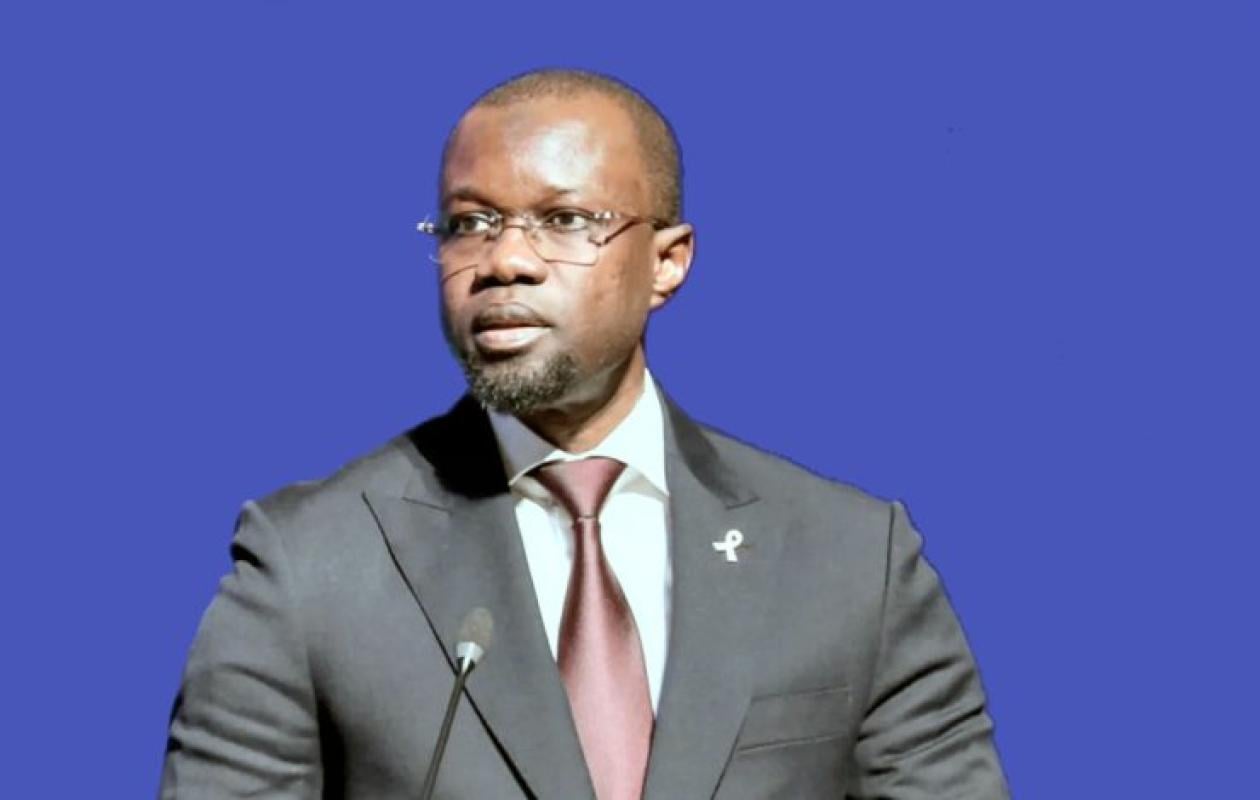
Regarding Senegal, while an economic consensus seems to be gradually emerging in favor of such an option, the Senegalese government insists that there is no question of restructuring the public debt. The Prime Minister forcefully reaffirmed this on January 8: “ Senegal does not want a debt restructuring. This is not Ousmane Sonko’s position; it is the official position of the State of Senegal .”
Therefore, is it necessary to restructure Senegal's public debt? This contribution attempts to explain that, however necessary it may be, restructuring is not inevitable.
An expert consensus that needs to be qualified
A relative consensus seems to be emerging among economists. In a note published on December 4, 2025, Bank of America emphasized that the restructuring of Senegal's external debt was becoming increasingly "likely." Seydina Alioune N'Diaye, in a note published on January 5, 2026, argues "for an organized restructuring of Senegal's public debt in 2026." Finally, in a "report" published on January 19, 2026, Martin Kessler and Abdoulaye Ndiaye appear, albeit with some reservations, to give more credence to the hypothesis of a public debt restructuring.
However, economists' positions require nuance. Senegal's situation necessitates an analysis that distinguishes between the risk of debt unsustainability and the risk of default. These two concepts differ conceptually. Sustainability refers to a state's capacity to maintain, in the long term, sufficient budgetary leeway to meet its future obligations without major changes to its fiscal and economic policy. Default, on the other hand, refers to a state's inability to immediately mobilize the resources necessary to meet its short-term obligations. The first concept thus falls under a long-term budgetary approach, while the second relates to a cash flow issue. The example of Congo in 2024 is illuminating. The country defaulted on 30 billion CFA francs, even though the IMF considered its debt still "sustainable." The distinction between budget and cash flow is therefore fundamental.
A liquidity risk rather than unsustainability
For the moment, the risk does not resemble one of unsustainability. In terms of stock, the outstanding debt amounted to 23,273 billion FCFA at the end of 2024. This level, which may be considered worrying in absolute terms, can nevertheless be analyzed in light of its dynamics and the economy's capacity to absorb this debt, particularly through economic growth. Indeed, the net change in outstanding debt (financing needs minus amortization) amounted to 2,331 billion FCFA in 2025 and was projected to reach 1,372 billion FCFA in 2026, representing a reduction of nearly 40% compared to 2025. Based on an average debt growth rate of approximately 7% to 8%, nominal growth of 7% to 9%, corresponding to 4% to 5% real growth accompanied by moderate inflation, could help stabilize outstanding debt, provided that the average cost of debt remains below nominal growth and that access to refinancing is maintained. However, this dynamic depends on two essential conditions : debt growth below the nominal growth rate and the implementation of the fiscal consolidation undertaken by the PRES ( Public Sector Reform Program) in a manner compatible with preserving growth potential.
The Debt Service Test (2026-2028)
However, analysis of budget flows reveals a strained situation. In 2025, the debt service-to-budget revenue ratio reached 111% after revision. In 2026, this ratio is expected to remain at the same level.
These figures are worrying. They mean that the state's own revenue is no longer sufficient to cover repayments. Senegal is therefore forced to borrow to repay: this is the "rollover" mechanism. In this context, the slightest loss of market confidence would transform this liquidity risk into a default.
This liquidity risk is particularly concentrated in the 2026-2028 period. This is when the 2018 Eurobond and various government securities mature. After this point, debt servicing should mechanically decrease from 2029 onwards. At the same time, the government hopes for new room for maneuver thanks to the increase in oil and gas revenues.
Conclusion: Let the storm pass with hope!
Following this analysis, it is now clear that restructuring, while useful, is not in itself inevitable. The Senegalese challenge is primarily a time-bound cash flow challenge. The government is betting on "weathering the storm" between 2026 and 2028 to regain some room for maneuver by 2029. This bet is understandable , although it rests on a fragile balance: flawless cash management, restored budgetary credibility, and, above all, the absolute maintenance of creditor confidence .
Sources: SDMT 2026-2028, LFI 2025, LFR 2025, LFI 2026




















Commentaires (9)
Participer à la Discussion
Règles de la communauté :
💡 Astuce : Utilisez des emojis depuis votre téléphone ou le module emoji ci-dessous. Cliquez sur GIF pour ajouter un GIF animé. Collez un lien X/Twitter, TikTok ou Instagram pour l'afficher automatiquement.