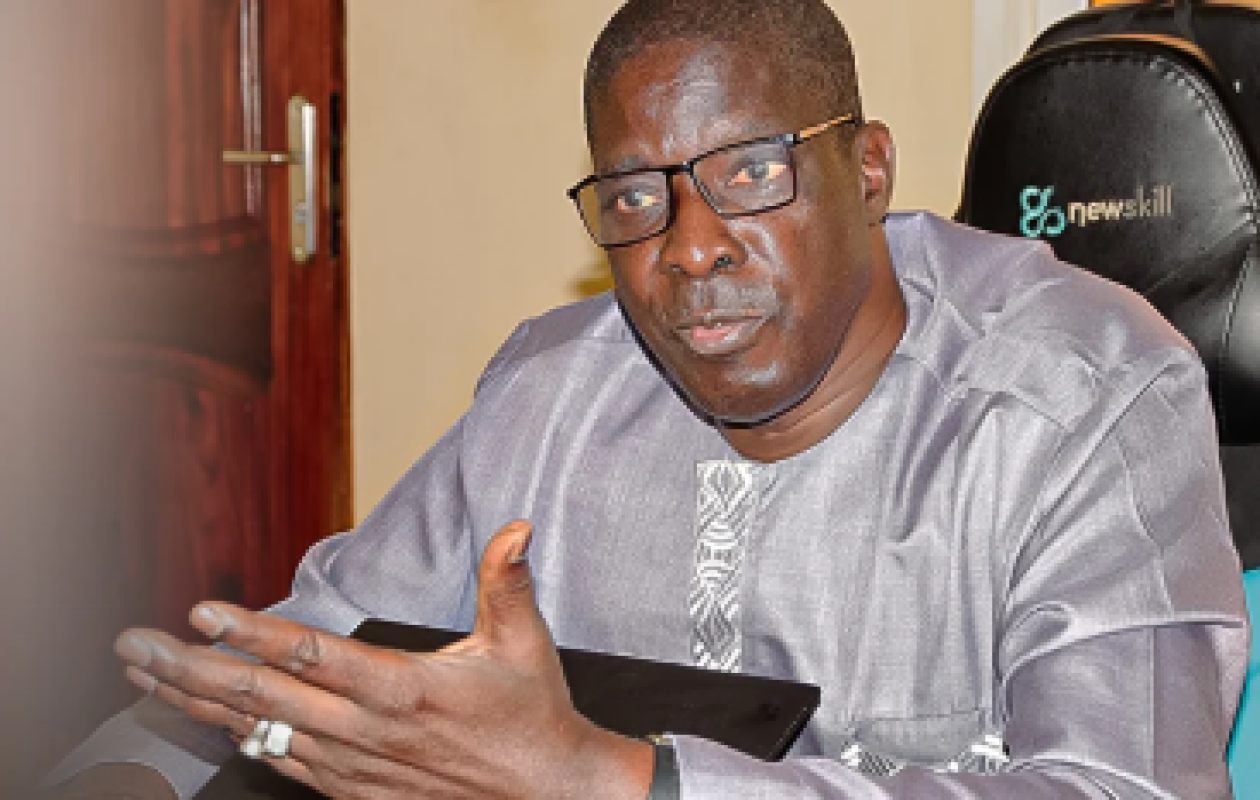
PROTECTION CIVILE / GESTION DES RISQUES ET CATASTROPHES AU SENEGAL . ENJEUX ET PERSPECTIVES , ( Par Amadou F Canar DIOP)
During the Council of Ministers meeting on February 25th, the President of the Republic called for a profound transformation of the national system for the prevention and management of risks.
Recent years have shown how Senegal can be economically and socially affected by natural disasters caused, among other things, by climate change (floods, droughts, coastal erosion). Therefore, the Government has implemented disaster prevention and management strategies, because although it is impossible to avoid some disasters, prevention can mitigate their impact.
Indeed, with the pace of climate change and uncontrolled economic development, Senegal is facing a range of major risks. These major risks not only create vulnerability for the population, but also threaten environmental balance and economic and social development.
Some effects of climate change are already being observed: floods, rainfall deficits promoting droughts, the spread of diseases on livestock and plants, locust attacks, deforestation, etc.
In addition to natural causes, the risks are also technological: industrial accidents, accidents involving the transport of dangerous goods (TDG), maritime transport and oil and gas exploitation.
In its Poverty Reduction Strategy Paper, Senegal identified risks and disasters as key factors hindering growth and poverty reduction, given their impacts on people, property and the environment.
Structural analysis has made it possible to define the country's vulnerability, the issues and challenges, but also the prospects for risk reduction and disaster management in Senegal.
Senegal is exposed to four main natural hazards: drought, locust invasions, flooding with the epidemics often associated with it, and sea-level rise (swell), the combination of which, with sediment deficit and human activities along the coasts, causes significant coastal erosion. This vulnerability is explained by its extensive access to the Atlantic Ocean along 700 km of coastline, its latitude placing it in a transition zone between a Sahelian and a Guinean climate, resulting in significant rainfall fluctuations inland, and finally, the presence of two major river systems and substantial groundwater potential, with relatively shallow aquifers in some areas. This physical vulnerability is accentuated by: weak economic development with a GDP per capita of USD 1921 in 2025 and a low Human Development Index (UNDP) ranking Senegal 168th (with an HDI of 0.517) out of 189 countries in 2022; dependence on non-irrigated agriculture dependent on rainfall; and a failure of land-use planning.
This country profile in terms of disaster risk and vulnerability has made it possible to define the ways and means to achieve resilience.
Thus, a National Platform for the Prevention and Reduction of Major Disaster Risks was created (Decree 2008-211 of March 4, 2008, establishing a national platform for the prevention and reduction of major disaster risks). Through its Inter-ministerial Committee for Disaster Risk Reduction, the National Platform is responsible for promoting the sustainable integration of disaster risk prevention and reduction into development policies and plans, as well as good governance and poverty reduction strategies. It is also tasked, among other things, with validating the national disaster risk prevention and reduction program, which represents a medium-term vision in this area, and ensuring the alignment of the Poverty Reduction Strategy with the disaster risk prevention and reduction program.
Finally, Senegal's National Climate Change Adaptation Plan (NAPA) was developed by the Ministry of the Environment and Nature Protection.
Despite the efforts and progress made, three major challenges need to be addressed.
First, the disaster risk management (DRM) mechanism is not fully effective due to the complexity and lack of clarity of its institutional framework, the weakness of the legal, regulatory, and operational mechanisms that support it, and the actors' lack of awareness of the existing DRM organization. The respective mandates and roles of the various existing structures and institutions within the DRM system, as well as the links between them, are not always clearly defined and formalized, such as the operational and/or hierarchical links between the National Platform and the High Commission for Civil Protection. The weakness of the operational tools and mechanisms limits the effective implementation of the institutional mechanisms and arrangements in place and prevents clear coordination between the various actors, both vertically (between the central, regional, departmental, and local levels) and horizontally (between sectors and between inter-ministerial structures). Many stakeholders are not fully aware of the existing DRM mechanism and their responsibilities within it.
Furthermore, the current structure and profile of the Directorate of Civil Protection (DPC) have weaknesses that prevent it from effectively implementing its mandates of coordination, mobilization and facilitation of interventions and of the sectoral actors concerned and engaged in risk and disaster management (RCM).
Furthermore, local risk and disaster management remains weak due to the limited decentralization of resources and disaster risk management (DRM) capacities to local authorities. These local authorities, primarily decentralized local governments at the municipal level, lack sufficient capacity to implement the mandates and missions entrusted and transferred to them in the area of DRM. This includes a lack of knowledge, concrete operational tools, models and references to serve as guides, and financial and material resources, all of which should be substantially strengthened. Given their responsibility in exacerbating flooding in certain at-risk areas, local authorities should be equipped with the technical capacities to better control the factors that could cause or exacerbate flooding at the local level (land-use planning, sanitation, drainage, land use).
Finally, to implement a sound strategy for preventing, reducing, and managing disaster risks, the following would be necessary:
1. Updating and operationalizing the national platform for disaster risk prevention and reduction with the expansion of networks (journalists, academics, local elected officials, women leaders, parliamentarians, etc.)
2. The establishment of a database accessible to all;
3. Strengthening the institutional capacities of the Directorate of Civil Protection;
4. Updating legislative and regulatory texts on Disaster Risk Reduction (DRR);
5. The establishment of a national early warning system, federating sectoral warning systems for a synergy of actions;
6. The operationalization of the Interministerial Crisis Management Operational Centre (COGIC);
7. The construction and equipping of a civil protection training center.
Ultimately, although Senegal remains vulnerable to various types of disasters, a whole disaster risk reduction mechanism has been put in place to address this despite institutional, technical, legal and financial shortcomings.
However, these shortcomings could be addressed quickly thanks to the Senegalese government's commitment to making disaster risk reduction not only a national priority but also, and above all, an essential element of development and poverty reduction.
"Disaster is not inevitable; we must prevent it and prepare for it in order to avoid it."
Amadou F Canar DIOP
www.lapipe.sn





















Commentaires (3)
Participer à la Discussion
Règles de la communauté :
💡 Astuce : Utilisez des emojis depuis votre téléphone ou le module emoji ci-dessous. Cliquez sur GIF pour ajouter un GIF animé. Collez un lien X/Twitter, TikTok ou Instagram pour l'afficher automatiquement.