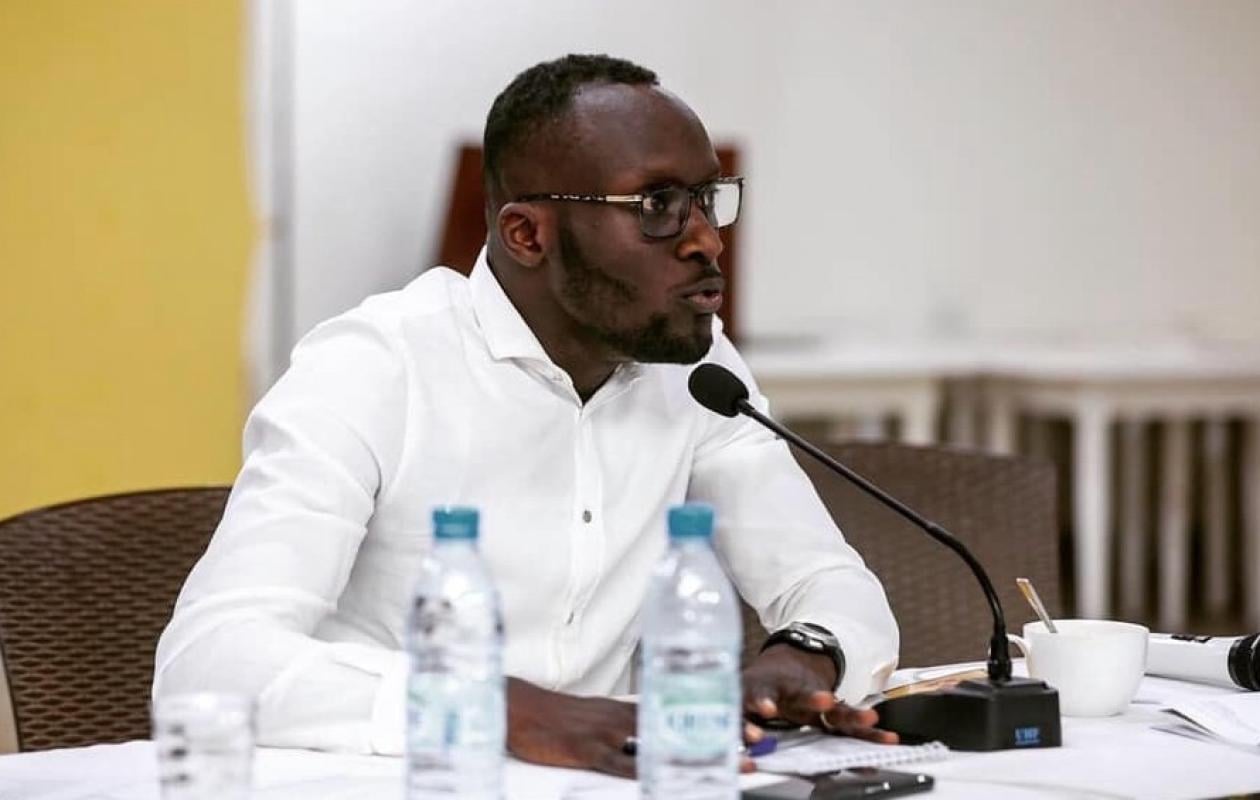
Régulation des médias : Habibou Dia recadre les organisations professionnelles sur la nouvelle loi
The debate surrounding the new media regulation law continues to generate strong reactions. Speaking on Seneweb, Habibou Dia, Director of Communications, did not mince words when addressing certain press organizations, notably the Union of Information and Communication Professionals of Senegal (Synpics) and the Council of Press Broadcasters and Publishers of Senegal (Cdeps). According to him, the criticisms leveled against the new regulatory body are based either on bad faith or a blatant misunderstanding of the process.
"Synpics made a mistake in good faith."
Habibou Dia believes that Synpics probably made an "honest error," while also acknowledging that the union lacks rigor in its analysis. He points out that the transformation of the regulatory body is a response to a profound evolution in the media landscape.
“The High Authority for Audiovisual Regulation (HARCA), as it was conceived, had reached its limits. Today, with new types of media and the emergence of content creators, a body capable of regulating this entire ecosystem was needed,” he explains. The new Regulatory Council, recently passed by the National Assembly, is not a political improvisation: “This body was already announced in the 2017 Press Code,” he points out, specifying that the objective is to protect the media landscape from abuses.
Actors involved in the preparatory work
Habibou Dia insists that the development of this reform was inclusive. According to him, professional organizations were represented during the preparatory work, making current criticisms of alleged exclusion difficult to justify.
He specifically cites the case of the Cdeps: "The Cdeps was represented by Bouna Manel Fall, with authorization signed by Mamoudou Ibra Kane," he states. Under these circumstances, he believes the organization is being disingenuous in now claiming to have been excluded from the process.
An internal transmission problem within Synpics?
The Director of Communications also raised the possibility of an internal problem within Synpics. "The Secretary General of Synpics may be experiencing a handover issue. There's been a change in leadership, and it's possible the outgoing team didn't properly transfer the files," he suggested. He believes these oversights undermine the credibility of organizations: "When I see some of these press releases, I'm stunned. The credibility of these entities is at stake," he lamented.
Wait for the final version of the text
Faced with accusations of "haste," Habibou Dia calls for restraint. He points out that the text was amended during parliamentary debates and that the final version is not yet public. "No one has the final draft yet. On issues like professional secrecy, we must wait for the final text or closely follow the debates before issuing a statement," he maintains.
Regulation: a reciprocal contract with the State
Regarding audiovisual regulation, Habibou Dia points out that the system is based on an authorization principle accompanied by a set of specifications. For him, this represents a genuine mutual commitment between the public authorities and private operators.
“A broadcasting license comes with a set of specifications. It’s a contract between the state and media groups. And like any contract, it can be amended or revoked,” he explains. According to him, this contractual approach should be understood as a necessary regulatory mechanism and not as an attempt to place the media under state control.









Commentaires (2)
Participer à la Discussion
Règles de la communauté :
💡 Astuce : Utilisez des emojis depuis votre téléphone ou le module emoji ci-dessous. Cliquez sur GIF pour ajouter un GIF animé. Collez un lien X/Twitter, TikTok ou Instagram pour l'afficher automatiquement.