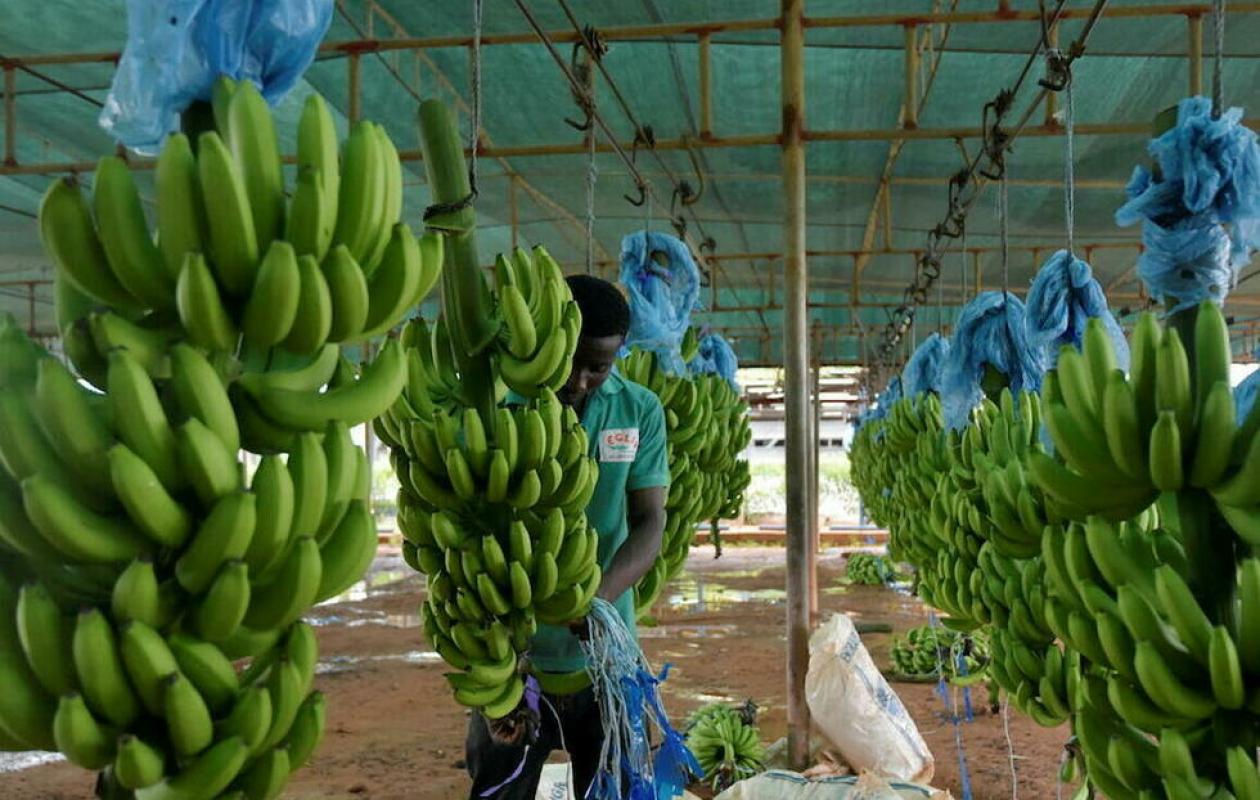
Bénéficies, emplois, importations… : les points savoureux de la filière banane
The ban on banana imports, implemented between September and December 2025, had an overall positive impact on domestic production. In an interview with the newspaper Le Soleil, Yahya Mamadou Sall, president of the Tambacounda Regional Banana Producers Collective, stated that this measure helped "save the banana industry," putting an end to years of chronic unsold stock.
This momentum is based on a technical transformation initiated between 2023 and 2024, driven by the introduction of in vitro plants and the modernization of irrigation. The results are significant: while Senegal imported more than 55% of its banana needs in 2021, this rate fell to less than 20% in 2025, with a record production estimated at 112,500 tonnes.
A social bulwark against emigration
Beyond its agricultural performance, the sector has established itself as an economic engine for the Tambacounda region, generating over 10,000 jobs. It offers a concrete alternative to rural exodus and illegal emigration. "A young producer can earn between 1.5 and 2 million CFA francs every six months," emphasizes Yahya Mamadou Sall.
Building on this momentum, the players are now aiming for self-sufficiency by 2029 and are advocating for an extension of the import freeze to six months in 2026, believing they are sufficiently organized to supply the market from July to December.
Structural locks to be lifted
Despite these advances, major challenges remain, particularly land ownership. The lack of secure land titles limits access to bank financing. This is compounded by logistical shortcomings, such as a shortage of refrigerated trucks and cold storage facilities, essential for preserving the produce. Environmentally, protecting banana plantations from flooding remains a priority, with calls for the construction of appropriate dikes.
How to regulate the market?
Finally, the high cost of the product for consumers remains a sensitive issue. While the producer sells it for 275 FCFA per kilogram in Dakar, prices increase along the distribution chain. To address this, stakeholders propose setting a price ceiling of 800 FCFA per kilogram and establishing dedicated sales points in each municipality.





















Commentaires (3)
Participer à la Discussion
Règles de la communauté :
💡 Astuce : Utilisez des emojis depuis votre téléphone ou le module emoji ci-dessous. Cliquez sur GIF pour ajouter un GIF animé. Collez un lien X/Twitter, TikTok ou Instagram pour l'afficher automatiquement.