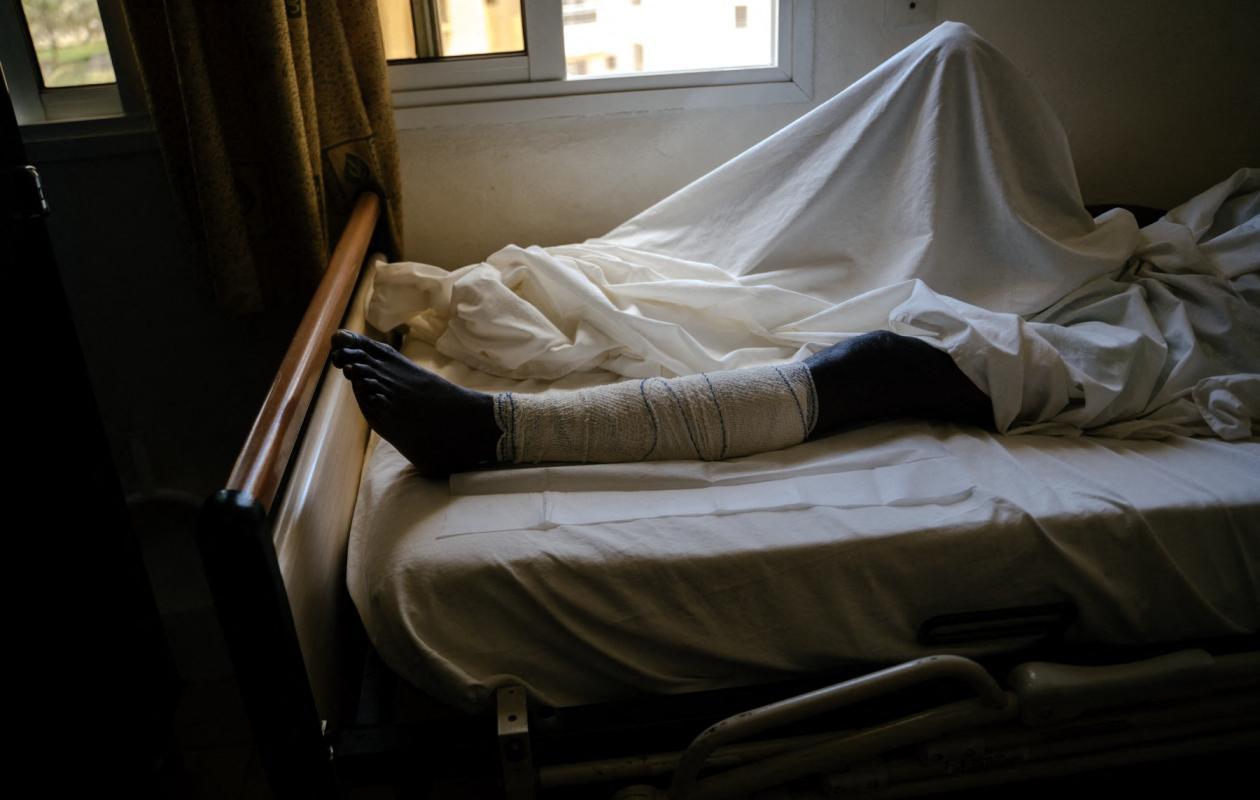
Accidents du travail : Le Dr Ismaila Mbaye pointe les failles du reclassement professionnel
To conclude our investigation into "the broken bones of the system," Seneweb turns its attention today to the corporate world. What becomes of a worker after a serious fracture or amputation? While Senegalese law provides protection mechanisms, the reality on the ground is much bleaker. Between employers reluctant to reassign employees and a lack of psychosocial support, Dr. Ismaila Mbaye, an occupational physician, offers a critical assessment of return-to-work procedures. He provides us with the keys to ensuring that injured workers do not become forgotten victims of professional life. This is the final installment of our series.
What are the main professional difficulties encountered after an accident involving a fracture ?
Senegalese regulations do indeed address these situations. After the therapeutic management of a workplace accident, when the treating physician authorizes a return to work, the company is required to refer the worker to the occupational physician. The latter conducts a return-to-work medical examination before any actual reintegration. The objective is fundamental: to reassess the worker's fitness for work and propose solutions adapted to the new state of health, especially when the accident has left lasting effects.
At the end of treatment, two scenarios are possible. First, the injured party regains full function: the doctor issues a certificate of recovery. Second, the injured party presents with lasting effects: a certificate of consolidation is then issued, specifying the need for a medico-legal assessment. This assessment is carried out by the medical expert of the Social Security Fund (CSS), which holds the monopoly on occupational risk insurance. The injured party may, however, be assisted by a doctor of their choice. The assessment establishes a disability rating, entitling the injured party to the payment of annuities. Difficulties arise primarily when the lasting effects result in a loss of physical or mental capacity, preventing the worker from safely performing their original job.
What is the role of the occupational physician in these situations?
The occupational health physician plays a central role. Following the return-to-work assessment, they must make the most appropriate decision by weighing the worker's functional limitations against the job requirements. They may suggest a reduction in workload, adjustments to the workstation, or reassignment to another department. However, the implementation of these recommendations depends heavily on the company culture and the employer's willingness. In SMEs, the unavailability of suitable alternative positions unfortunately sometimes leads to the dismissal of the injured worker.
Are companies sufficiently informed and prepared to support the return to work?
We can't generalize. Regulations exist, and every company is supposed to be aware of them. As for actual preparation, adapting workstations is generally not very expensive; it all depends on the employer's willingness, who has a moral obligation, being legally responsible for the accident. In practice, while we see a human touch in many organizations, cases of ill will persist, particularly through outsourcing or service provision, where the contract can be terminated due to a lack of possible reassignment.
Does Senegal have sufficient structures for the psychosocial support of victims?
The situation varies considerably between Dakar and the regions. The capital is relatively well-equipped (National Orthopedic Equipment Center, specialists, social workers), but psychosocial support remains insufficient, with the emphasis placed on the physical aspect. In the regions, the limitations are pronounced: limited medical facilities, insufficient medical transport, and a shortage of specialists.
What reforms would be necessary to improve care?
Several efforts are needed: improving the medical evacuation system, increasing the number of emergency numbers, and implementing a real-time computerized system to monitor bed availability. First aid techniques must also be disseminated in schools and through the media. In rural areas, it is essential to properly equip facilities and assign more specialists to them.
What key message do you want to convey to the public?
Initial care is crucial. Some actions, even if performed with good intentions, can be harmful. Inappropriate handling can be fatal, especially in cases of spinal injury. Finally, for commuting accidents, it is essential to complete an accident report and obtain an initial medical certificate. Without these documents, the victim risks losing their rights with the insurer or Social Security office.




![[EXCLUSIF] Actes contre nature : L'homme politique Ndiaga Seck arrêté par la DIC](https://image.seneweb.com/content/news/2026-20-15//thumb_1260x800_6a0726d812df9_nxDd5CNBzl.jpg)











Commentaires (1)
Participer à la Discussion
Règles de la communauté :
💡 Astuce : Utilisez des emojis depuis votre téléphone ou le module emoji ci-dessous. Cliquez sur GIF pour ajouter un GIF animé. Collez un lien X/Twitter, TikTok ou Instagram pour l'afficher automatiquement.