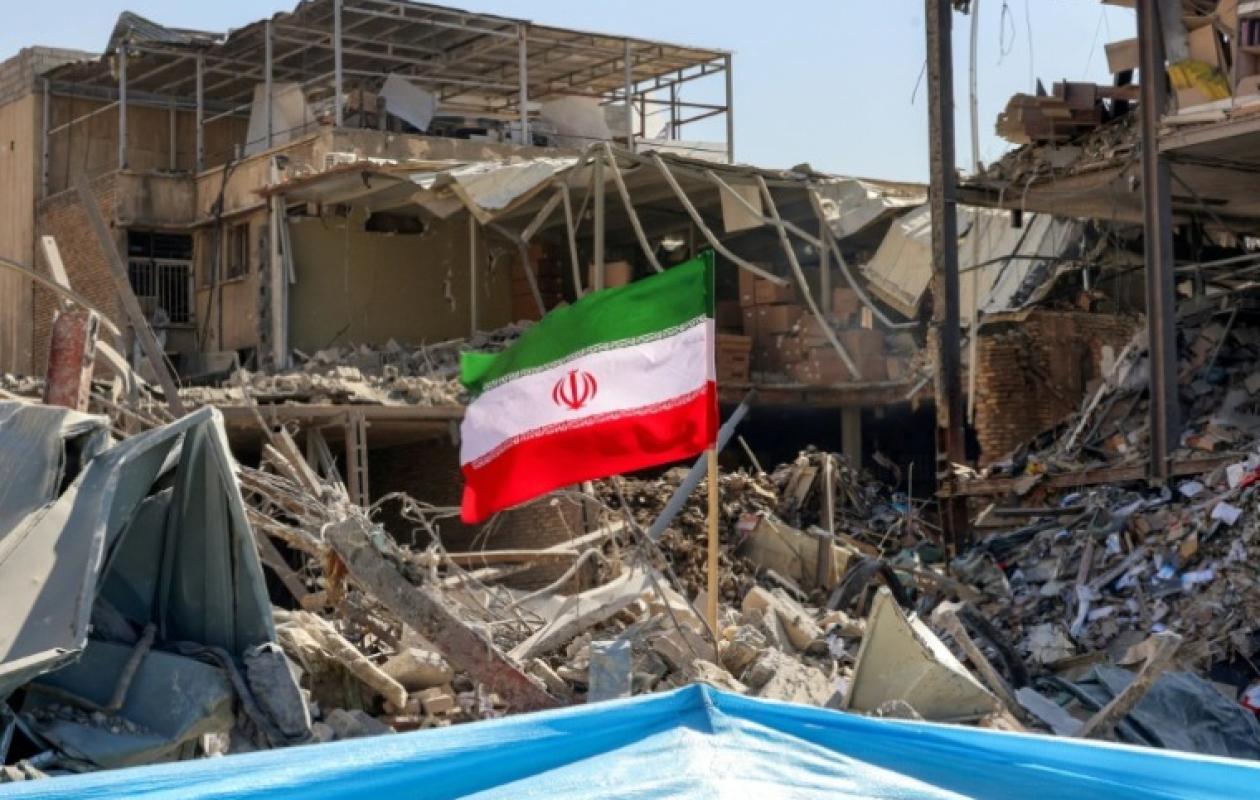
Iran : la guerre sans mort à la télévision
Since the start of the war between the Israeli/American coalition and Iran, bombs have been raining down on Tehran and other cities across the country. Thousands of missiles have been dropped on Iranian soil. The death toll has surpassed a thousand, and most are civilians, particularly women and children. In the media, this conflict has been the main story for the past two weeks, sometimes even the only story, with the now-famous special reports. But strangely, there is a "blind spot" in the conflict: the civilian casualties. Apart from images of the girls' school whose bombing is attributed to the American military, the deaths in Iran are nowhere to be seen.
In the French media, the argument that Iran is a closed country is often used to justify the lack of images of the war's consequences. In truth, this is simply not the case. This supposed or real isolation of the country is merely a pretext. Since the 2003 invasion of Iraq, Western media have adopted a new form of war coverage. Now, victims are visible or invisible depending on which side they are on.
When the strongest forces are in the Western camp, American, French, and British television networks cover the war from a military and technical perspective: the number of missiles and launchers, the air force, naval capabilities, and so on. They praise the firepower of both the Americans and the Israelis while downplaying that of Iran. They extol the quality of Mossad intelligence to highlight the weaknesses of the Iranian security apparatus.
This type of coverage emphasizes the bombings: "Missile rain in Iran," "Tehran under bombardment," "Israel announces massive bombing," "Today, Iran will be hit very hard!" (Trump). These phrases are repeated ad nauseam, accompanied by images of targeted strikes provided by the Israeli and American militaries. And it's as if there are no human lives involved. We see neither dead nor wounded. The intention is clear: to present a clean war, to obscure the human tragedy so as not to sway public opinion.
Two types of death in Iran
In the case of Iran, for example, Western media outlets that claim the country is closed off broadcast images of destruction, but never of civilian casualties. French media, for instance, have a "super-correspondent" in Siavosh Ghazi, capable of doing "80 live reports a day for TF1, BFMTV, LCI, and of course RFI and France 24, for whom he usually works." Curiously, this super-correspondent in Tehran doesn't provide any images of the wounded in hospitals, let alone the grief of bereaved families.
In Ukraine, however, these same media outlets showed elderly women whose homes had been destroyed and who were forced to leave their houses after 80 years of life. Others had to live in the cold and darkness after power outages. In Lebanon, where the French press felt concerned, the images showed the population in disarray, forced to leave their homes and sleep under the open sky. None of this was happening in Iran.
Yet, these same television stations broadcast images of the deadly repression of the demonstrations in Tehran. It is, however, the same Iranian people. The difference is that the demonstrators were killed by the "terrorist regime of the mullahs," while the victims of the war are the "collateral damage" of a noble liberation mission initiated by Israel and the United States, the Samaritans of the 21st century.
October 7 in Israel vs. genocide in Gaza
It is true that Israeli dead and wounded are also invisible, but not for the same reasons. Here, the victims are not shown, primarily to avoid contradictions. The media cannot simultaneously praise Tel Aviv's defense capabilities and expose its vulnerability.
This is followed by a refusal to acknowledge Iran's firepower. It is necessary to convince public opinion that Israeli territory is inviolable, except for minor damage.
This logic of invisibility prevailed during the genocide in Gaza. In Western media, the focus was limited to counting the dead and showing buildings reduced to rubble. One had to turn to a channel like Al Jazeera to see the horror and scale of the genocide.
But when it comes to the October 7 massacre, the Western media regain their humanity. They show the faces of the dead through photographs. Portraits of the hostages are ubiquitous. When prisoners are released on both sides, a carefully orchestrated scene is prepared for the Israelis. The hostage is greeted at the airport or at home by family members, both relieved and moved. There are tears, emotion—in short, humanity.
On the Palestinian side, there are silhouettes getting off the buses, without family, without emotion, therefore without humanity.
This is the new form of conflict coverage by Western media: restoring humanity to victims who are ideologically close to them and reducing others to technical aspects.








Commentaires (40)
Participer à la Discussion
Règles de la communauté :
💡 Astuce : Utilisez des emojis depuis votre téléphone ou le module emoji ci-dessous. Cliquez sur GIF pour ajouter un GIF animé. Collez un lien X/Twitter, TikTok ou Instagram pour l'afficher automatiquement.