Sachets d’eau contaminés : À quoi joue le ministère du Commerce ?
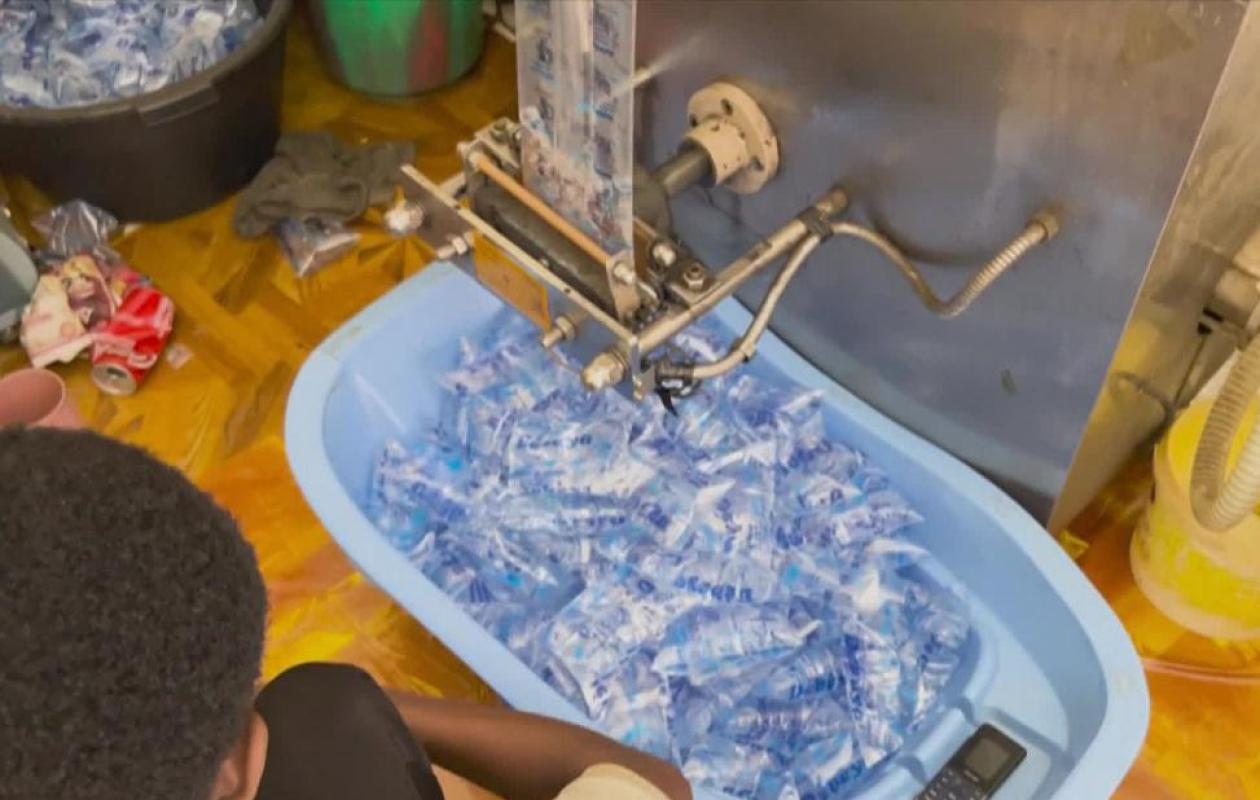
The Ministry of Commerce issued a statement on July 6th informing the public of the "increasing presence" in certain markets of sachets of water and other beverages "produced clandestinely and potentially dangerous to health." The Ministry warns of a risk of contamination, defective packaging and storage conditions, and a lack of traceability. This means that consumers are at high risk of suffering from digestive problems, infections, waterborne illnesses, and other health issues.
For all these reasons, the ministry is asking the public to be vigilant, in other words, to "only buy sealed products that are properly labeled and come from identifiable brands." The ministry concludes its statement with threats against producers, warehouse operators, and distributors, announces inspection operations, and even encourages the public to report them.
If it were permissible to laugh about it, we'd be snickering heartily. But the subject is serious enough to be taken lightly. One might, however, wonder who the Ministry of Commerce is trying to fool. What are they telling us? If it's about the "increasing presence" of water sachets, the public already knows. Around fifty brands have been identified between Dakar and Mbour. This is perfect proof of the product's omnipresence.
Perhaps the ministry is informing us of the microbial contamination of the sachets. If so, one might wonder what the ministry's true purpose is. It's worth noting that this announcement comes in the wake of a study conducted at UCAD that has received widespread coverage in national and international media (BBC, Brut, ZOA, etc.). The study revealed that, in a sample of 100 sachets from 50 different brands, 82% contained fecal matter. If this is the information, then the ministry has been beaten to the punch by UCAD and the media.
And this raises a question: does the ministry have laboratories to verify food safety? Is this work actually being done by Serigne Guèye Diop's department? In principle, it should be the ministry's responsibility to analyze water sachets, beverages, and other products to determine their compliance before they are placed on the market. If prior testing isn't in place, then at least post-production testing should be implemented to alert the public and demand the withdrawal of any product that presents serious risks. Instead, the minister is waiting for others to do his job, for the results to be widely disseminated, and then to finally alert the public. Despite all this, he wants us to believe that "protecting the health of citizens is an absolute priority."
Capital vs. health
What we expect from the ministry is more information on these water sachets and other products. Instead of asking consumers to buy only "identifiable brands," it would be better to consult with UCAD and, if necessary, delve deeper into the subject to provide a list of compliant and non-compliant brands to help the public make informed choices. Identifying a brand is not enough if its quality cannot then be assessed. Serigne Guèye Diop and his team could go further and investigate the "Kaay naan," these filtered water outlets, to determine their quality.
Unfortunately, there's no hope. For over a decade, these water sachets have been sold everywhere in Senegal, with a high density per square meter: on the street, in shops, in markets. Tracing them back to the producers should be relatively easy. So, brandishing a threat is pointless when the only option has been inaction. If there were a process for controlling and authorizing their sale, all this chaos wouldn't exist.
And the recent Soft Care affair reinforces our belief that the ministry will do nothing. Serigne Guèye Diop and the Minister of Health, Ibrahima Sy, prioritized employment over public health. This water sachet affair also involves many jobs. More jobs than at Soft Care. Long live industry, down with public health.























Commentaires (18)
Participer à la Discussion
Règles de la communauté
💡 Astuce : Utilisez des emojis depuis votre téléphone ou le module emoji ci-dessous. Cliquez sur GIF pour ajouter un GIF animé. Collez un lien X/Twitter, TikTok ou Instagram pour l'afficher automatiquement.
Se connecter
Commentez avec votre profil, votre photo, et soyez averti des réponses.