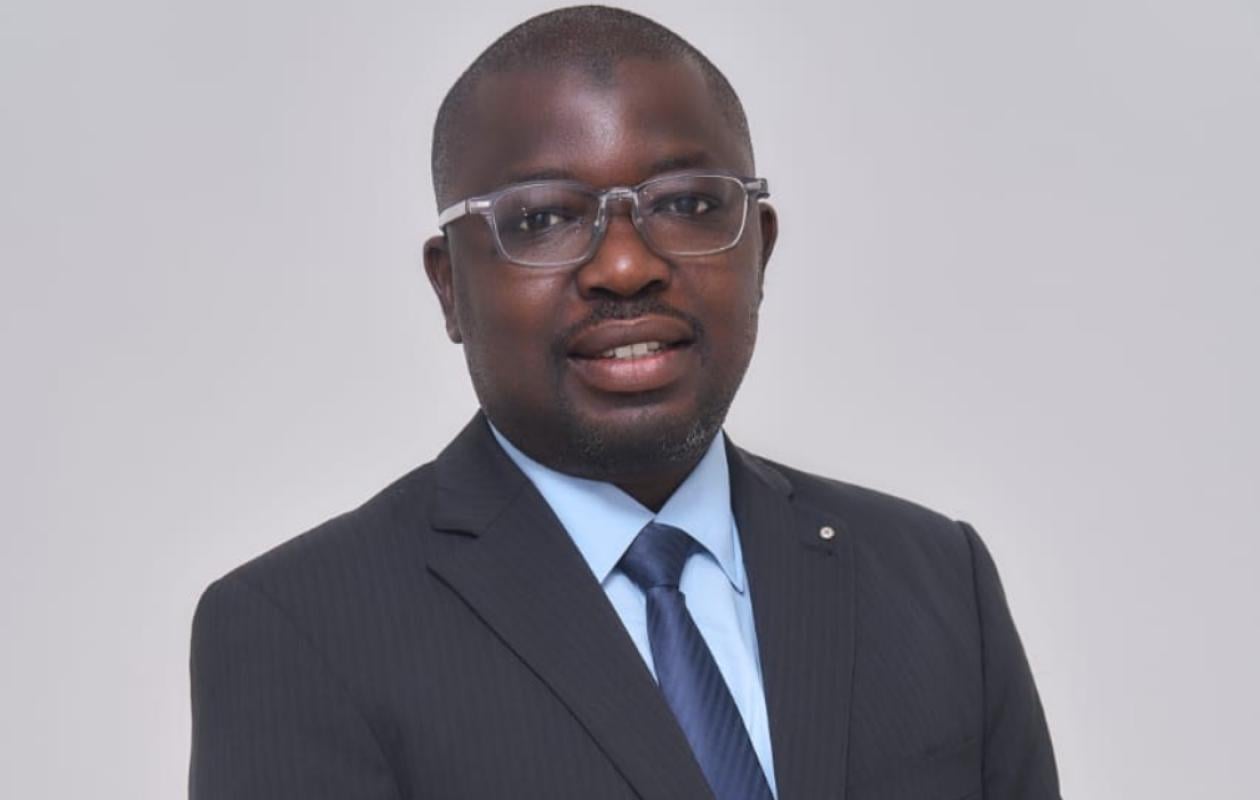
DAKAR DEM DIKK, LE SERMENT DU PRÉSIDENT ABDOULAYE WADE ( Mame Gueye NDAW)
A century of existence is granted only to those whom history has long intersected with. President Abdoulaye Wade has just crossed that threshold, and among the achievements that posterity will remember from his long tenure, there is one that does not languish in archives or languish in glass cases, for it runs every morning through the arteries of Dakar, from the Corniche to the Parcelles, from Rufisque to Guédiawaye, with a regularity that few Senegalese institutions can claim. Dakar Dem Dikk belongs to that rare category of accomplishments that have transcended rhetoric to become part of people's everyday lives, and no honest assessment of the presidential legacy can afford to ignore it.
One cannot understand the man without considering the unique nature of his background. A formidable lawyer in the courtroom, an economist of international stature, and a mathematician of such rigor that even his adversaries acknowledged him, Abdoulaye Wade possessed the rare ability to think about society as one solves an equation, seeking the hidden variable upon which the equilibrium of the whole depends. His teaching degrees and doctorates, the lecture halls where he taught economics before wielding it as a political weapon—everything in his intellectual journey predisposed him to see transportation not as a mere logistical problem but as a social function upon which employment, education, and urban peace depend. Where others saw only buses to be purchased, his mathematical mind perceived a system of flows, and his jurist's soul read in it a right to be asserted.
A gamble. SOTRAC, bled dry after a long period of financial decline, was liquidated in November 1998, and for nearly two years the capital was left to the mercy of informal taxis and unlicensed drivers, in a chaotic situation where getting around was an ordeal. When the change of government in March 2000 brought the " Pope of Sopi" to the highest office, Dakar's urban transport system lay in a state of neglect that previous authorities had failed to address. Reconstructing a coherent public transport system from these still-smoldering ruins was less a matter of administrative management than pure political will, and the new president made it one of the key priorities of his first term.
The act that sealed the birth of Dakar Dem Dikk stemmed from pedagogical genius as much as political intuition. President Wade understood before anyone else that a public service is not imposed by decree but by adoption, and that the language in which things are named determines the attachment they inspire. By " Wolofizing" the name, by exchanging the coldness of an inherited acronym for the warmth of a phrase that every Dakar resident instinctively grasps, "Dakar Dem Dikk," he offered users a service that reflected their identity. Many still remember the scene where, having summoned national television, standing before a blackboard, chalk in hand, he patiently explained, like a schoolteacher, why the bus routes needed to be renamed to be better understood, more easily visualized, and more easily remembered by those who would use them. Few heads of state are willing to descend to the level of the user, to trade the solemnity of the lectern for the modesty of the blackboard, and the scene remains in the collective memory as the founding act of a pedagogy of public service.
Chalk and a blackboard were no accident for a former teacher. Mr. Wade readily governed as he had taught, demonstrating rather than asserting, taking the time to convince an entire nation of the merits of an idea rather than imposing it solely through the authority of his office. Pedagogy was his way of respecting the people, of considering them intelligent and capable of understanding the reasons for a reform. The Wolof naming of the lines stemmed from the same deeply democratic conviction that a public policy only becomes legitimate when even the humblest citizen embraces it and makes it their own.
The decision required resources, and Mr. Wade didn't let himself be hampered by the usual delays. He dispatched a close associate from his inner circle, Christian Salvy, a trusted man with family ties, with an unambiguous instruction: to gather the rolling stock and the necessary practical arrangements as quickly as possible to launch operations. Behind this haste lay a long-standing promise, almost a point of honor: to have the buses running for the start of the school year after the 2000 Christmas holidays, so that no schoolchild would be left stranded on the first morning of January. Keeping his word within such a tight timeframe, on the ruins of a vanished institution, required a tenacity that skeptics deemed unreasonable. Yet the buses did run, and January 1, 2001, marked the true beginning of an adventure that many had written off before it even began.
The schoolchild's concern speaks volumes about his priorities. For a man who had made education the driving force of development, allowing a child to miss the start of the school year due to a lack of transportation would have been a more serious admission of failure than a budget shortfall. The promise kept that January morning was tantamount to an entire program, for it articulated Wade's vision: school first, and around it, the patient organization of a society that provides the means to get its children there. The urgency was therefore not the whim of a hasty founder but the expression of an intellectual coherence where transportation served education, which in turn served the nation.
President Wade's most enduring legacy lies not in the number of vehicles or the expansion of routes, but in a fare philosophy that has survived all regime changes. The price of a Dakar Dem Dikk ticket remains remarkably low, almost a matter of principle, conceived not as a source of revenue but as a social benefit, a right to citizenship granted to the most vulnerable to reach school, the market, the workshop, or the hospital. Yet, economists knew better than anyone the cost of such pricing to operational balances, and the stubborn maintenance of a price lower than its actual cost stemmed from a deliberate calculation: that of a state assuming its share of responsibility for the mobility of its citizens because it sees it as the cement of national cohesion. Mr. Wade viewed it less as an expense than as an investment in the stability of a metropolis where mobility is essential for access to work and dignity. Dakar Dem Dikk's sociological roots in working-class neighborhoods, its familiarity with users in Pikine and Thiaroye, its status as an institution that is criticized but would be fiercely defended if it were to fail, all stem from the original societal intention instilled by the founding father.
President Wade did not simply establish the company; he also provided support. Well aware of the divisions inherited from SOTRAC, whose difficulties were practically congenital, he never hesitated to meet with both the unions and management, sometimes individually, but more often around the same table, to smooth over tensions, defuse emerging conflicts, and preserve the internal social contract without which no transport service can function. In his administration, power also knew how to be conciliatory, to engage directly with the demands, to listen to both union representatives and managers, and to arbitrate with an authority that no one questioned. This approach contrasted sharply with the usual aloofness of the presidential palace, and it indelibly shaped the culture of dialogue that still characterizes the company today.
Wade's political influence extended far beyond national borders, and the scope of his achievements was measured against a continental ambition rarely equaled. A builder at heart, a theorist of an African renaissance he sought to anchor in infrastructure rather than mere rhetoric, he conceived of public transportation as one of the cornerstones of this larger edifice, where the movement of people and goods was the primary condition for development. Dakar Dem Dikk, in its own way, contributed to this pan-African vision, a modest laboratory for an idea that transcended the bus to encompass the philosophy of a man convinced that Africa would only rise by rationally organizing the movement of its people. The lawyer pleaded for the continent, the economist quantified its needs, and the politician laid the concrete foundations in stone, asphalt, and metal.
At one hundred years old, Abdoulaye Wade can consider this legacy with the serenity of those who have left tangible traces. Dakar's public transport owes its renewal to him, and beyond transport, the entire sector bears the imprint of a man who thought big because he thought for the people. Anyone who has spent years unearthing the history of Dakar Dem Dikk, delving into its archives, and gathering the stories of those who were its first architects, knows how decisive the presidential decision of 2000 was, and how the very name that the visionary President gave it continues to resonate faithfully in the memory and on the avenues of the capital. For his centenary, perhaps the most beautiful tribute can be summed up in a few words. As long as a Dakar Dem Dikk bus departs at dawn and returns at dusk, the centenarian president's vow will remain fulfilled. JerejefMame!
Mame Gueye NDAW Executive at Dakar Dem Dikk SA; Author of "Dakar Dem Dikk, Twenty-Five Years of History and Memory"








Commentaires (4)
Participer à la Discussion
Règles de la communauté
💡 Astuce : Utilisez des emojis depuis votre téléphone ou le module emoji ci-dessous. Cliquez sur GIF pour ajouter un GIF animé. Collez un lien X/Twitter, TikTok ou Instagram pour l'afficher automatiquement.
Se connecter
Commentez avec votre profil, votre photo, et soyez averti des réponses.