
Decroix ou l’art de rejouer la peur (Dr Abdourahmane Ba)
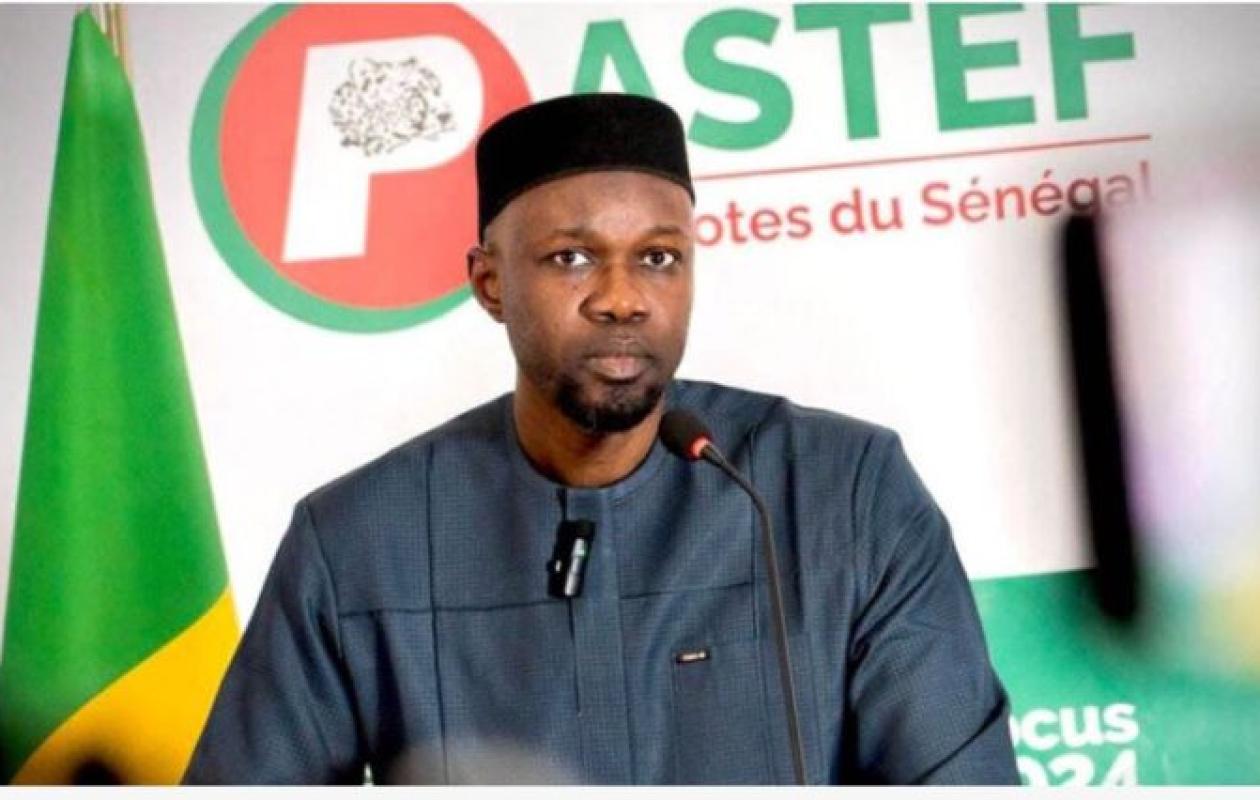
“Mamadou Diop Decroix has an obstinate fascination with power, whatever its color. From Marx to Macky, from Wade to Sonko, he has survived all regimes, always quick to defend whoever rules, rarely whoever reforms. His latest text, disguised as a sermon for peace and stability, is in reality a masterpiece of recycled fear, a sermon to keep the people under moral anesthesia, while the PASTEF regime learns to breathe in the confusion.”
These remarks come from Dr. Abdourahmane Ba, an expert in Evidence, Management, and Development Strategy. He has produced a text that, he says, “doesn’t analyze: it warns, it threatens, it instills guilt. It addresses a mature nation as if it were a restless flock, pointing out invisible enemies: ‘dividers,’ ‘anti-nationals,’ ‘foreign agents.’ A well-known dramatic device: when power falters, specters are resurrected. And Decroix, true to his tradition as a political actor, dons the mantle of the guardian of the temple, ready to defend, down to the last metaphor, a regime that is already struggling to defend its figures.”
His Senegal is not the Senegal of facts, but of fantasy. He sees knives hanging over two "Siamese twins," the President and his Prime Minister, whom he believes must be protected from the people and their contradictions. The metaphor is flawed: when one speaks of an umbilical cord in politics, it means refusing the emergence of debate. In truth, the rupture he fears is that of lucidity. He doesn't want a Senegal that thinks, but a Senegal that contemplates.
His text, under the guise of unity, is an ode to voluntary servitude. He presents loyalty to power as a cardinal virtue, critical thinking as a latent crime. He doesn't speak of public policy, productivity, or equity; he speaks of "cohesion," "threats," and "dark forces." In other words: emptiness. The country is buckling under an abysmal debt, but he prefers to talk about imaginary knives. Prices are skyrocketing, programs contradict each other, economic plans pile up like school drafts, but for Decroix, the real danger lies in the words that dare to doubt.
The PASTEF government, searching for direction, finds in him an old griot of fear, ready to sing the praises of a silence it mistakes for peace. He writes as if chanting, quotes as if threatening, concludes as if pleading: “Full speed ahead!” But towards what? Towards a saturated budget horizon, towards a disillusioned youth, towards promises of price cuts without any macroeconomic basis?
His pen, once rebellious, has become sycophantic. He no longer questions the debt, he justifies it. He no longer evokes poverty, he downplays it. He no longer speaks of the Republic, but of a regime that has become his new belief. Like a true “political Highlander,” he still imagines himself invincible, but it is his credibility that has ceased to breathe. The man who once wielded words as a weapon of liberation now wields fear as a strategy of self-preservation.
The irony is cruel: this is the same Decroix who yesterday accused the powers that be of “holding the people hostage ideologically.” Today, he presents himself as a willing hostage, reciting the litanies of the PASTEF regime like a court chorus. The revolutionary has become a preacher of stability; the voice of change has morphed into a megaphone of conformity.
The truth is that the PASTEF regime doesn't need enemies to divide itself: it's self-sufficient. It's not the knives of its opponents that threaten the duo, but the inconsistencies in its own narrative. When you govern with slogans, you always end up being cut down by your own illusions.
Decroix would have us believe that criticizing the government weakens the country. Quite the opposite: it is silence that kills, not words. The stability he invokes is merely a deceptive calm, that of a regime walking on fiscal coals while humming hymns of unity.
Senegal will not fall because of overly free public debate; it will fall if intellectuals like Decroix continue to sell it fear as a horizon, submission as wisdom, and loyalty as a program. There is no knife in this story, only a mirror: that of a former revolutionary who can no longer bear his reflection, because he sees in it what he has become, the docile poet of a power without direction.

![[EXCLUSIF] Diodio de "Baabel" arrêtée avec de la cocaïne et des objets sexuels : comment une vidéo virale a poussé le procureur Saliou Dicko à actionner la BR de Keur Massar](https://image.seneweb.com/content/news/2026-25-17//thumb_1260x800_6a31e625b77ed_Ghfor4Ome2.jpg)









Commentaires (19)
Il veut juste que ses problèmes soient vite resolus,sinon PASTEF s en ira comme l APR et d autre avant elle.
Wakh Rek
Qu'Allah nous guide sur le chemin de la Vérité.
C'est connu, Mamadou Diop DECROIX (MDD) a toujours été un politicien.
L'hypocrisie et l'opportunisme ont aussi leur charme quand ils sont portés impudiquement par un courtisan, un flagorneur.
Mamadou Diop DECROIX (MDD) veut instiller la peur dans les yeux de ceux qui ne se sont toujours pas lassés de le voir encore sur la scène politique.
Ceux qui connaissent MDD depuis près de 60 ans, le regardent avec amusement et avec un haut-le-coeur, désespérés et dépités : "Decroix, tu n'as jamais été sérieux, tu ne seras jamais sérieux".
Il faut envoyer les vieilles guimbardes à la casses. Elles créent la pollution et engagent l'insécurité routière.
Participer à la Discussion
Règles de la communauté :
💡 Astuce : Utilisez des emojis depuis votre téléphone ou le module emoji ci-dessous. Cliquez sur GIF pour ajouter un GIF animé. Collez un lien X/Twitter, TikTok ou Instagram pour l'afficher automatiquement.