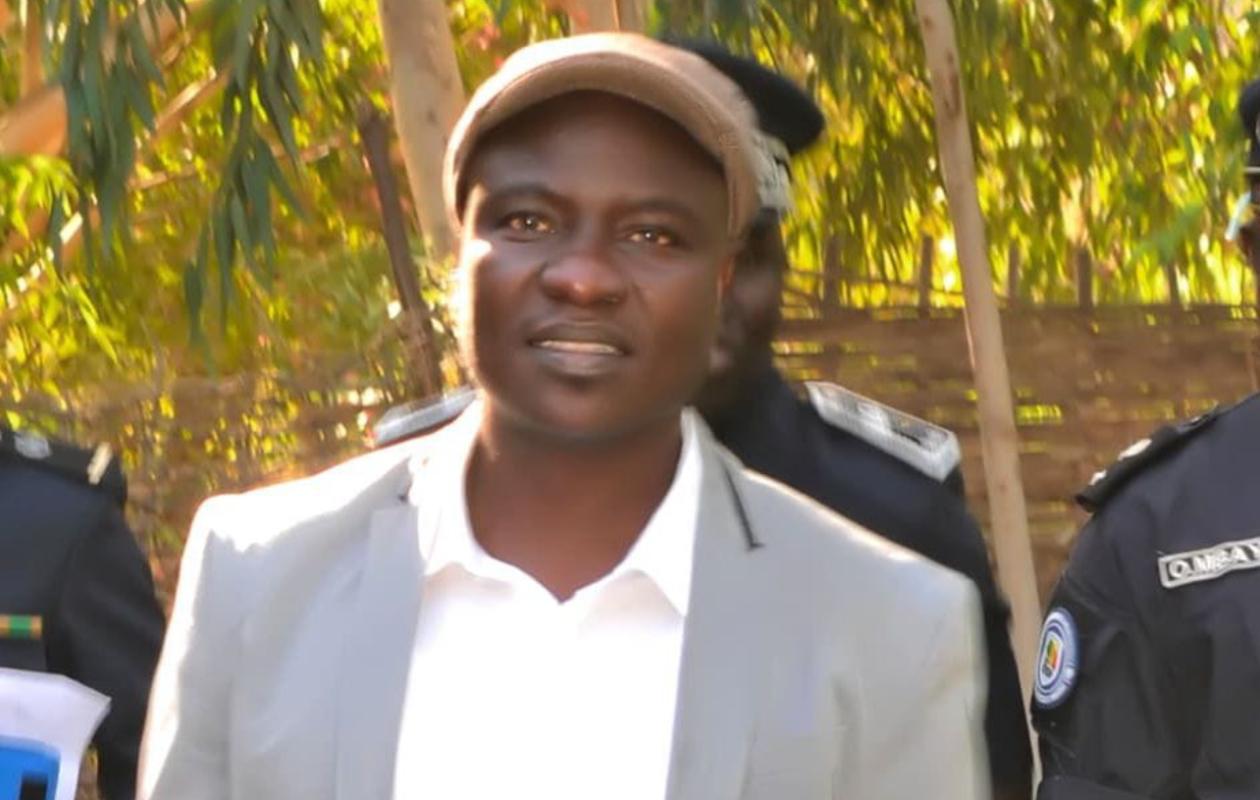
Droits humains, responsabilité de l’État et ONU : remettre le débat à sa juste place [Par Mouhamadou Moustapha DIAGNE]
Babacar Gaye's response to Seydi Gassama, regarding Macky Sall's potential candidacy for the position of Secretary-General of the United Nations, calls for essential clarification. This clarification must not be based on partisan morality or invective, but on the law, the only relevant framework in a democratic state.
Questioning the President: a constitutional right, not intimidation
Contrary to what is claimed, the public questioning of the President of the Republic by a human rights defender is neither an activist injunction nor an attempt at intimidation. It falls within the normal exercise of constitutionally guaranteed freedoms: freedom of expression, freedom of opinion, and citizen participation in public debate. In a Republic founded on the rule of law, reasoned criticism of government action is not a deviation, but a democratic imperative.
Remembering the victims: a legal obligation, not a political tool
Recalling the deaths that occurred during the repression of political demonstrations is not an act of emotional manipulation. It is a reminder of an international legal obligation. Senegal is bound by the African Charter on Human and Peoples' Rights and the International Covenant on Civil and Political Rights, which impose on the State the duty to investigate, prosecute, and redress any violation of the right to life.
To equate these victims with other national tragedies, armed conflicts, urban violence, or abuses by rebel groups is based on legally unfounded reasoning. Human rights violations are not ranked in order to cancel each other out. And above all, crimes attributable to the state entail a specific responsibility, distinct from that of armed groups or non-state actors.
Political violence: distinguishing between criminal responsibility and state responsibility
Destruction, incitement to insurrection, or violence committed by individuals falls under personal criminal responsibility. Conversely, the use of force by security forces directly engages the State's responsibility under international law. Confusing these two categories dilutes responsibility and weakens the very principles of republican legality.
UN: an eminently political and normative candidacy
It is true that no one runs unopposed for the position of Secretary-General of the United Nations and that the final decision rests primarily with the UN Security Council. However, concluding from this that Senegal's position is marginal is legally and politically erroneous. A state's official support for a candidate impacts its international credibility.
However, UN practice shows that respect for human rights and the existence or absence of an effective fight against impunity are central evaluation criteria. Questioning the appropriateness of such support is therefore neither simplistic nor emotional: it is a debate of international responsibility.
As a concrete illustration, the case of Commissioner Arouna Sy is particularly revealing. Accused by Amnesty International and other human rights organizations of serious human rights violations, he was unable to take up his post at the United Nations. This precedent demonstrates that, in UN practice, the existence of serious, unresolved accusations that could damage the moral credibility of a leader is sufficient to jeopardize an appointment.
The amnesty law: the legal crux of the problem
The heart of the debate lies elsewhere: in the existence of an amnesty law covering acts that may constitute serious human rights violations. In international law, such amnesties are widely considered incompatible with the obligations of states and may be unenforceable before international courts. The rights of victims cannot be erased by a legal artifice. Given the Constitutional Council's position on the interpretative law of the amnesty law, the question of criminal liability and judicial truth regarding serious human rights violations remains open.
Human rights and cultural sovereignty: a false dilemma
Finally, equating the defense of human rights with submission to foreign agendas or financial interests is a personal attack, not a legal argument. Fundamental rights are universal and indivisible. Their promotion implies neither the denial of cultures nor contempt for national values; on the contrary, it constitutes a common foundation of dignity.
The current debate is not between patriots and activists, much less between morality and reasons of state. It is between a demanding conception of the rule of law and a logic of impunity that is politically convenient but legally untenable. The memory of the dead must neither be exploited nor silenced: it demands truth, accountability, and justice. Only under these conditions will Senegal be able to speak with a credible voice, both at home and on the international stage.
By Mouhamadou Moustapha DIAGNE, a lawyer specializing in international human rights law












Commentaires (7)
Participer à la Discussion
Règles de la communauté :
💡 Astuce : Utilisez des emojis depuis votre téléphone ou le module emoji ci-dessous. Cliquez sur GIF pour ajouter un GIF animé. Collez un lien X/Twitter, TikTok ou Instagram pour l'afficher automatiquement.