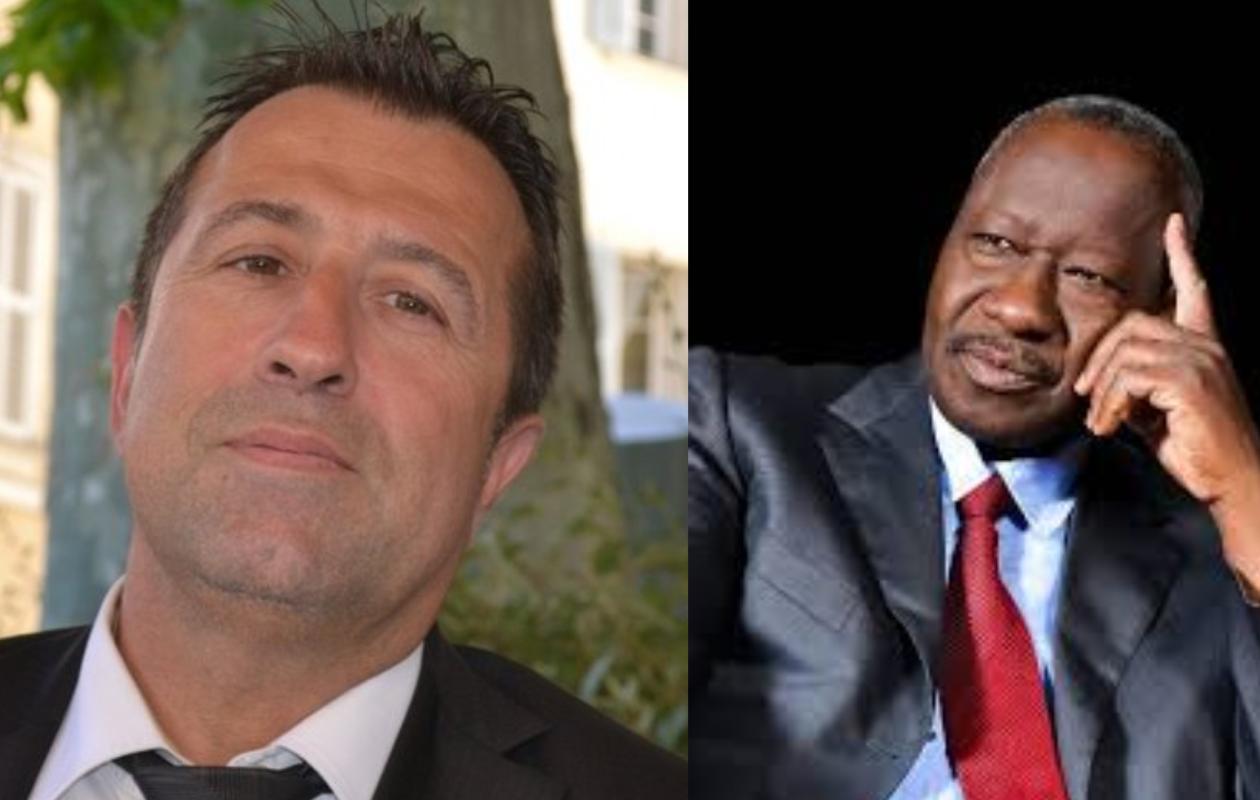
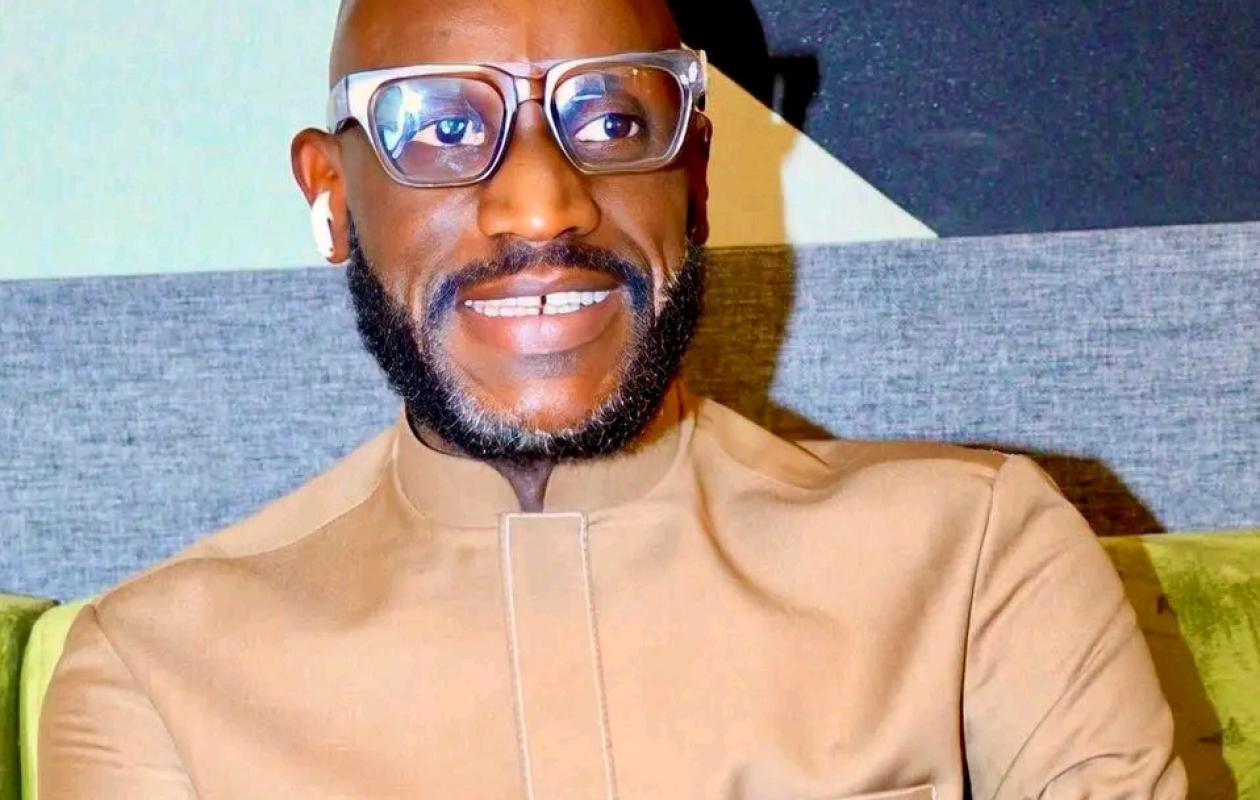
El Hadj NDiaye, le champion qui a rendu au Sénégal sa voix et au peuple sa fierté (Tribune de Bernard CHAUSSEGROS)
Former President of Euromedia France
Court-appointed expert at the Court of Appeal of Paris and Gombe (DRC), Member of the CESER South Region
Commander of the Order of Merit in Senegal, Knight of the Legion of Honour
Officer of the Order of Merit, Officer of Arts and Letters, Knight of the Order of the Pleiades
There are nations that are perceived as fragile, yet suddenly find in one man the symbol of their vitality. Senegal, a land of artisans, thinkers, and free spirits, has this unique characteristic: it has always progressed thanks to individuals who refused to give up. Among them, El Hadj N'Diaye , founder of 2STV, remains a monument. A pioneer. A champion.
And above all, a man who gave Senegal something even rarer than modernity: a strong voice in a world that no longer listens to African nations.
When I met him in 2002, at the time of the takeover of SFP, I didn't just see an entrepreneur. I saw a man driven by passion. His project seemed immense: to create the first major private cultural television channel in Senegal , broadcast via the Eutelsat satellite and covering Africa, Europe and the diaspora , in a media landscape that was then tightly controlled, where audacity was almost a crime.
He once said something to me that perfectly sums him up:
"What Africa lacks is not strength: it is decisiveness."
And he had made up his mind.
At that time, he had an office right at the heart of the French audiovisual ecosystem of the era, rubbing shoulders with figures like Patrick Sébastien, Christophe Dechavanne, and Jean-Pierre Foucault. He absorbed this environment while remaining convinced that he had to reinvent the model and adapt it to the African context. A major figure in media and communication was about to launch his career.
Culture is often said to be a luxury. No. Culture is power.
Culture is a border, an army, a flag. El Hadj N'Diaye understood this before anyone else.
2STV was not just another channel. It became a bridge between Senegal and its diaspora , a thread stretched between the country and its scattered children, a stage where artists, storytellers, musicians, and intellectuals could finally speak to the world without filters, without translators, without prior authorization.
He exported Senegalese culture like others export oil or minerals — with determination, with pride, with the absolute conviction that a people's heritage is worth more than all raw materials.
In New York, Paris, Montreal, or Milan, there isn't a Senegalese person who doesn't know his name. He is the man who proved that Senegal is not a small country: it is a great people.
He often repeats:
"A people who lose their culture lose their future."
And that is why his struggle has never been merely a media event. It is political, in the noblest sense: it concerns the destiny of a nation.
As the country goes through a troubled period, marked by political confusion, contradictory statements and institutional uncertainty, Senegalese people are looking for a point of reference.
A stable man. A free man.
A man who did not build his reputation in the excitement of the moment but in work , creation , perseverance .
This is where El Hadj N'Diaye's stature becomes essential.
In a context where some officials seem to be playing with the country's destiny, multiplying ambiguities, he embodies a simple truth: Senegal will not be saved by slogans or speeches, but by builders.
He never got involved in petty politics. He never sought a privileged position of influence.
He never knelt down to please anyone.
This is precisely what makes him a central figure in civil society today. He is said to be respected: and that's true.
People say he's listened to: that's true. But above all, he's credible . He told me recently:
"Africa must break free from the waiting game. No one is going to come and save us. It is up to us to assert our place."
At a time when the country is searching for its bearings, this voice matters. This voice reassures. This voice unites.
Senegal does not need ephemeral stars.
He doesn't need grand, empty phrases.
He doesn't need heroes manufactured in media controversies.
It needs national champions , those exceptional individuals who, through their work and integrity, carry the flag in an indifferent world.
El Hadj N'Diaye is one of them.
And it's time to say it forcefully.
He belongs to that generation of African builders who refuse dependency, who reject victimhood, who ask nothing of anyone but demand that their country live up to its promises.
"France had its Malraux, Senegal has its N'Diaye."
This sentence sums it all up: his role was never to comment, but to embody.
His journey is also a lesson for young people:
Success is not a miracle, it's a discipline. He doesn't promise that everything is easy. On the contrary, he says:
"Work never humiliates. What humiliates is giving up."
In a country where part of the youth, abandoned or deceived, believes that hope lies in exile or anger, the example of El Hadj N'Diaye is a powerful antidote.
He opened his country to the world.
He unified the Senegalese people in their diversity.
He protected their culture when others were diluting it.
He stayed the course when so many others gave in to political fads.
That is why, today, in the midst of uncertainty, its role in civil society is becoming increasingly clear.
It is a compass.
A stable figure.
A man capable of uniting where others divide.
Great nations are those that know how to recognize their giants while they are still alive.
Senegal is fortunate to have El Hadj N'Diaye: a creator, a patriot, a champion. He brought Senegalese culture to the forefront when it was being ignored.
He strengthened national cohesion when others were weakening it.
And today, he embodies what the country needs most: clarity, solidity, excellence.
He is not just a media figure: he is an institution.
It is a landmark.
He is a force for stability in a country that lacks it.
And, more than anything, he is shining proof that a Senegalese person can change the destiny of their country without waiting for anyone's permission.
Bernard Chaussegros 06 87 73 12 00
President
Certified Public Accountant, CNAM Engineer-Economist
Expert witness before the Court of Appeal of Paris and the Administrative Courts of Appeal of Paris and Versailles and the High Court of Kinshasa (DRC) Mediator
Member of the French Arbitration Committee








Commentaires (18)
Un homme stable. Un homme libre.
Un homme qui n’a pas construit sa notoriété dans l’agitation du moment mais dans le travail, la création, la persévérance
NO COMMENT
Monsieur les Sénégalais sont éveillés maintenant ne te fatigue pas. Haaa quelle blague
El Hadj Ndiaye foumou todj à part keuram ?
Maintenant le petit blanc veux tout nous prendre
Sénégal: El Hadji Ndiaye de Studio 2000 et son frère déballent leur vie devant le juge
7 Mars 2002. Le Soleil
C'est toujours triste de voir les membres d'une même famille en arriver à régler leur contentieux au tribunal. El Hadji Ndiaye, le célèbre propriétaire du Studio 2000, a finalement jugé utile de traîner son propre frère devant le juge des flagrants délits pour les délits de menaces de mort verbales, abattage d'arbres et dénonciation calomnieuse. Cela n'a pas empêché le procureur de la République de tancer vertement les membres de la famille Ndiaye qui étaient presque tous au tribunal qui pour répondre à la barre qui pour être interrogé. Comme dans un roman, les frères El Hadji et Seydou Ndiaye ont étalé toute leur vie devant le juge et le public pendant quatre heures d'horloge. Cela n'a pas plu au procureur : " une querelle de famille se règle en famille. Vous ne deviez même pas venir au tribunal déballer de votre naissance à aujourd'hui ce qui vous unissait. C'est vraiment honteux ", a regretté le représentant du parquet.
La maison laissée par leur père est l'étincelle qui a mis le feu aux poudres. La mort de leur mère en septembre 2001 aggrave les relations. Seydou, qui était en Suisse, tenait à ce que sa mère soit enterrée à leur village Woudourou ( à plus de700 kilomètres de Dakar), conformément à ce qu'elle lui aurait dit. El Hadji, décidé une première fois à inhumer leur mère à Yoff, rejoint son frère sur son voeu. Mais, on ne pourra pas l'attendre pour les funérailles, étant donné qu'il était impossible de conserver davantage le corps.
...
Heureusement que nous avons appris la fable de la fontaine : "Le corbeau et le renard" 😀
Participer à la Discussion
Règles de la communauté :
💡 Astuce : Utilisez des emojis depuis votre téléphone ou le module emoji ci-dessous. Cliquez sur GIF pour ajouter un GIF animé. Collez un lien X/Twitter, TikTok ou Instagram pour l'afficher automatiquement.