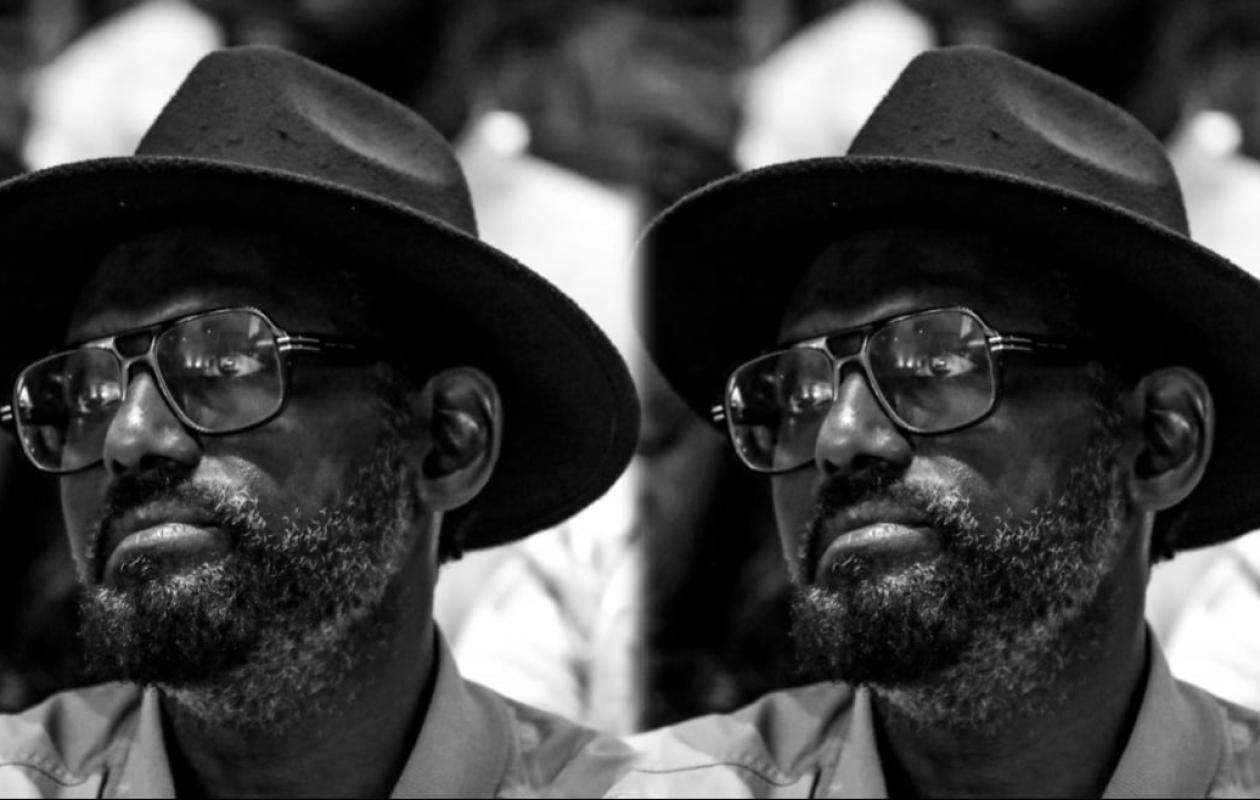
LE MOMENT CITOYEN (Par Alioune NDIAYE)
When a new regime repeats the mistakes of its predecessors, it stems from a set of psychosocial mechanisms deeply rooted in power dynamics, social expectations, and the complexity of institutional interactions. These behaviors, which often lead to the same unfortunate consequences, reflect collective and individual processes that can be studied.
The effect of "historical continuity" or institutional inertia
Power structures and communication habits are rarely entirely renewed with the arrival of a new regime. Teams often inherit the same institutional frameworks, tools, and operating methods. This organizational inertia means that, despite the change in leadership, certain dysfunctional reflexes persist, such as a tendency to disconnect from popular expectations or an excessive reliance on stereotypical formulas. Past mistakes become entrenched, rendering the regime incapable of truly breaking with the errors of its predecessors. This relates to the idea of historical path dependency, widely discussed in the works of Paul David (1985), Douglas North (1990), and W. Brian Arthur (1984).
The narcissistic bias of power
Once in power, political elites often tend to overestimate their own ability to shape public opinion, forgetting that the failures of their predecessors sometimes stemmed from this very overconfidence. This narcissistic bias, as Dacher Keltner (2016) demonstrates, can lead them to develop a distorted view of themselves and their role, exacerbated by a sense of self-sufficiency, infallibility, and superiority.
The difficulty of shedding "symbols of the past" while simultaneously wanting to break with it
Frantz Fanon, notably in his works such as Black Skin, White Masks (1952) and The Wretched of the Earth (1961), powerfully theorized the psychological and sociopolitical dynamic in which the victim sometimes aspires to "take the place of their oppressor." This thesis, rooted in his reflections on colonization and decolonization, resonates deeply when discussing the exercise of power. The dominated, whether colonized peoples, the socially oppressed, or marginalized citizens, often live in a system where power relations are taken for granted. The oppressor (whether a dominant class, a colonizer, or a political authority) is perceived as the central figure of power and legitimacy.
In doing so, the victim sometimes ends up internalizing the methods of their oppressor, to the point of considering their attitude as a model to follow. Thus, political emancipation can turn into mimicry: those who come to power reproduce the same authoritarian, oppressive, and ultimately counterproductive structures.
The idea of "symbolic revenge"
In a process of role reversal, attaining the position of power held by the former oppressor represents a dynamic of psychological revenge. It is not merely a quest for equality or justice, but an attempt to heal the symbolic wounds inflicted by past oppression. Within this framework, inherited practices or behaviors (authoritarianism, arrogance, contempt for the masses) may reappear, but under a new ideological or political banner. Thus, as Hannah Arendt (1951) and Pierre Bourdieu (1970) demonstrated, the fascination with existing power structures—and in particular with the instruments of domination (official discourse, coercion, social hierarchy)—often leads new regimes to reproduce the same tools and patterns as their predecessors in order to establish their legitimacy.
Jubbanti Jubal Jub
Objectively speaking, the "Pastefian" revolution, which culminated in the election of President Bassirou Diomaye Diakhar Faye to the highest office on March 24, 2024, is a major event in Senegalese and African political history. The hope that this election has inspired among the country's youth, as well as among the youth of the continent in general, should be examined with the utmost attention and seriousness. Maintaining the course toward the horizon set by the new Vision 2050 framework should, therefore, be a priority for the new authorities, despite the fact that a cursory analysis of the national political evolution at the beginning of this third millennium tends to suggest a certain "wear and tear" on power after a decade of governance. It is therefore essential to ensure the ability to implement the Project over twenty-five years, supported by the Jub Jubal Jubbanti … or the Jubbanti Jubal Jub . That is, five years of Jubbanti (Diomaye) 1), ten years of Jubal (Sonko) and ten years of Jub (Diomaye) 2).
The example of the patriarch
This five-year term should therefore be one of a beneficial recovery at all levels.
This recovery requires specific human qualities to ensure its success. One of these qualities is assertiveness. If there is one man who, throughout his productive and useful life, has embodied this ability to express himself, to defend his rights and his opinion without infringing on the rights of others—at the national, continental, and global levels—it is undoubtedly the patriarch Amadou Mahtar Mbow. Was it therefore solely out of a sense of duty that the President of the Republic chose to honor him on October 28th, or did he also perceive, like many others, this fortunate similarity in their character?
The citizen moment
Baasirou Diomaye Diakhar Faye is undoubtedly an assertive leader. And this is certainly one of the reasons why his friend and brother Ousmane Sonko chose him to lead the coalition that brought him to power. His current five-year term is therefore a "Diomaye moment." And a "Diomaye moment" is a moment of civic engagement.
This is why the entire nation feels so deeply involved right now. This is why the entire nation, including his mentor, should support him.
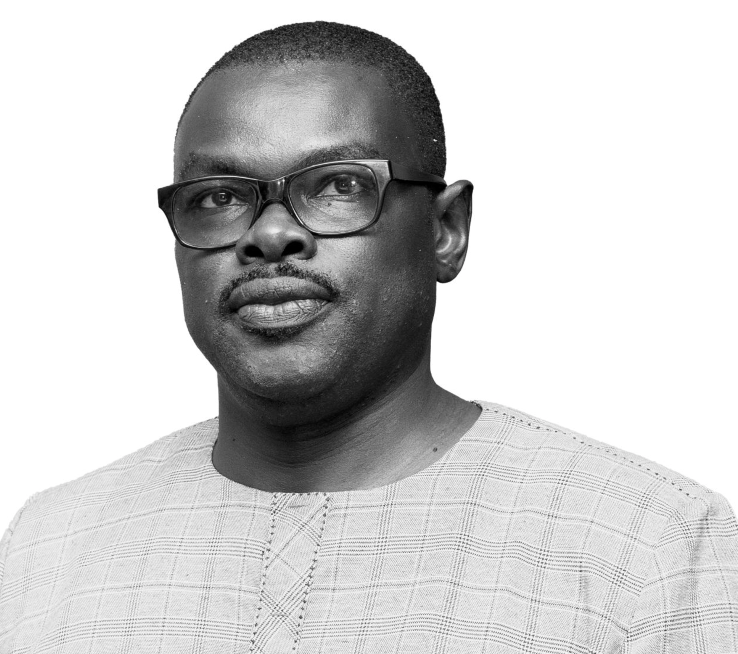
Alioune NDIAYE, MBA, DBAc
Special Advisor to the
President of the Republic
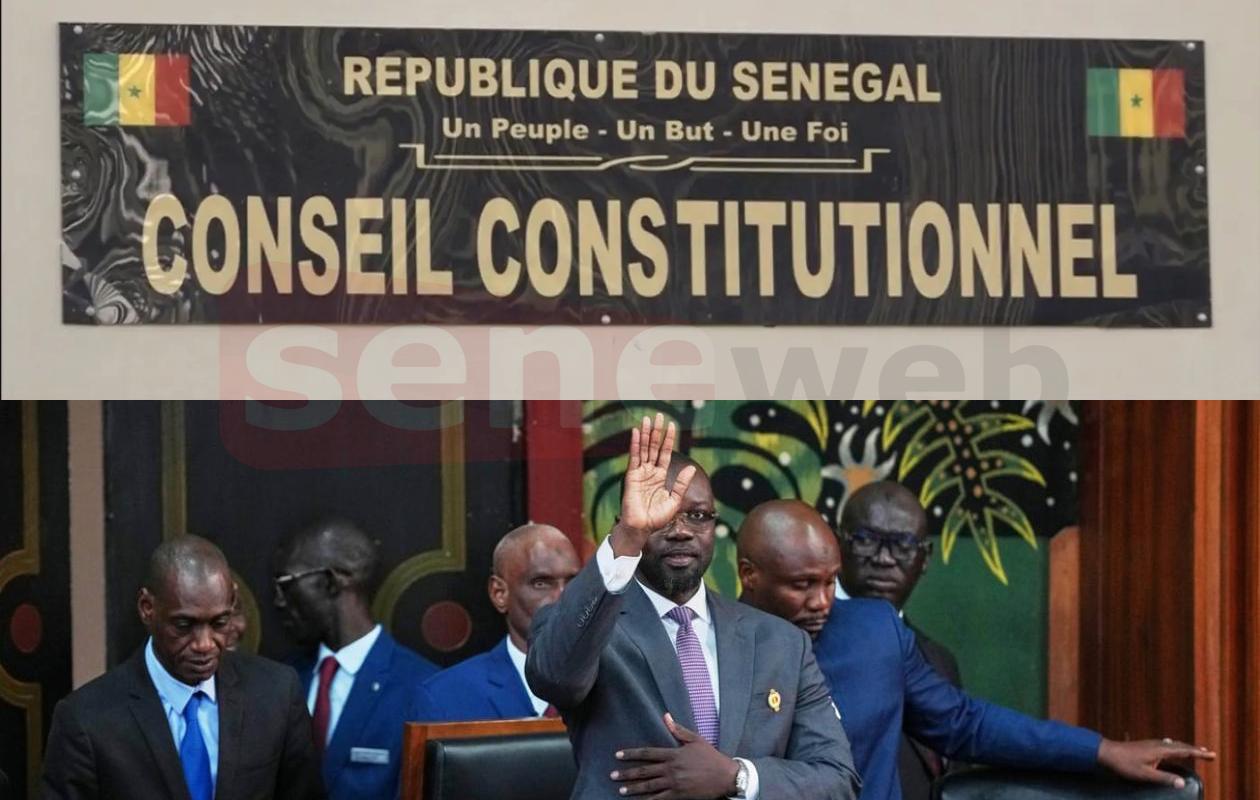
![[Exclusif] Révision de la Constitution : Le Conseil constitutionnel invalide le vote des députés](https://image.seneweb.com/content/news/2026-28-09//thumb_1260x800_6a4fdec36aa84_Tpa745ZYpD.jpg)















Commentaires (13)
Chaque citation a un sens dans le temps et dans l'espace.
Citer dans un contexte différent, dans un temps ou espace different, ne veut pas épouser la pensee de l'auteur initial.
Il suffit de quelques phrases de toi pour voir la différence de niveau.: C’est la raison pour laquelle toute la Nation se sent, en ce moment, impliquée au plus haut point. C’est la raison pour laquelle toute la Nation, son mentor y compris, devrait le soutenir.
Malheureusement Diomage n'a cassé que les ennemis du Projet à la présidence.
Participer à la Discussion
Règles de la communauté
💡 Astuce : Utilisez des emojis depuis votre téléphone ou le module emoji ci-dessous. Cliquez sur GIF pour ajouter un GIF animé. Collez un lien X/Twitter, TikTok ou Instagram pour l'afficher automatiquement.
Se connecter
Commentez avec votre profil, votre photo, et soyez averti des réponses.