![[Documentary] Abdoulaye Wade: The Century of an Eternal Rebel](https://image.seneweb.com/content/news/2026-22-29//thumb_1260x800_6a1979a22f06d_c51XkXXGll.jpg)
[Documentaire] Abdoulaye Wade : Le siècle d’un éternel insoumis
Abdoulaye Wade is not just a former president; he is an era unto himself. Having come to power at 74 and left it at 86, he shook Senegal and its postcolonial certainties between these two temporal markers that encapsulate his extraordinary destiny. He molded concrete to give form to the dreams of emergence that several generations of Senegalese (those of the 1960s, 70s, and 80s) had lost faith in. After a century of reigning as an almost absolute master of the national political scene, Mr. Wade still looks history straight in the eye, without feigning the slightest regret. He has been called stubborn, courageous, brilliant, visionary, a builder, and even an autocrat; he was all of these, sometimes all at once.
At 100 years old, the "Pope of Sopi" still defies categorization. Between visionary genius and Machiavellian political tactician, the man Léopold Sédar Senghor nicknamed "Ndiomboor" (the Hare) has spent over half a century burying his adversaries, sacrificing his heirs, and challenging time. Father of Senegalese democracy by day and constitutional monarch by night, Abdoulaye Wade remains a living paradox who built bridges to the future while remaining chained to his own illusions. With an almost Shakespearean duality—both liberator and autocrat, builder and stubborn dreamer—he is one of those figures of contrasts whose legacy cannot be interpreted linearly.
Wearing many hats, including those of politician, lawyer, and brilliant economist, he doesn't simply walk on Senegalese soil: he rides the wave of a tumultuous political career. He regenerates himself in ovations, like a harangue who gorges himself on raw emotion and only regains his strength in the presence of the crowd. A formidable strategist and an exceptional orator, as described by journalist Dr. Cheikh Oumar Diallo, the Pope of "Sopi" (change, in Wolof) has made rupture the driving force of his politics. It is the fuel of a life marked by an unparalleled propensity to defy conventions, even within international institutions where he has succeeded, with resounding force, in making the long-silenced voice of the African continent resonate.
Courageous and audacious, the native of Kébémer (officially born on May 29, 1926) is not the prototype of the average modern politician, whose commitment is driven solely by an obsession with power and privilege. Wade is a constant force of nature who, even at rest, shakes the most deeply held convictions. Reaching the milestone of one hundred years old—a gift of life not bestowed upon everyone—while remaining this towering figure of Senegalese political life is almost mythical. But for those who have journeyed alongside this sprightly 100-year-old, it comes as no surprise. For the patriarch of Senegalese liberalism, who embodies the archetype of a timeless personality whose ambition is matched only by his tenacity, is also a master of the unexpected. As proof, where others would have thrown in the towel after more than two decades of electoral failures and four lost presidential elections, he made the opposition a launching pad, thus proving that ambition has no expiry date.
The philosophy of "ambition" and the sociological rupture
For Wade, "ambition" was not an empty word. It was the very breath of life, a philosophical principle that perfectly illustrated his vision of an existence built on action, self-improvement, and a rejection of fate. For him, ambition should not be confused with pretension or the pursuit of privilege. He defined it as the driving force of success and the visceral desire to do well. He often reminded people that a man should be ambitious, provided he avoids pretension, which he described as a disproportion between aspirations and means. For him, having the ambition to do well, to give oneself fully, and to succeed was an excellent thing.
It was precisely on the perception of this notion of ambition that he clashed with the traditional Senegalese education system, which, according to him, crushed budding vocations before they could even mature. This break with social conformity characterized the insubordination, from a very young age, of this lawyer who became a leading figure in the emancipatory struggles of post-independence Senegal. Wade railed against the fact that traditional education was extremely dangerous. Although deeply rooted in certain values, he deplored the way it stifled ambition, particularly when parents criticized a child for their curiosity when they sought to understand a mechanism. According to him, while this might have been valid in traditional societies where roles were predetermined, the modern, mobile society demands that individuals be freed to reach their full potential.
It was precisely to liberate the people and unleash the genius of the Senegalese people—long inhibited by the constraints of "kërsa" (modesty and discretion)—that he made opposition a profession and resilience a doctrine. Through "Sopi," he offered more than just a political project: a true sociological shift intended to push Senegalese people toward audacity and hard work. "There's no secret. You have to work, work hard, always work," he declared during his popular swearing-in ceremony in 2000 at the Stade de l'Amitié in Dakar. This insistent call to work encapsulates his entire vision for the country's development, reminding everyone that sustained effort and selflessness remain the only drivers of success, values of which he himself is the perfect example.
Twenty-six years of opposition, or the cult of resilience
At a time when political careers are often over in five years, he endured for twenty-six years, standing up to the steamroller of the Socialist Party, first under Léopold Sédar Senghor, then under Abdou Douf. Tracing this long and arduous journey through the political wilderness, marked by profound crises in 1988, 1993, and 1996, as well as imprisonments, is like revisiting the most feverish chapters of Senegalese political history. But first, to grasp the foundation of his resilience, one must analyze the trajectory of this young man from Kébémer, born under French rule.
The son of Momar Tola Wade—a Senegalese tailor and rifleman—and Aïssatou Dabo had to fight hard to conquer a world that was cruel to him. From primary school at Kébémer's School No. 1 to his legal practice, Mr. Wade had to combine intelligence, versatility, and an almost obsessive dedication to amass a mountain of degrees in diverse fields. A graduate of the William Ponty School in Sébikotane in 1947, "Pontin" earned a scholarship to pursue his studies in France. During a thirteen-year stay, Wade attended the prestigious Lycée Condorcet in Paris, where he obtained a certificate of advanced studies in general mathematics, followed by a double doctorate in economics and law in Grenoble and Besançon, the city where he met his wife Viviane, the mother of his two children, Karim and Sindiély.
Returning to Senegal after a legal internship in Besançon, Wade enrolled at Cheikh Anta Diop University in Dakar, teaching at the law faculty before opening his own practice. Appointed defense attorney to the Court of Appeal and the courts of French West Africa (AOF) by a decree of May 8, 1958, he pleaded in favor of Mamadou Dia, the President of the Council, accused of undermining state security during the 1962 political crisis.
He also took on the case to defend his own father, a World War I rifleman who had not received his war medal and pension due to a clerical error. Momar Tola Wade demanded that his son take charge of the case. Deeming the fee paltry, Maître Wade suggested he forgo it, even offering to pay him ten times that amount from his own pocket. Faced with his father's categorical refusal, the argument escalated, and the father flew into a rage, warning him that if he refused to resolve his problem while he was still alive, despite his competence, he would pray to God that their paths would never cross again in the afterlife.
Faced with this emotional blackmail, Mr. Wade eventually gave in. His efforts bore fruit in the early 1980s: he won his case for his father, to whom Charles Hernu, then French Minister of Defense, finally awarded the Croix de Guerre and the Legion of Honour, a few years before his death in 1985.
It was with the same fighting spirit that he entered politics in 1971 under the banner of the former UPS. He created his own faction within this party before convincing, with a cunning worthy of a "Ndiomboor" (a term used to describe a political opportunist), the poet-president to broaden the scope of Senegalese politics. In 1974, Wade launched the Senegalese Democratic Party (PDS). Two years later, through a constitutional revision, Senghor established a multi-party system limited to three ideological currents (socialist, liberal, and Marxist-Leninist). Wade thus achieved his first political success, even though he subsequently suffered a series of electoral defeats in 1978, 1983, 1988, and 1993.
Twelve years to mark the century and transform the country
The stars finally aligned on March 19, 2000. The "Sopi" movement, driven by the youth and the left-wing parties that brought Wade back from his exile in Versailles to be their candidate, swept everything in its path. Forty years of unchallenged socialist rule were thus brought to their knees. Having come to power at 74, Wade was not as outdated as many thought: paradoxically, he injected a real breath of fresh air into the country. His vision for 21st-century Senegal and his dreams for development were far more futuristic than those of the socialists.
In twelve years, he laid concrete. Bridges, highways, airports, schools, colleges, high schools, universities, preschools, health centers, and the African Renaissance Monument began to spring up throughout Dakar and the interior regions. Some of his dreams, sometimes too grand for his coffers, began to materialize through the succession of plans such as Omega, REVA, GOANA, the Sesame Plan, and the University of the Future. Wade transformed the country without neglecting democracy, which received a boost with freedom of the press, freedom of assembly (despite a setback at the end of his reign with the Ousmane Ngom decree), the right to strike with the wearing of a red armband, and the parity law.
However, his excessive use of public funds, financial scandals, and a controversial plan for the preservation and devolution of power in a monarchical fashion ultimately undermined his rule during his second term. June 23, 2011, marked the beginning of his downfall: the revered orator and father of democratic change had become what he had fought against. Ousted by his protégé and former Prime Minister Macky Sall in 2012, his ambition to see the PDS and liberal ideology reign over Senegal for a century survived only twenty-four years, divided equally between his twelve years in power and the twelve years of his successor. But his legacy remains intact.
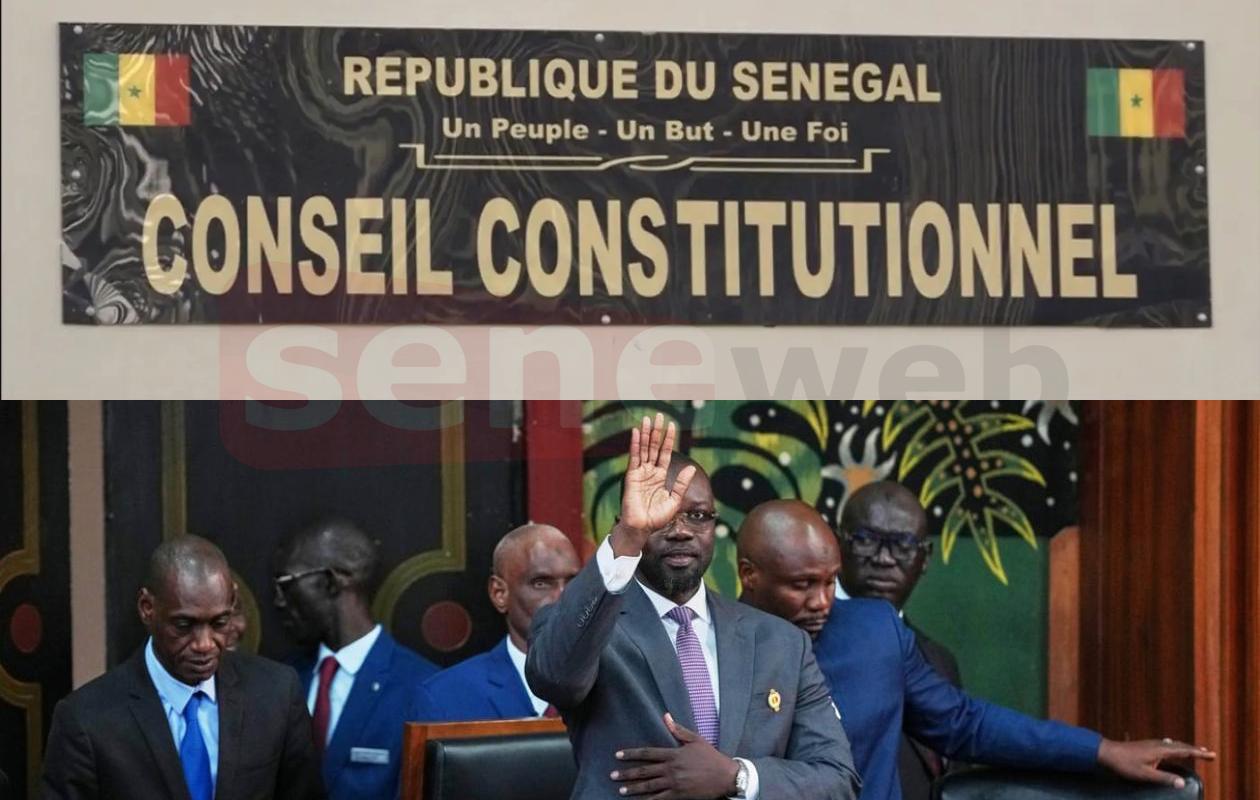
![[Exclusif] Révision de la Constitution : Le Conseil constitutionnel invalide le vote des députés](https://image.seneweb.com/content/news/2026-28-09//thumb_1260x800_6a4fdec36aa84_Tpa745ZYpD.jpg)









Commentaires (29)
Participer à la Discussion
Règles de la communauté
💡 Astuce : Utilisez des emojis depuis votre téléphone ou le module emoji ci-dessous. Cliquez sur GIF pour ajouter un GIF animé. Collez un lien X/Twitter, TikTok ou Instagram pour l'afficher automatiquement.
Se connecter
Commentez avec votre profil, votre photo, et soyez averti des réponses.