
Corps mutilés, droits bafoués : Ces voix qui se lèvent pour briser la tradition de l'excision (1/3)
With a prevalence reaching 78% in some regions, female genital mutilation (FGM) remains a public health and human rights emergency in Senegal. This report, published on the occasion of the International Day of Zero Tolerance for Female Genital Mutilation on February 6, takes us from the dust of Matam to the treatment centers of Kolda, to meet those fighting to break the cycle of violence. Between the implementation of the 1999 law and public declarations of abandonment, discover how the country is attempting to heal its past scars and forge a future free from pain.
Childhood memories don't easily align with female genital mutilation (FGM). For many women, FGM isn't a memory: it's a living scar, etched into their bodies, their sexuality, their motherhood, and their self-esteem. For a long time, their voices were silenced by fear, shame, or the weight of tradition. Today, they speak out. They were just days old, sometimes a few years old. They didn't understand the silence that followed, nor the brutal pain, nor the blood that was wiped away too quickly. Every year, approximately 4.3 million girls are at risk of undergoing FGM, according to UNICEF. Around 23% of women aged 15 to 49 have undergone FGM, with significant regional disparities reaching up to 78% in some areas like Kolda and Matam. Approximately 31% of girls are married before the age of 18, and 9% before the age of 15.
However, the practice is gradually fading away. 18% of the 1,673 communities that took part in Tostan's program in Senegal reported abandoning harmful practices, including female genital mutilation and child marriage.
It's important to remember that behind every statistic, there is a body. Behind every tradition, a life. Giving a voice to those who have suffered, those who have practiced, and those who provide care is perhaps the most crucial step in definitively breaking the cycle of mutilation.
This is a problem that has persisted over time and continues to resist legislation. Indeed, survivors of female genital mutilation (FGM) recount the unspeakable: the violence they endured, the physical aftereffects, the pain during intercourse, the complications during childbirth, but also the slow, sometimes incomplete, recovery. Their testimonies reveal the reality of an act presented as a rite, but experienced as mutilation with lasting consequences. Alongside them, former practitioners of FGM break the silence. Those who wielded the blade explain why they acted, what they didn't know then, and what they know now.
Their rare and unsettling testimonies reveal the social, economic, and cultural mechanisms that perpetuate the practice, but also the possible paths to abandoning it. The accounts are supported by precise statistical data, which show that female genital mutilation (FGM) is neither marginal nor uniform. It varies according to region, community, and generation. The figures remind us that, despite criminalization and awareness campaigns, thousands of girls remain exposed, often very young, sometimes from birth. Finally, the floor is given to an expert urological surgeon, a daily witness to the invisible damage caused by FGM. Dr. Idrissa Ngom explains, frankly, the medical complications: infections, hemorrhages, urinary problems, infertility, obstetric fistulas, and profound psychological suffering. He also discusses repair, its possibilities, its limitations, and the importance of humane care that respects women's wishes.
Female genital mutilation: education as a bulwark against persistent violence
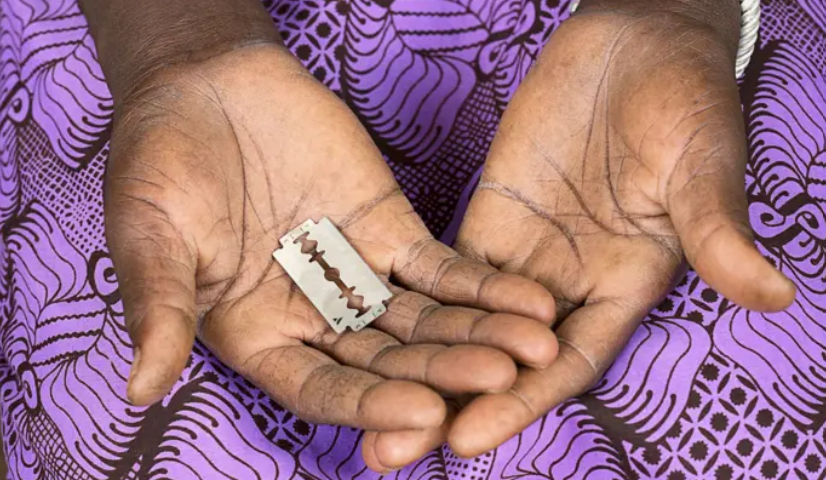
Despite laws and international commitments, female genital mutilation (FGM) continues to scar the bodies and lives of many girls and women in Senegal. Faced with this reality, human rights education is one of the most powerful tools for bringing about lasting change in attitudes and behaviors. This is the conviction of Aminata Diéye, head of the human rights education program at Amnesty International Senegal. “We cannot ask people to abandon a practice without raising awareness, training them, and enabling them to understand the consequences,” she asserts. For Amnesty International, the fight against FGM cannot be solely punitive. It must be preventive, educational, and community-based.
A legal framework exists, but it is still poorly adapted.
African legal texts are quite explicit. The African Charter on the Rights and Welfare of the Child, along with its additional protocols, clearly protects the physical integrity of women and girls. Female genital mutilation constitutes a serious violation of these fundamental rights. But a significant gap remains between legal norms and social realities. “If these practices were right, we wouldn’t hide them,” emphasizes Aminata Diéye, noting that the very secrecy reveals an awareness of the danger and the illegality.
School, the foundation of social change
For Amnesty International, schools are a strategic space. “Schools are a microcosm of society. If we want to change behaviors, we have to start at the grassroots level,” she explains. Teachers, students, and supervisors are trained through participatory approaches that encourage open dialogue, critical thinking, and the appropriation of human rights. Testimonies gathered in the field underscore the extent of the suffering endured. One teacher, unable to maintain eye contact during a training session, later confided privately that she herself was a survivor of female genital mutilation (FGM), an experience that had profoundly impacted her marriage. A young girl, ashamed and silent, sought help via text message for a serious complication stemming from FGM she underwent in childhood. “These realities exist and persist because the silence remains so pervasive,” emphasizes Aminata Diéye. Hence the importance of a multidisciplinary approach, involving healthcare professionals, legal experts, journalists, radio broadcasters, and community leaders, while avoiding the stigmatization of survivors. In some areas, the practice continues in concealed forms. The porous borders facilitate the movement of circumcisers from neighboring countries such as Guinea and Mauritania.
They operate quickly in villages before moving on, making the fight more complex. Yet, there are signs of hope. Teachers, fathers, and husbands are now openly opposing the excision of their daughters, even going so far as to contact the authorities to prevent any attempt.
Men, key players in change
“Men’s participation is essential,” insists Aminata Diéye. Amnesty International is focusing on positive masculinity, encouraging men to protect the rights and physical integrity of women and girls. “Concrete examples show that when men become firmly committed, even in families historically involved in the practice, female genital mutilation declines. Some even go so far as to break with long-standing family traditions to protect their children and grandchildren.”
Community commitments need strengthening
According to Aminata Diéye, public declarations of abandonment of FGM are first and foremost moral commitments. "It's not the signature that puts an end to mutilation, but the genuine will of the population to act," she explains. These moments, however, allow for the involvement of administrative and judicial authorities, remind people of the existence of the law, and reach audiences who have previously had little awareness. As Senegal embarks on a reform of its school curriculum, Aminata Diéye advocates for the clear and systematic integration of human rights, sexual and reproductive health, and the fight against gender-based violence. "Now is the time to act," she believes. For her, the fight against female genital mutilation will be won neither through fear nor silence, but through knowledge, dialogue, and education.
Declarations of abandonment
It was a special morning, unlike any other. The people of Loumbi Saranabé gathered in the square that traditionally hosts major ceremonies. Women, curious children, traditional chiefs, young people, dignitaries… Nearly 500 people converged on this isolated village in the commune of Oréfondé, in the heart of Matam. They had all come to witness a historic moment: the public declaration by 34 communities determined to abandon female genital mutilation (FGM) and child marriage. It is a major decision in a region where these practices remain deeply entrenched. According to the UNFPA, 67% of girls in Matam still undergo FGM. Nationally, nearly one in three girls is married before the age of 18, with rates exceeding 70% in some rural areas. “Here, for generations, these practices have been part of the social norms. Breaking with them requires courage, but above all, a collective decision,” explained a development worker present at the scene.
A village steeped in history and at the heart of Fulani traditions
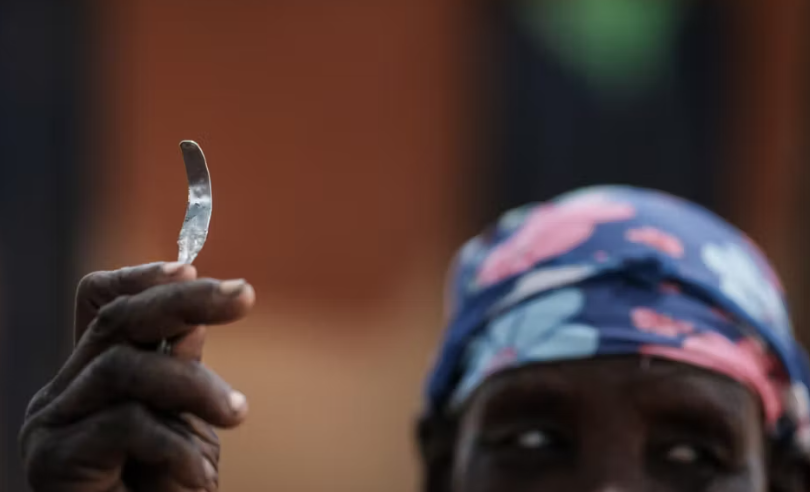
Located 65 km from Oréfondé, Loumbi Saranabé lies in an isolated basin, surrounded by pastures and seasonal water sources. Its name reflects this history: "Loumbi," the valley where several streams converge, and "Saranabé," a Fulani identity marker. Founded before colonization by Djidé Yoro Sow, the village now has 1,800 inhabitants spread across nine hamlets, who live primarily from livestock farming, millet cultivation, and small-scale trade. A primary school, a health post, a mosque, a borehole, and even a solar power plant structure this rural daily life where traditions still thrive in rhythm with the seasons.
"Loumbi is a place of memory. A village where the word of the elders counts, where any change must come through unity," emphasizes a notable, sitting under a large tree, a symbol of customary power.
A slow, patient transformation, driven by community education
It is no coincidence that Loumbi Saranabé is hosting this declaration today. Since 2013, the community has benefited from Tostan's Community Capacity Building Program (CCBP). Several cycles of education in local languages have enabled residents to work on health, education, governance, and especially human rights. The first few years were difficult. "There was very strong resistance, even intimidation," recalls Djiby Amadou Golloko, the supervisor. "Let's be clear: abandoning female genital mutilation (FGM) means challenging a social norm that has defined entire generations of women." But patience is paying off. In the Tostan classes, children learn to read, write, manage a development fund, and understand the right to health. They also discuss, in groups, the consequences of FGM: hemorrhaging, infections, chronic pain, and complications during childbirth.
Aissé Aliou Sow, now a community health worker, recounts: “Before, some women were afraid to go for prenatal care. Now, they come of their own accord. They know it’s their right. They understand the risks of female genital mutilation. And I can explain it to them in simple terms because I learned all of this in the Tostan classes.” At the primary school, the headmaster, Moussa Ndao, observes another change: “Before, many parents didn’t value school. Some didn’t even know how to write their names. Now, thanks to the program, adults themselves come to request classes. And eleven new students were enrolled in first grade this year, after an awareness campaign led by the Community Management Committee. This is unprecedented.”
The decisive role of the village chief: an assumed local leadership
Beneath his white turban, village chief Aliou Yarga Sow, 57, calmly walks toward the benches set up for the ceremony. He was the one who proposed that the declaration be held here in Loumbi Saranabé. A powerful symbolic act. “We have understood that female genital mutilation and child marriage destroy girls’ health. We have seen the consequences. So I consulted the elders, the imams, the women, the young people. Everyone was involved. This decision does not belong to one person, but to the entire community,” he says.
Around him, the women applaud. Some hold back tears. Others nod timidly: a mixture of pride, caution, and relief.
A mobilization supported by the State
Present alongside community leaders, the sub-prefect of Agnam, Babacar Diagne, hailed "a long-awaited day." He added, "The State will support the community in continuing this momentum. Abandoning these practices strengthens the role of women and opens up a development opportunity for the entire region." His words resonate with national statistics: 23% of Senegalese women have undergone female genital mutilation, and more than 4.3 million girls worldwide are still at risk each year. In Loumbi Saranabé, on this November 27, 2025, a community is rising up to reverse this trend.
A statement that changes everything
Speeches follow one after another, then comes the solemn moment. A document is read aloud, in French and Pular. Representatives of the 34 communities rise, one after another, to affirm their commitment. The sun is already high, but no one stirs. They listen. They nod. They applaud at length. This declaration is not a mere ceremony: it is a new social norm that is being inscribed in the collective memory. UNICEF studies have shown that ten years after such declarations, the practice of female genital mutilation falls by more than half in the villages that have committed. In Loumbi Saranabé, the inhabitants are convinced: "Today marks a turning point. We want a different future for our daughters," whispers a mother, holding her little girl by the hand. In this Fulani valley where traditions are as old as the village itself, a new voice has been raised.
Thanks to community education, collective courage, and local leadership, Loumbi Saranabé is becoming a model: a village where awareness translates into action, where norms are transformed, and where children gain new rights. The road ahead remains long, but on that day, in the golden dust of Matam, a new chapter begins.
Mariama Baldé (Kolda): "Female genital mutilation has not been practiced in our village since 2020."
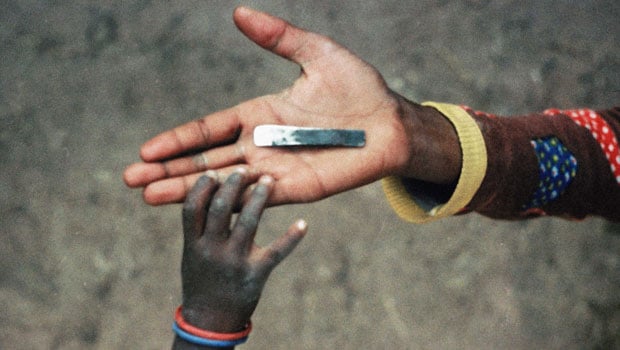
Mariama Baldé, a resident of the commune of Coumba Kara, in the Kolda region, affirms that the practice of excision has been totally abandoned in her locality since 2020, following awareness campaigns conducted by the NGO Tostan.
“I am not a circumcised woman and I want to make it clear that this practice no longer exists in our village since Tostan’s arrival. It is true that previously girls were circumcised, but thanks to the awareness sessions, we understood the dangers and decided to put a definitive end to it,” she explains.
According to her, the consequences of female genital mutilation (FGM) on women's health and lives have largely contributed to this change in behavior. "Women who have undergone FGM suffer greatly in their relationships. They experience serious complications during childbirth and a lack of sexual fulfillment. Many now regret this practice," Mariama Baldé emphasizes.
Faced with these findings, the community has taken firm measures. "Since 2020, female genital mutilation has been formally banned in our village. Through awareness campaigns, community meetings and alerts from the moment girls are born, we inform parents of the total ban on this practice," she explains.
Community liaisons and health workers have also been designated to report any attempts at female genital mutilation. "Anyone who engages in it will be brought to justice in Kolda, because female genital mutilation is a practice banned by law. It is a source of suffering and problems, and we want to spare our daughters the ordeal our mothers and grandmothers went through," she insists.
Mariama Baldé, a midwife by profession, also testifies to the persistent after-effects in circumcised women. "They often fall ill, especially during pregnancy and childbirth. Some have serious complications, to the point that I am sometimes forced to refer them to other health facilities in Kolda," she confides.
However, she sought to reassure people about the future: "Today, I can confirm that female genital mutilation is no longer practiced in Kolda. We sincerely thank the NGO Tostan, which opened our eyes. Since its intervention in the region, no one dares to perform female genital mutilation on girls anymore. We are seeing a real and gradual abandonment of this practice throughout the region."
Female genital mutilation in Senegal: what the law actually says
In Senegal, female genital mutilation has been prohibited for over twenty years. Law No. 99-05 of January 29, 1999, amending the Penal Code, included this practice in the register of criminal offenses, marking a major step forward in the protection of the rights of girls and women.
A firm and unambiguous ban
Article 299 bis of the Penal Code criminalizes all forms of female genital mutilation, whether total, partial, or performed under cultural, religious, or medical pretexts. The perpetrator faces a prison sentence of one to five years, a fine of up to 100,000 CFA francs, and harsher penalties if the victim is a minor or if the act results in serious injury or death. Furthermore, not only those who commit the act are punished, but also all those who incite, organize, or facilitate it.
The responsibility of families and leaders
Contrary to popular belief, the law does not target only the woman who performs the excision. Parents who ordered the act, accomplices, and even those who provide logistical support can be prosecuted. This broader liability aims to break the social chain that perpetuates the practice.
A law that is still too rarely applied
Despite its existence, prosecutions remain rare. The weight of social norms, the fear of exposing the family, or the desire to "protect" the perpetrators often discourage reporting. In some regions where the prevalence exceeds 70%, such as Kolda or Matam, female genital mutilation is still perceived as a necessary step towards marriage.
Criminalization has established a clear framework: female genital mutilation is not a tradition, it is a crime. But community education programs, public declarations of abandonment, and the commitment of religious and traditional leaders play a crucial role in bringing about lasting changes in attitudes. The results would be more visible if everyone got involved.
















Commentaires (11)
Participer à la Discussion
Règles de la communauté
💡 Astuce : Utilisez des emojis depuis votre téléphone ou le module emoji ci-dessous. Cliquez sur GIF pour ajouter un GIF animé. Collez un lien X/Twitter, TikTok ou Instagram pour l'afficher automatiquement.
Se connecter
Commentez avec votre profil, votre photo, et soyez averti des réponses.