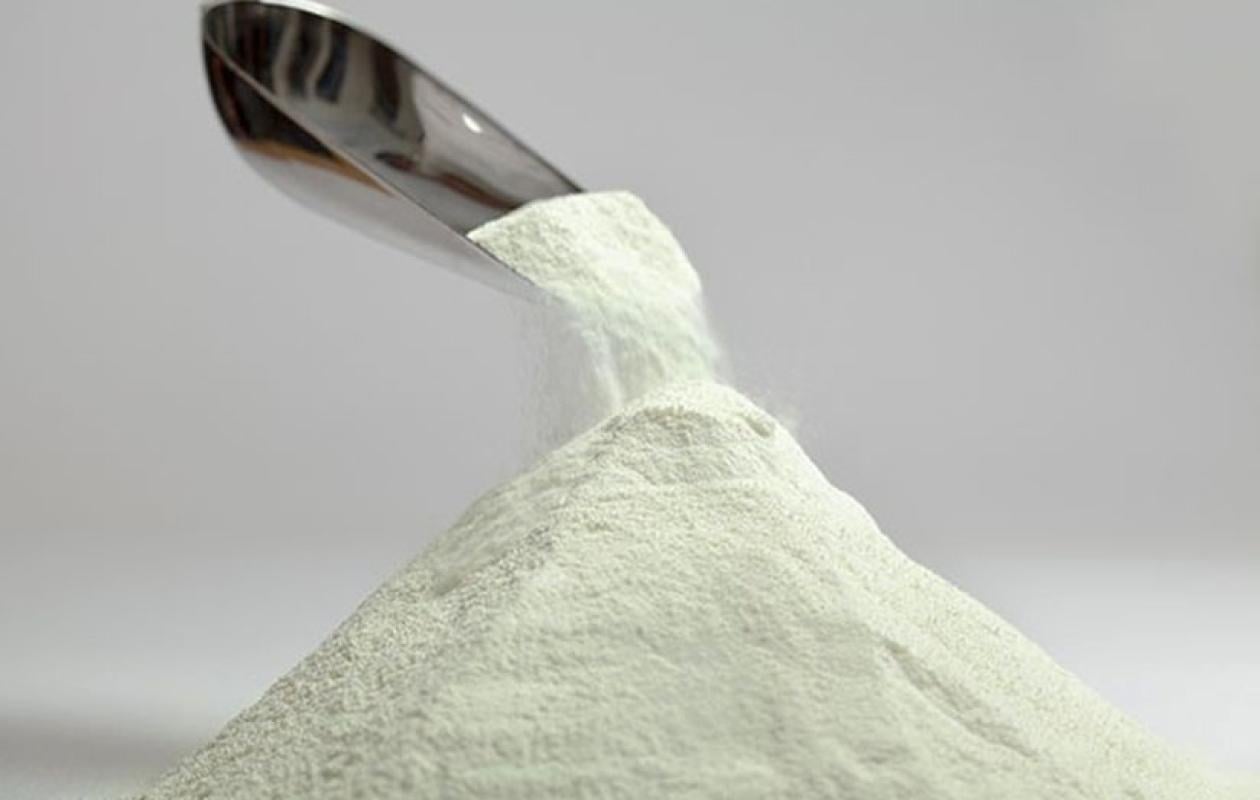
Le lait en poudre : Enquête sur un « faux lait » qui menace la santé publique
In Senegal, it's hard to escape powdered milk. Whether in morning Touba coffee, Ramadan ndogou, evening curdled milk, or commercial yogurts, it has become a staple of the diet. Accessible, inexpensive, and ubiquitous, it has established itself as a solution for millions of households.
But behind these sachets, sometimes sold for 100 FCFA, a controversy is brewing: disputed nutritional quality, competition with local production, and health concerns. Between economic necessity and suspicions of "fake milk," we delve into a market that has become strategic. (Report)
Immersion in a Ndogou meal under the sign of powdered milk in Ouakam
At 6 p.m. in Dakar, specifically in the Avion neighborhood, a working-class area of Ouakam, the Barry family is preparing to break their fast. In the courtyard of their house, a large white tablecloth is carefully spread on the ground. Around it, about fifteen family members take their places in a warm and convivial atmosphere.
Bowls of steaming sauce, bottles of cold drinks, dates, and bread are laid out for Ndogou. Next to them, one thing is never missing: several sachets of powdered milk, some open, some still sealed, ready to be mixed with coffee or hot water.
“Indeed, we consume a lot of powdered milk,” confirms Aïssatou Ciré Baldé, the mother of the family.
In this large household, each child receives their own individual sachet of powdered milk, purchased for just 100 francs at the shop. But sometimes, the family buys one-kilo bags to reduce expenses. "Whole milk remains the healthiest, but it's not affordable for us. Powdered milk is cheaper and available everywhere. If local milk were affordable, we would choose it without hesitation," explains Ibrahima Lamarana Barry.
Despite rumors about the quality, the Barry family continues to consume it.
“We have heard criticisms, health controversies, but we have no alternative. In any case, we are not the only ones who consume this milk because powdered milk is consumed by all Senegalese people. And besides, it is God who protects,” adds the father of the family.
A market dominated by imports
Like the Barrys, thousands of Senegalese households consume this product out of economic necessity rather than choice.
According to estimates from the Ministry of Agriculture, Senegal imports between 65 and 75 billion FCFA of milk powder each year, or nearly 900 million liters.
In 2022, approximately 166,000 tonnes of European milk powder were exported to the country.
In a context where local production covers less than half of the needs, imports remain the main source of supply. But this dependence weakens the national sector.
Local producers stifled by imports
Local producers are denouncing unfair competition. In West Africa, customs duties on imported dairy products hover around 5%, well below those in other African markets. These massive imports discourage investment in local production. “We have dairy cows, we produce pure milk directly from our cows, without any blending, and we sell a liter of milk for 1,000 francs. But Senegalese consumers prefer imported milk, which they consider cheaper. And with such low import taxes, competing with importing countries is almost impossible,” explains Ifra Sow, a local milk distributor in Mboro, with dismay.
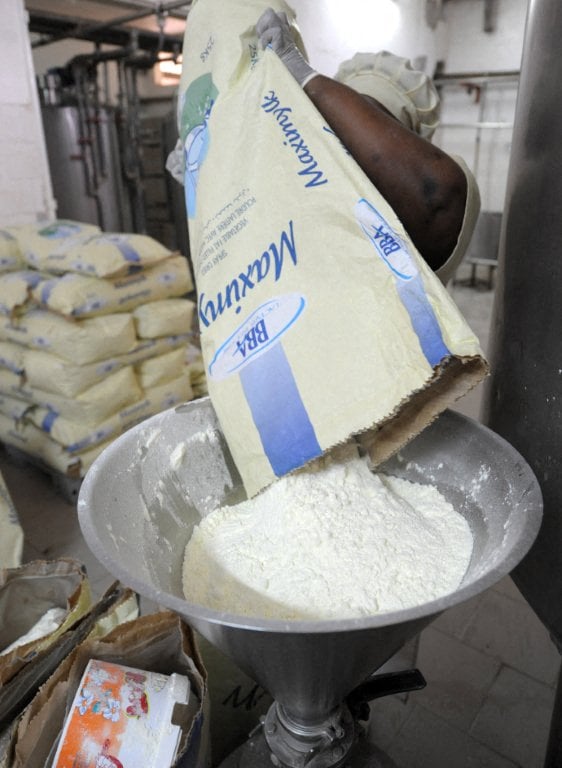
Some milk powders sold in West Africa are said to be made from skimmed milk to which vegetable fats, such as palm oil, are added.
Indeed, a documentary entitled "Train of Powder", broadcast on TV5MONDE, helped to popularize this debate by revealing the presence of these substitutes in several products.
Interviewed in this investigation, Professor Yvan Larondelle, a biochemistry and nutrition researcher in Belgium, states that several of the powders analyzed contained cheap vegetable fats that had replaced natural dairy fat.
"Substituting dairy fat can lead to a loss of certain nutrients because when you remove dairy fat, you lose certain nutrients such as vitamin D, and some oils used may contain industrial trans fatty acids," he explains.
Critics also denounce labels deemed insufficiently clear, fueling accusations of commercial deception.
Imported powdered milk: These health controversies are worrying nutritionists and consumer associations in Senegal
Faced with growing criticism of the quality of powdered milk widely consumed by Senegalese households, nutritionists and Senegalese consumer protection organizations are raising concerns about potential risks associated with this imported product, including excess sugar, the use of substitute fats and a nutritional value sometimes deemed insufficient.
For Senegalese nutritionist Fatma Guèye, it is essential to distinguish between two realities.
The first concerns industrially produced milk preparations: these are skimmed milk to which vegetable fats (VFs) are added, sometimes sugar, particularly in the form of maltodextrin, as well as additives such as soy lecithin. These products are permitted, but their nutritional value remains lower than that of whole milk.
The second category, which she considers more worrying, is that of artisanal “fake milk”, a fraudulent product made from cassava or corn starch and containing no milk protein.
“This is more worrying because this fake milk contains no dairy products. Consumers think they are buying protein and calcium, but in reality, they are mainly buying sugar derived from cassava. It’s deception. A product whose milk fat has been replaced by vegetable fat should not be called milk, but a dairy preparation. Images of cows on packaging often mislead consumers, even though these products are mostly composed of vegetable fat,” she explains.
Between industrial milk preparations and artisanal fake milk, the term "milk" covers very different realities in Senegal.
While the former fall under a legal framework but remain nutritionally less interesting, the latter constitutes fraud that can represent a danger to public health, particularly for children and vulnerable people.
Faced with this situation, the specialist warns against the risks associated with regularly consuming products low in nutrients.
“Vegetable fats do not provide the same benefits as dairy fat. Excessive consumption of saturated vegetable fats can be associated with cardiovascular disease or obesity. Infants are particularly vulnerable to deficiencies, and in people with diabetes, the presence of sugars and additives can unbalance the diet,” she explains.
The expert finally argues for a return to the consumption of local milk, which she considers a healthier alternative.
"Local milk has a naturally complete nutritional profile. It is rich in protein, casein and whey, and contains animal fats, plenty of calcium and few or no additives."
On the side of the Consumers Association of Senegal, (ASCOSEN), the concern is real.
“Senegalese consumers should not be second-class consumers. We must not become the dumping ground for other markets,” laments Momar Ndao, president of the association, who insists on the need to strengthen the capacities of the national laboratory and stricter import controls.
The local supply chain: a lever for food sovereignty
In Momar Ndao's view, a lasting break from dependence on imports requires a change of approach: encouraging local consumption while strengthening state support for Senegalese producers.
He emphasizes that the country has real potential in dairy production. Initiatives already exist, such as La Laiterie du Berger, which collects and processes milk produced primarily by Fulani herders. According to him, this model demonstrates that it is possible to structure a viable national sector, even if these experiences are still insufficient on a national scale.
To achieve this, he recommends several concrete actions: increasing the number of collection and processing units, supporting the creation of businesses capable of buying milk from farmers in pastoral areas, and improving livestock farming conditions through access to animal feed, technical training, and financing.
A call to consumers
Addressing Senegalese citizens, the consumer advocate emphasizes the importance of consumer choice.
He encourages Senegalese people to prioritize local products, believing that every purchase is both an economic and civic act. Consuming Senegalese products, he explains, helps strengthen the national economy while also contributing to the protection of public health.
He also calls on the authorities to put in place a strong policy to support local producers.
In Senegal, imported powdered milk has become an essential product due to its affordability and widespread availability, meeting the needs of households with limited purchasing power. However, its use raises issues that extend beyond simple nutrition, impacting public health, the survival of the local dairy sector, and food sovereignty.
Between the need for consumers, the challenge for producers and the responsibility for the authorities, the central question remains: how to guarantee affordable milk without compromising the quality or the future of local production?

























Commentaires (22)
Participer à la Discussion
Règles de la communauté :
💡 Astuce : Utilisez des emojis depuis votre téléphone ou le module emoji ci-dessous. Cliquez sur GIF pour ajouter un GIF animé. Collez un lien X/Twitter, TikTok ou Instagram pour l'afficher automatiquement.