Adaptation climatique : Les acteurs appellent à des mécanismes endogènes face à la complexité des financements internationaux
The tightening of conditions for access to international climate finance is now pushing African states and local actors to rethink mechanisms for supporting climate adaptation.
Indeed, in a context where the least developed countries (LDCs) remain among the most exposed to the effects of climate change despite their low responsibility in global emissions, the actors gathered in Saly stressed the urgency of a change of approach, placing territories and populations at the heart of adaptation strategies.
Thus, within the framework of the 2nd National Forum on Locally Led Adaptation (LLA), ENDA Énergie, in collaboration with the Ministry of the Environment and Ecological Transition through the Directorate of Climate Change, Ecological Transition and Green Finance, brought together experts, local authorities, community organizations and public authorities to exchange views on the challenges related to climate adaptation and the governance of financing.
The stakeholders therefore advocated for the development of endogenous financing solutions that are more accessible to vulnerable populations.

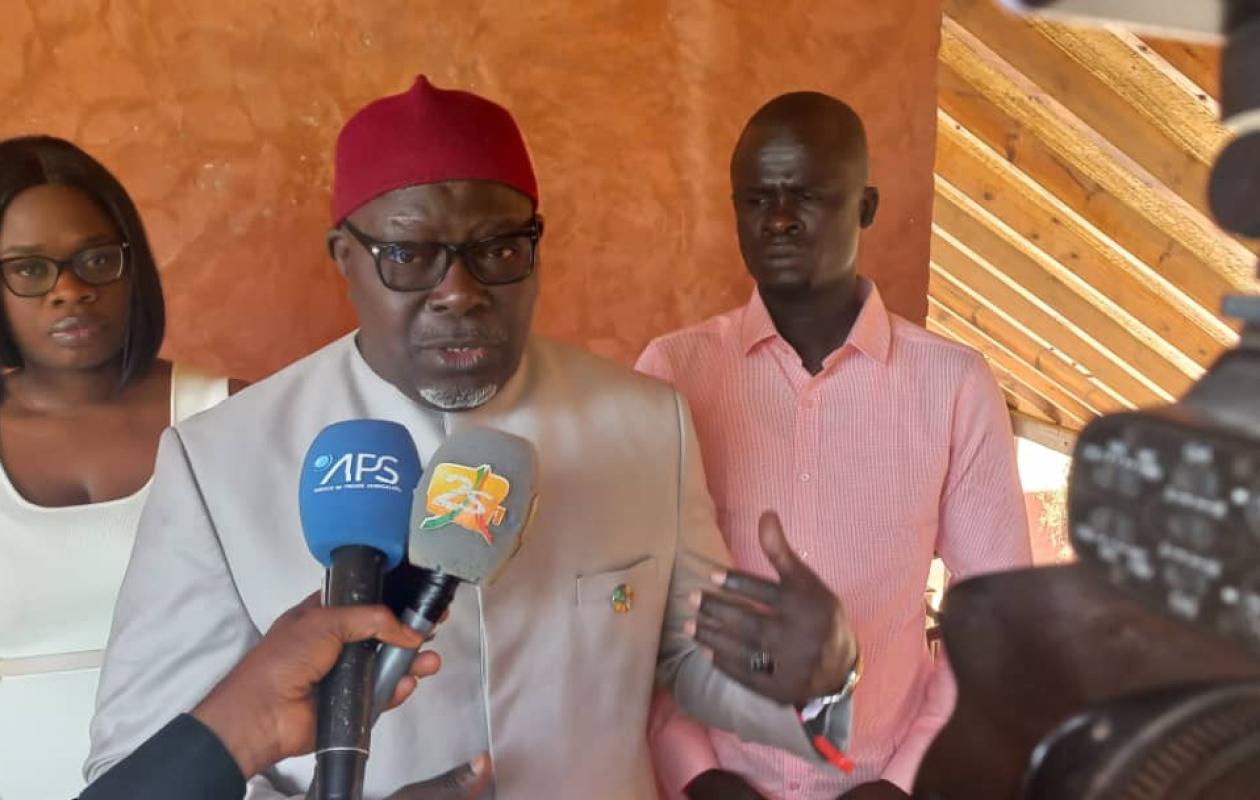
For Issa Sarr, project manager at Enda Énergie, the main challenge today is to find sustainable alternatives in the face of the growing difficulty of accessing international resources dedicated to climate.
"Climate finance is becoming increasingly difficult to obtain. Our states and actors must now consider developing endogenous mechanisms for financing adaptation to climate change. On the financial level, we must consider financial mechanisms that take into account different approaches depending on the scales, but also depending on the actors. Depending on the scales, we work with the local level; how should community actors access financing?" he said.
According to him, financial solutions must now be considered at multiple levels. At the local level, communities must have direct access to funding tailored to their specific circumstances.
At the territorial level, local authorities need resources to implement their climate plan, while at the national level, states must strengthen the mechanisms and funding mechanisms capable of supporting sectoral adaptation policies.
The forum is part of the international Local Led Adaptation (LLA) program, launched in 2021 to promote community-led climate adaptation. This movement, now supported by more than 130 international organizations, is based on eight principles aimed at decentralizing decision-making, strengthening local capacities, and fostering better collaboration among stakeholders.
As a member of the National Committee on Climate Change, Antoine Faye stressed the need to territorialize climate policies in order to better take into account the specific vulnerabilities of each geographical area.
"The impacts of climate change are not the same everywhere. In coastal areas, populations face marine erosion, while in the Ferlo, the problems are different," he explained.
The consultant also denounced the limitations of the current architecture of international financing. He specifically mentioned the difficulties faced by local authorities in accessing international climate funds such as the Green Climate Fund, whose minimum funding amounts remain largely beyond the reach of local projects.
"The smallest grant from the Green Climate Fund can reach several million dollars. No local authority has the technical and financial resources to set up this type of project on its own," he stressed.
Beyond international funding, participants highlighted the importance of exploring innovative solutions, such as climate insurance mechanisms, territorial funds, or national financial instruments capable of directly supporting local adaptation initiatives.
The organizers' ambition is therefore to lay the foundations for a national framework for coordinating adaptation initiatives, but also for more inclusive climate governance, enabling local communities to play a central role in defining and implementing climate policies.























Commentaires (0)
Participer à la Discussion
Règles de la communauté
💡 Astuce : Utilisez des emojis depuis votre téléphone ou le module emoji ci-dessous. Cliquez sur GIF pour ajouter un GIF animé. Collez un lien X/Twitter, TikTok ou Instagram pour l'afficher automatiquement.
Se connecter
Commentez avec votre profil, votre photo, et soyez averti des réponses.