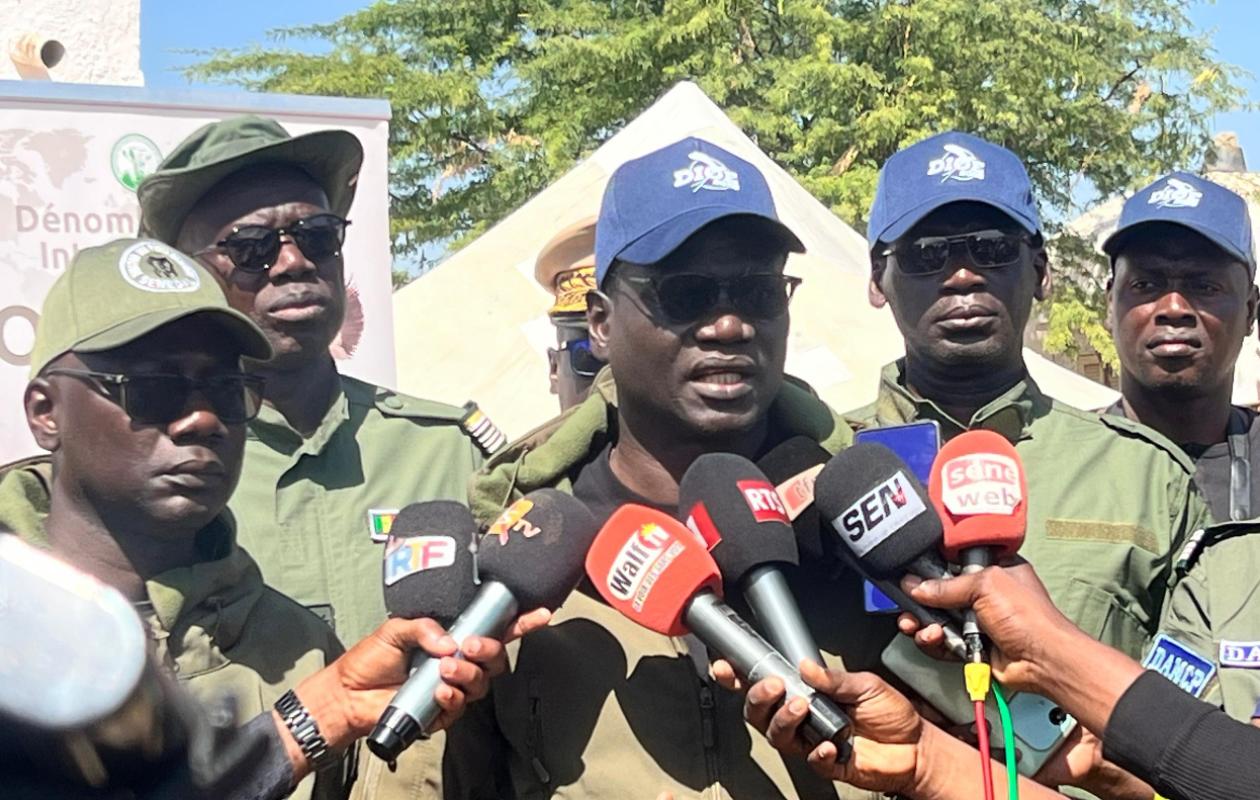
Dénombrement international des oiseaux d’eau : Le Dr Abdourahmane Diouf met en lumière l'importance du parc national du Djoudj
To mark World Waterbird Day (WWD), celebrated on January 15, 2026, Senegal mobilized authorities and experts at Djoudj National Park. This large-scale scientific operation aimed to better understand the status of bird populations and strengthen the protection of this World Heritage site.
Like many countries around the world, Senegal celebrated this day. For this edition, the featured bird is the red-billed tropicbird (Phaethon aethereus), an emblematic species. The event takes place simultaneously in 143 countries, mobilizing experts, authorities, and biodiversity enthusiasts.
In Senegal, the Minister of the Environment and Ecological Transition, Dr. Abdourrahmane Diouf, chose Djoudj National Park as the main site for this activity. Among the 37 sites identified nationwide, spread across nearly 219 sectors, this ecological gem in the north of the country hosted the ministerial delegation. The objective of the census is clear: to collect reliable ecological and biological data, particularly on the size and evolution of bird populations and the health of their habitats.
"We are here to enable Senegal to have accurate information on the number of waterbirds and also to contribute to the count on an international scale," the minister explained.
Abdourrahmane Diouf took the opportunity to highlight the strategic importance of the Djoudj park, which covers nearly 22,000 hectares, including more than 4,000 hectares of bodies of water.
According to him, this represents more than 50% of aquatic surface area and approximately 40% of emerged land, illustrating the immense ecological potential of the site.
However, the minister acknowledged that while considerable efforts have been made in conservation, development remains lagging behind. "As much as we have progressed on conservation, we are still behind in the sustainable exploitation and development of these resources," he lamented.
To address this, he announced the upcoming implementation of a public-private partnership model. This mechanism will allow the State to maintain its role as guarantor of environmental protection, while offering the private sector the opportunity to sustainably exploit the park's natural resources.
With nearly 22,000 individuals recorded, Djoudj National Park remains one of the most important breeding sites for waterbirds in West Africa. "It is a privileged area for reproduction, particularly for the white pelican, but also for many migratory species from all corners of the world," the minister emphasized.
Aware of the challenges involved in preserving this natural heritage, the government has made significant investments to improve working conditions for park rangers. "We are currently building four ranger stations and a command post. We hope to complete them before the winter season to provide better working conditions for our staff," he explained.
Abdourrahmane Diouf invited the public to discover this exceptional site. He believes that the Djoudj National Park possesses remarkable tourism and ecological potential, around which the State will continue to invest to make it a benchmark of international standards.























Commentaires (4)
Participer à la Discussion
Règles de la communauté :
💡 Astuce : Utilisez des emojis depuis votre téléphone ou le module emoji ci-dessous. Cliquez sur GIF pour ajouter un GIF animé. Collez un lien X/Twitter, TikTok ou Instagram pour l'afficher automatiquement.