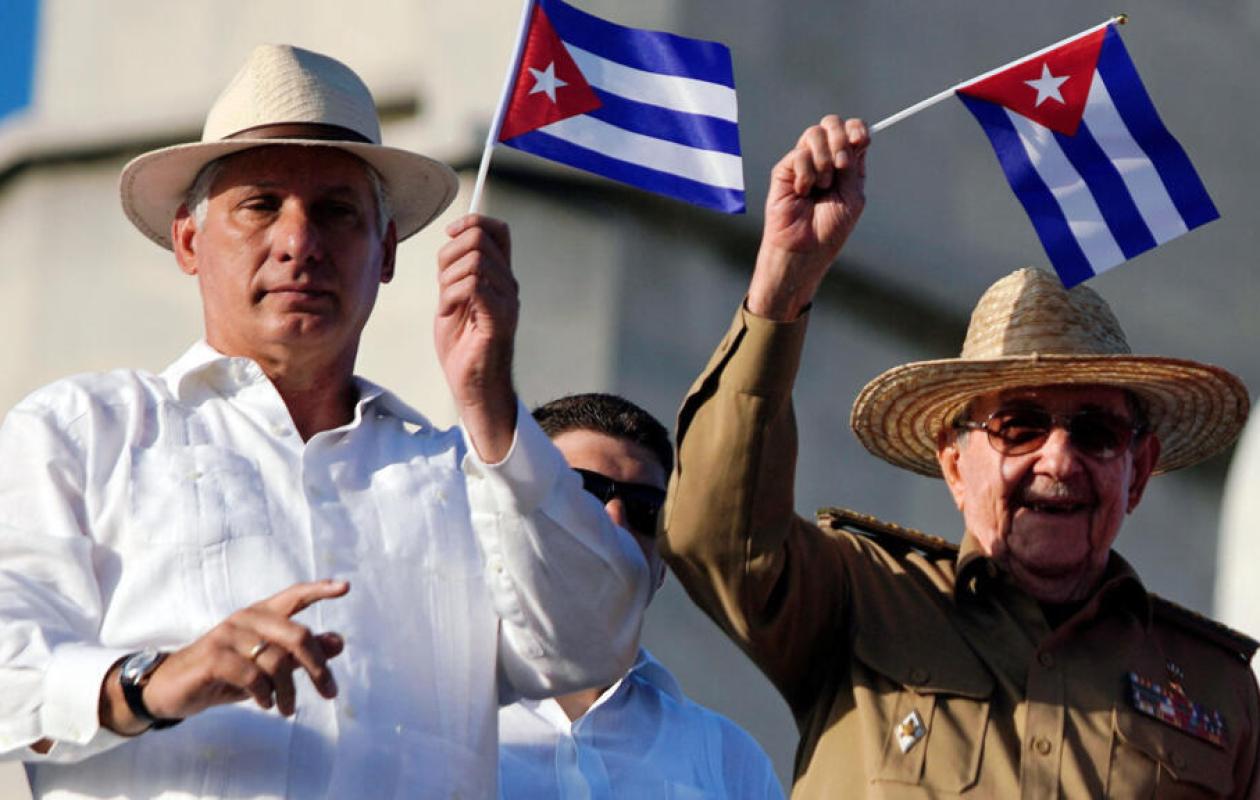
Cuba: le président Diaz-Canel et plusieurs personnalités du régime sous sanctions américaines
The US government intensified its pressure on Cuba on Thursday, June 4, by imposing economic sanctions on several Cuban figures, including President Miguel Diaz-Canel and members of the Castro family. Washington is ramping up its measures and threats in an attempt to bring down the Cuban regime, whose downfall President Trump has promised.
In Cuba, President Miguel Diaz-Canel had already been subject to sanctions since July 2025 by US diplomacy, which accuses him of acts of repression against protesters in 2021.
Raul Castro's son and one of his grandsons, who no longer holds an official position but remains, at 95, at the heart of decisions concerning the future of the communist island, are also on the US Treasury Department's blacklist.
The only son of the former leader, Alejandro Castro Espín, was a key player in the secret negotiations between Cuba and the United States that led to the restoration of diplomatic relations between the two countries in 2015. The Cuban president's wife, Lis Cuesta, and her son are also sanctioned, along with the Ministry of the Revolutionary Armed Forces.
These sanctions "aim to strengthen the blockade measures and the climate of conflict between Cuba and the United States," denounced the Cuban head of state on X.
"The aggression and perversity of the Yankee government will clash with our decision to face the worst-case scenarios and resist the imperial attack," added Miguel Diaz-Canel, as the American president reiterated on June 4 that he wanted to "deal with" the communist island soon.
The Treasury Department had already recently sanctioned Cuban ministers, several generals, and intelligence services. When Washington imposes sanctions on individuals and organizations, any assets they may hold in the United States are frozen. American companies and citizens are prohibited from doing business with them, under penalty of being subjected to sanctions themselves.
Another grandson of Raul Castro, Raul Guillermo Rodriguez Castro, who according to American media plays a role in the difficult talks that have been ongoing for several months between the two countries, is however not among the personalities subject to the restrictive measures.
Cuba's economic interests are being targeted
"The entities and individuals designated today direct or finance the regime and its efforts to mobilize its radical revolutionary movements in the United States," said U.S. Secretary of State Marco Rubio, of Cuban origin and a fierce opponent of the Havana government, in a statement.
Marco Rubio said he was continuing "the dismantling of the military cartel that has seized all economic power in Cuba for the benefit of a small circle of regime elites," referring to the conglomerate of companies linked to the Cuban military, which was sanctioned by Washington in early May. This "Group of Enterprises," known as GAE.SA or Gaesa, has been weakened in recent weeks by the successive withdrawal of several foreign partners from the island of 9.6 million inhabitants.
Newsletter
Receive all the latest international news directly in your inbox
I subscribe
Fearing US sanctions, several international hotel groups have withdrawn from managing nearly a hundred tourist establishments on the island, most of them associated with Gaesa. And Visa and Mastercard payments have had to be suspended.
Ongoing tensions in 2026
Relations between the United States and Cuba, under embargo since 1962, have become considerably strained since the beginning of the year. Washington has imposed a de facto oil blockade on the island, issued waves of sanctions against Cuban companies and officials, and indicted Raul Castro in a case dating back to 1996.
Donald Trump believes that the island, located 150 kilometers off the coast of Florida, represents "an extraordinary threat" to US national security. The American president has repeatedly threatened to "take control" of it.
Asked on Thursday, June 4, in the Oval Office at the White House whether these sanctions were aimed at causing the collapse of the Cuban economy, Donald Trump said he simply wanted "it to be a well-run country that can feed its people." "The country is starving... it has no money, it has nothing. It has a beautiful piece of land. We could have some great tourist resorts there," the American president continued. "And we're going to take care of that as soon as we're done. I like to do one thing at a time, and we're going to take care of the Islamic Republic of Iran," he added.






Commentaires (0)
Participer à la Discussion
Règles de la communauté :
💡 Astuce : Utilisez des emojis depuis votre téléphone ou le module emoji ci-dessous. Cliquez sur GIF pour ajouter un GIF animé. Collez un lien X/Twitter, TikTok ou Instagram pour l'afficher automatiquement.