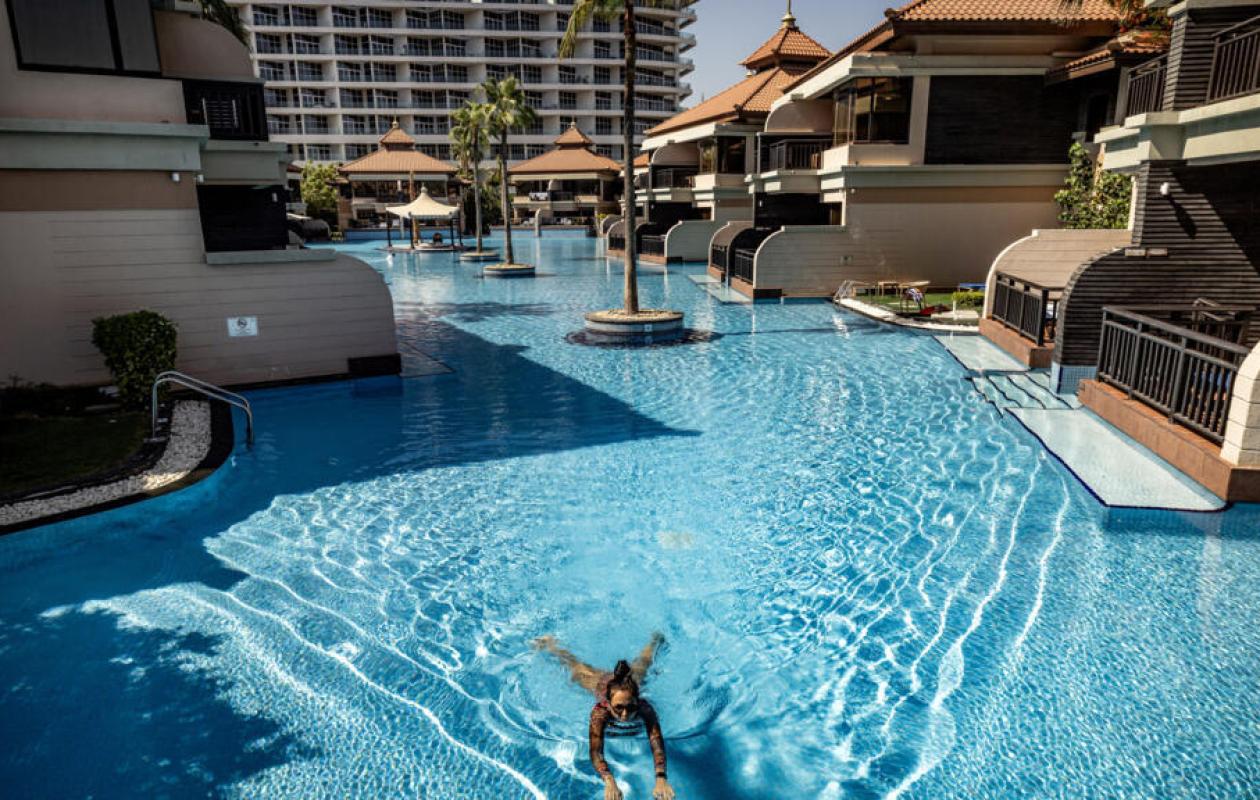
Faute de touristes, les hôtels de luxe de Dubaï cassent les prix pour les locaux
Villas on stilts, infinity pools and private beaches at bargain prices: due to a lack of tourists, Dubai hotels are turning to a local clientele, who are affording a luxury that has become accessible in the midst of war in the Middle East.
On the artificial island of Palm Jumeirah, a symbol of the Gulf emirate's opulence, the vast lobbies of five-star hotels see a bit of activity on weekends and holidays, thanks to the influx of residents from the United Arab Emirates. These guests, Emiratis and expatriates—approximately 90% of the population is foreign—were drawn in by unprecedented promotions.
"I had never slept in a hotel in Palm, because the prices were exorbitant," says Fadi Iskandarani, a Lebanese doctor who has been living in Dubai for five years, who has just spent a weekend with his partner in one of the many seaside resorts on the palm-shaped island.
The atmosphere was certainly not that of its usual peak, with several floors closed due to a lack of customers. But thanks to a rate reserved for residents, four times lower than the usual price, "luxury in Dubai has become affordable," he rejoiced.
- A breath of fresh air -
With 19.5 million tourists in 2025, Dubai has established itself as one of the region's leading destinations. Its 827 hotels – including 173 five-star establishments – boasted an average occupancy rate of over 80%.
But the war launched on February 28 by Israel and the United States against Iran, which has spread to the Gulf, has shaken its image of stability.
Since the ceasefire came into effect on April 8, some tourists have returned, but the movement remains limited, says Michael Robinson, director of the Anantara The Palm hotel, another establishment on the island.
With its villas on stilts, its artificial lagoons and its decor inspired by Thailand, the hotel is also full of local residents, offering them discounts that can go up to 50%.
"On weekends, especially Saturday nights, we generally exceed 90% occupancy," says Mr. Robinson. From Monday to Thursday, the rate drops back to 20 or 30%.
This new clientele is a breath of fresh air for hotels, even if it also brings its share of logistical challenges, particularly regarding parking, as most residents arrive by car. But it doesn't completely fill the void.
"The big difference is the length of stays," he points out. "Local customers come for one or two nights (...) whereas international tourists stayed for a week, ten days, sometimes two weeks."
For now, thanks to "staycations" (local stays), the Anantara The Palm assures that it remains profitable without having made any layoffs.
- "Fewer staycations" -
But how long can this model last? "If the situation continues into July, when school holidays begin and many families leave Dubai for the summer, there will be less demand for staycations," acknowledges Mr. Robinson.
Some hotels have chosen to take advantage of the slowdown in business to close temporarily and undertake renovations, like the iconic Burj Al Arab palace. Others have cut staff or salaries, particularly establishments in the city center, which are more dependent on business tourism.
An employee of one of these establishments, who is prohibited from speaking publicly, told AFP that his salary had been reduced by 40%.
Another, an employee at a luxury hotel in the neighbouring emirate of Abu Dhabi, was asked to take two months of unpaid leave, before recently being called back.
Michael Robinson, for his part, wants to believe in a quick rebound.
"If there is some form of agreement in the coming weeks, I think tourists will return faster than we imagine," he hopes.






















Commentaires (6)
Participer à la Discussion
Règles de la communauté :
💡 Astuce : Utilisez des emojis depuis votre téléphone ou le module emoji ci-dessous. Cliquez sur GIF pour ajouter un GIF animé. Collez un lien X/Twitter, TikTok ou Instagram pour l'afficher automatiquement.