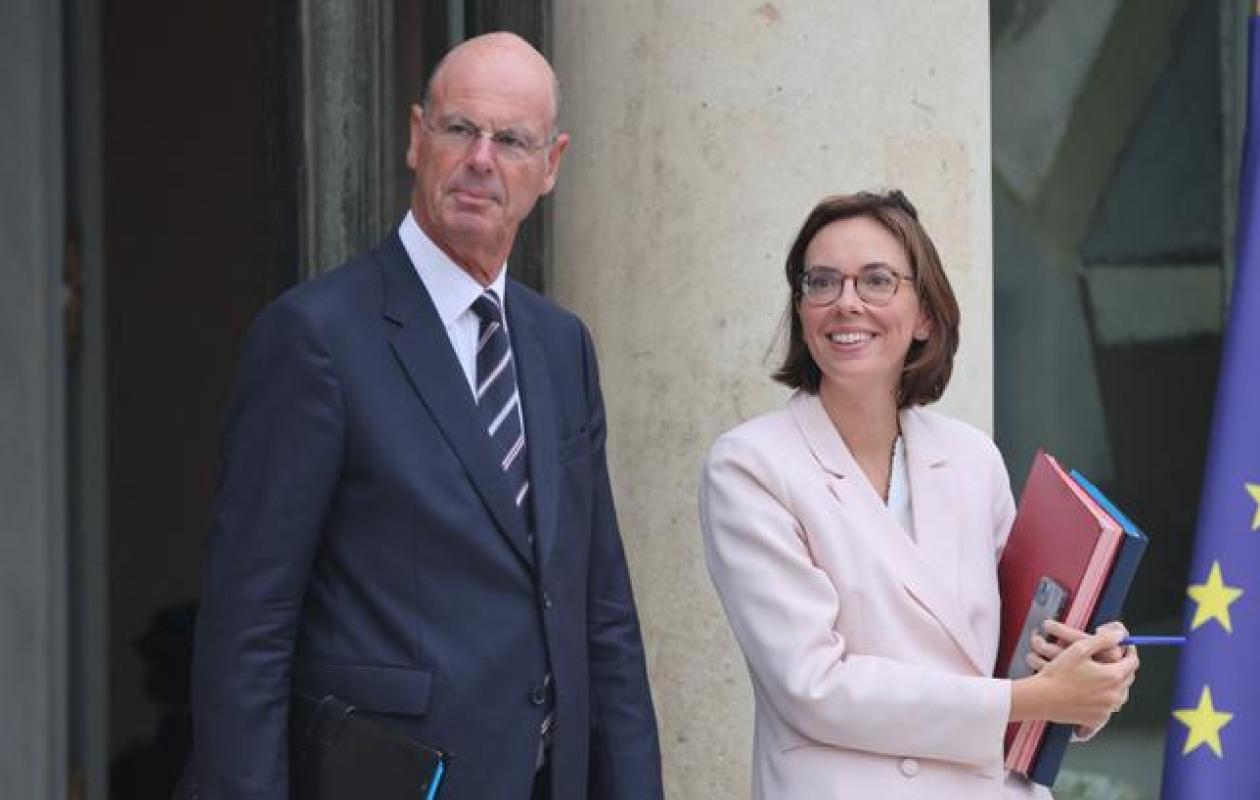
FRANCE: Le nombre inouï de millionnaires qui ne paient pas d’impôts sur le revenu (et qui contredit Montchalin)
Documents provided by the Ministry of Finance to members of parliament support the idea that a large number of the wealthiest manage to circumvent tax mechanisms.
The issue had pitted the Minister of Public Accounts, Amélie de Montchalin, against her former colleague at the Ministry of the Economy, Éric Lombard. The facts, revealed this Wednesday, February 18, appear to vindicate the latter and contradict the future president of the Court of Auditors. Documents provided by the Ministry of the Economy and Finance to members of parliament reveal that thousands of the wealthiest people in the country do not pay income tax.
The figures, first published by Le Monde, are staggering: in 2024, 18,525 tax households with assets exceeding €1.3 million (an estimated 186,000 households are subject to the real estate wealth tax) paid not a single cent in income tax. This figure drops to 13,335 if those who are not tax residents or who died during the year are excluded.
Documents reviewed by senators on the Finance Committee reveal another incongruity: the higher the wealth of millionaires, the greater the proportion of those who do not pay income tax. Among the 0.1% of households "with the largest real estate holdings," the proportion of households not paying income tax is 10.2% (2,500 households), while this figure rises to 14.9% (approximately 300 households) for the wealthiest 0.01% of households.
“It’s not true that tens of thousands of wealthy French people pay no income tax. There’s no document at the Ministry of Finance that shows this,” Amélie de Montchalin asserted on January 14th at the National Assembly. She was being questioned about statements made a few days earlier in Libération by Éric Lombard. “Among the wealthiest people, thousands have a reference tax income of zero. They pay no income tax! Instead of paying social security contributions on their salaries, they are paid by holding companies. These mechanisms are legal, but unfair,” the former minister pointed out.
The debate on wealth taxation will resume
A month later, the minister's entourage indicated that she would not comment on this data. The explanations are numerous and will be the subject of a Senate report to be published before the summer: there is the case (not quantified) of homeowners (often retirees) whose properties are valuable due to their location, but who have low incomes. There are also wealthy individuals whose income is not taxed (capital gains on their primary residence) or who benefit from tax credits and reductions that lower their reference tax income.
There remains the even more problematic (though legal) case of tax optimization, highlighted by Éric Lombard, where taxpayers are paid through holding companies to avoid increasing their household income. It was to address this reality that wealth taxation was a subject of debate during the budget preparation. The Zucman tax, championed by a large part of the left, was the most publicized example: it aimed to ensure that households with assets exceeding €100 million paid a minimum tax equal to 2% of those assets.
"Taxation of the rich will inevitably be a subject of the presidential campaign," Claude Raynal, the Socialist president of the Senate Finance Committee, told Le Monde.




![[EXCLUSIF] AIBD : Niang Kharagne Lo arrêté puis conduit à la BR de Faidherbe](https://image.seneweb.com/content/news/2026-08-18//thumb_1260x800_69961e7c2dd38_oh7b2BqrKZ.png)









Commentaires (3)
Participer à la Discussion
Règles de la communauté :
💡 Astuce : Utilisez des emojis depuis votre téléphone ou le module emoji ci-dessous. Cliquez sur GIF pour ajouter un GIF animé. Collez un lien X/Twitter, TikTok ou Instagram pour l'afficher automatiquement.