"Terre promise": des Israéliens rêvent de coloniser le sud du Liban
From her home in an Israeli settlement in the occupied West Bank, Anna Sloutskine closely follows Israeli operations in Lebanon. For her, as for others, this rekindles the dream of further expanding Israel's borders by establishing a presence in the south of the Land of the Cedars.
Anna Sloutskine, a 37-year-old biology researcher, co-founded the Uri Tzafon organization ("Awake, north wind," a passage from the Song of Songs in the Bible) in 2024, which now includes dozens of families, she told AFP.
Its members would like Israel's northern border to be pushed back to the Litani River, about 30 km north of the current demarcation line drawn by Israel in southern Lebanon, where the Israeli army now occupies what it presents as a buffer zone to protect northern Israel from fire from the Lebanese Islamist movement Hezbollah.
Despite a ceasefire, soldiers are razing houses and infrastructure.
One million Lebanese have been displaced within the country by Israeli operations.
While Israeli Foreign Minister Gideon Saar insists that his country has "no territorial ambitions" in Lebanon, and that the government in general has not provided any public political support to the movement to colonize the south of the country, Anna Sloutskine sees things differently.
"The idea is that the majority of the (Lebanese) population flees, that we move the border, not let this population return and that it remains part of the State of Israel," says this resident of the settlement of Karnei Shomron, in the northern West Bank, Palestinian territory occupied by Israel since 1967.
She created the movement in memory of her brother, a soldier killed in the Gaza Strip in 2024.
"He dreamed of settling in Lebanon," she confided. "He said he wanted to live in a place that was green in the summer and white in the winter."
Although the colonization of Lebanon remains a marginal dream, its supporters are convinced that the project is destined for a prosperous future, like what happened in the West Bank.
The expansion of settlements, considered illegal by the UN under international law, has accelerated there under the current government of Benjamin Netanyahu, some of whose ministers are themselves settlers and advocate the annexation of Palestinian territory.
According to Ms. Sloutskine, the settlement of southern Lebanon is essential to ensure Israel's security and to end the repeated clashes with Hezbollah.
"What the Israeli army is doing now is the first step," she says. It "enters, conquers, and clears. Then we must not withdraw, but settle in."
His movement has 900 subscribers on Telegram and 600 members on a WhatsApp group where invitations to online meetings and maps showing what the group presents as ancient Jewish settlements in Lebanon, dating back to time immemorial, are published.
Ori Plasse, a seasonal farm worker, joined the group in its early days, after having been actively involved in colonization in the West Bank and also in Gaza.
About a year and a half ago, this 51-year-old American man illegally entered Lebanon through an open border crossing.
His intention, he told AFP, was to set up a tent, plant trees and launch a movement "that would gain momentum".
He was quickly escorted out of the area by Israeli soldiers, but described the experience as "incredible".
"You feel like you're at home, like this is your country," says this resident of Sde Yaakov, in northern Israel.
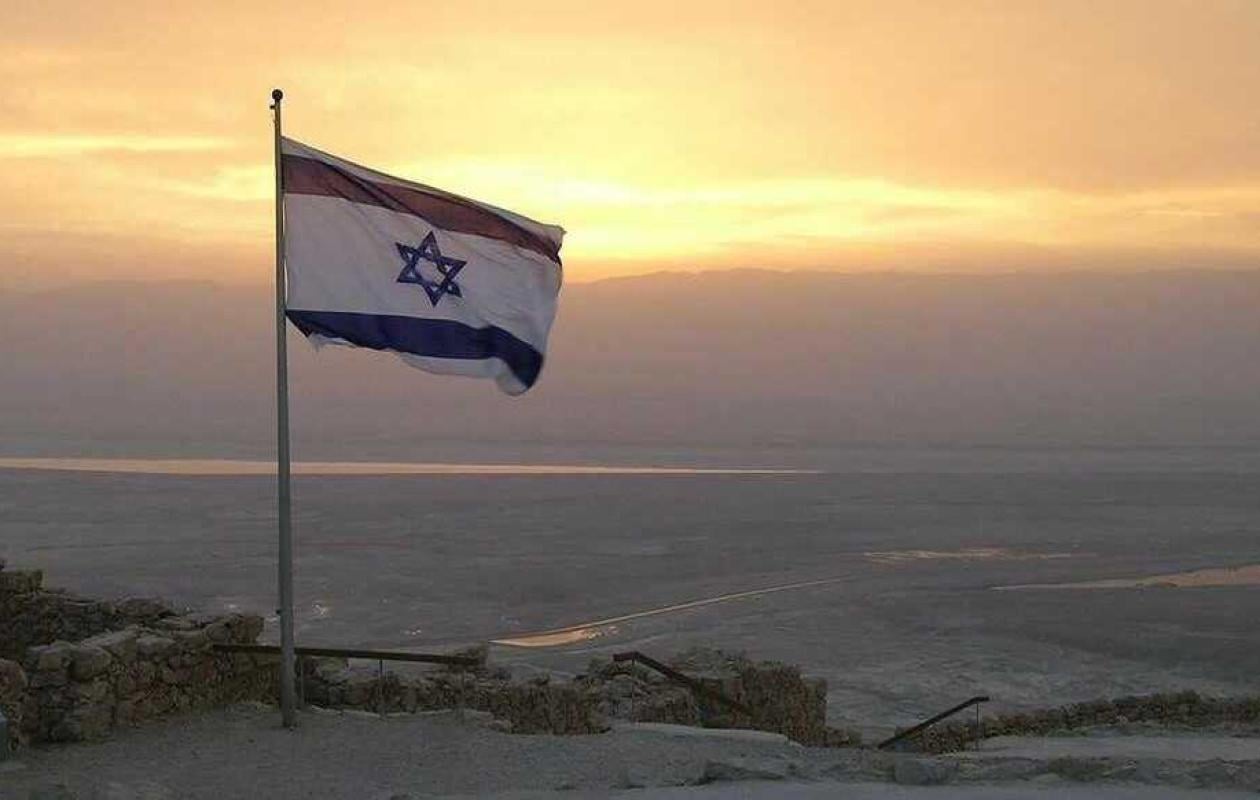
In February, Uri Tzafon organized a trip to plant trees, posting photos of smiling children alongside Israeli flags and signs erected near the border wall, an initiative strongly condemned by the army.
In his garden, Mr. Plasse enthusiastically opens an old container containing everything needed to create new settlements: mattresses, sleeping bags and plastic tarpaulins.
He also has a book with maps of Greater Biblical Israel, stretching from present-day Egypt to Iraq.
"Anyone who follows the teachings of the Torah (...) should know that the land of Israel is promised to us, roughly, from the Nile to the Euphrates River," he said.
With the parliamentary elections approaching, Uri Tzafon would like to obtain the support of political leaders, whose responses have so far remained "vague", says Ori Plasse.
For Anna Sloutskine, who recently met with the Minister of Environmental Protection Idit Silman, some deputies and ministers are in favor of them: "some say it openly, others in hushed tones, but there is certainly support".
AFP
























Commentaires (14)
Participer à la Discussion
Règles de la communauté :
💡 Astuce : Utilisez des emojis depuis votre téléphone ou le module emoji ci-dessous. Cliquez sur GIF pour ajouter un GIF animé. Collez un lien X/Twitter, TikTok ou Instagram pour l'afficher automatiquement.