
Affaire Pape Cheikh Diallo -Djiby Dramé et Cie : Qu’est-ce que la délégation judiciaire ?
In certain sensitive criminal cases, the investigating judge may delegate certain tasks to the police or the gendarmerie. However, this is not automatic. Many believe that delegating means withdrawing or losing control of the investigation. Yet, this is not the case. Judicial delegation is a legal mechanism that allows the judge to advance the investigation while remaining in charge of the case.
On Monday, February 9th, television presenter Pape Cheikh Diallo, singer Djiby Dramé, and others were sent to prison for criminal conspiracy, unnatural acts involving the intentional transmission of HIV/AIDS through unprotected sex, endangering the lives of others, and money laundering. Furthermore, the investigating judge ordered a judicial inquiry.
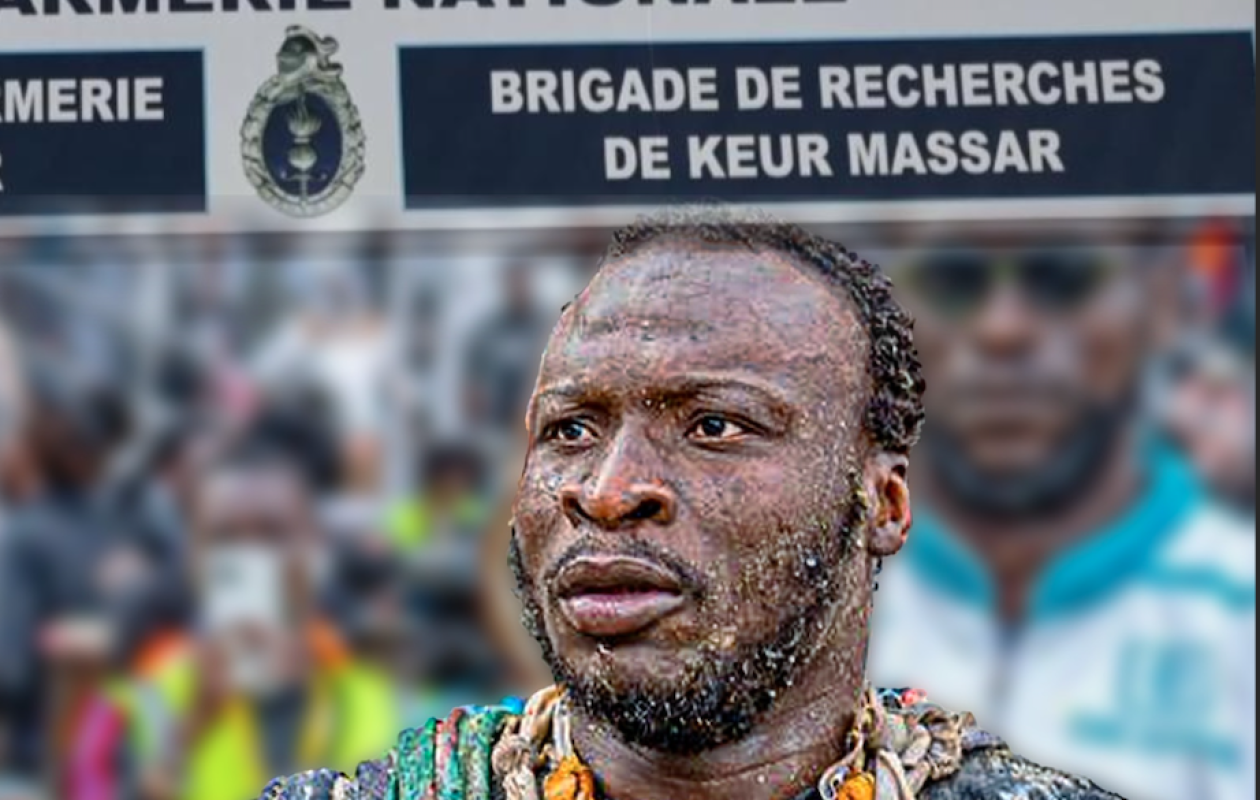
Having received the order, the gendarmes of the Keur Massar Research Brigade carried it out. Thus, three of the suspected homosexuals, namely Pape Cheikh Diallo, Djiby Dramé, and Doudou Lamine Dieng, were taken from their cells on Tuesday for further investigation.
So, is judicial delegation an abdication or simply an instrument of execution? The legal consultant, El Amath Thiam, has analyzed articles 72, 142 and following of the Code of Criminal Procedure.
According to the president of Justice Without Borders, "the analysis of the texts reveals an unambiguous answer: far from weakening the authority of the investigating magistrate, judicial delegation organizes it, rationalizes it and makes it compatible with the requirements of efficiency and protection of freedoms."
The judge remains in charge of the investigation.
Article 72 of the Code of Criminal Procedure affirms a fundamental principle which is "the investigating judge shall carry out all acts which he deems useful for the manifestation of the truth".
“This principle establishes the central role of the investigating magistrate in the judicial investigation phase. He is not simply an administrative supervisor. He is the legal director of the investigation. He guides the search for evidence, assesses its relevance, and verifies its legality. This position is essential. The investigating judge is neither an agent of the prosecution nor an adversary of the defense. His independence guarantees the balance of the criminal trial,” explains the legal expert.
However, El Amath Thiam points out that the practical realities of cases can be complex, geographically extensive, and technically demanding. He emphasizes that it would be illusory to believe that a single magistrate could personally carry out every investigative act. "This means one essential thing: the judge is in charge of the investigation. He decides on hearings, searches, expert assessments, and confrontations; he directs, structures, and controls. He works neither for the prosecution nor for the defense. He seeks the truth. An investigation can extend across several regions. It can require dozens of technical procedures. It can involve multiple physical checks. No magistrate can be everywhere. This is where judicial delegation comes in," he insisted.
The framework of the Judicial Delegation
But delegating is not the same as relinquishing authority. "Delegation is merely an instrument of execution," explains the president of Justice Without Borders. "The judge defines the actions to be taken, strictly limits their scope, and verifies the evidence gathered. He remains responsible for the entire procedure."
Article 142 of the Code of Criminal Procedure governs the terms of this delegation. It authorizes the judge to request, either by letter rogatory, another territorially competent magistrate, or by judicial delegation, a judicial police officer to carry out specific acts.
Each magistrate operates within a defined jurisdiction. When actions must be taken outside this jurisdiction, a letter rogatory ensures legality and respect for jurisdictional competence. This is a mechanism for judicial cooperation, not a circumvention of the rules.
A specific mission, under control
Judicial delegation allows a judge to entrust the execution of certain acts to judicial police officers. "The term 'judicial delegation' is often misunderstood. It does not mean a transfer of power. It means execution under supervision," emphasizes El Amath Thiam.
The judge defines the mission, specifies the offense in question, outlines the authorized actions, and verifies the results obtained. The police do not act arbitrarily; they act on a warrant.
The law requires that the delegation be in writing, dated, signed, bear the magistrate's seal, and be strictly limited to actions related to the offense being prosecuted. "In other words, it's not a general authorization to investigate. It's a specific mission."
The protection of rights is at the heart of the system
Responsibility remains with the courts. Above all, the law sets substantial limits designed to protect fundamental rights. Judicial police officers may not interrogate the accused or conduct confrontations with them. These actions remain the exclusive responsibility of the investigating judge.
Even in exceptional circumstances related to national security, where delegation can be exercised across the entire territory in case of emergency, formalities remain. "Emergency does not abolish legality; it reinforces its requirements," says the legal expert.
It thus appears that judicial delegation constitutes an organizational mechanism, not a transfer of sovereignty. The analysis of Articles 72 and 142 et seq. of the Code of Criminal Procedure relating to judicial delegation is not an abdication of the investigating judge. It is a procedural technique designed to reconcile two fundamental imperatives: the effectiveness of the search for truth and the protection of individual liberties,” concludes El Amath Thiam. He further clarifies: “The judge delegates the execution, never the responsibility.”









![[EXCLUSIF] Le lutteur Ama Baldé arrêté par la BR de Keur Massar](https://image.seneweb.com/content/news/2026-22-27//thumb_1260x800_6a174f4ee60cb_SOgkg3Pd2C.png)












Commentaires (6)
Participer à la Discussion
Règles de la communauté :
💡 Astuce : Utilisez des emojis depuis votre téléphone ou le module emoji ci-dessous. Cliquez sur GIF pour ajouter un GIF animé. Collez un lien X/Twitter, TikTok ou Instagram pour l'afficher automatiquement.