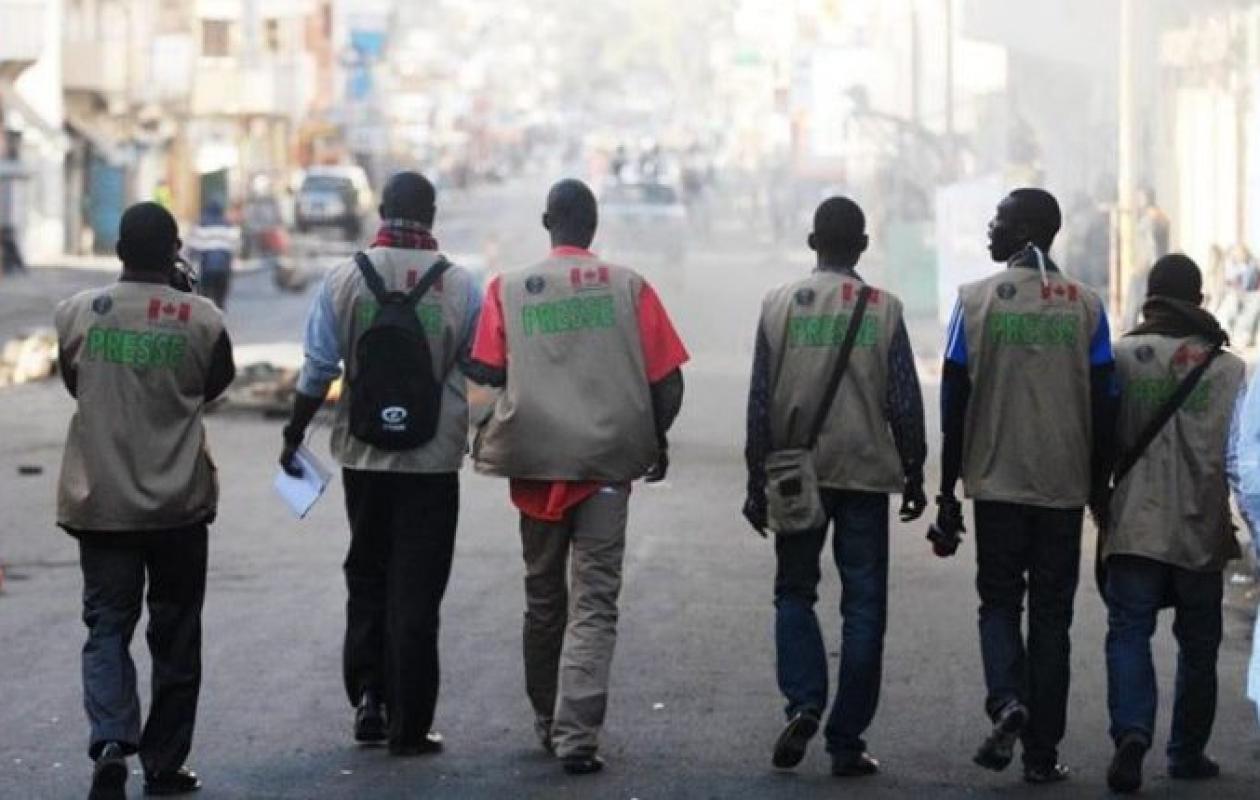
Passion contre précarité: les jeunes reporters fuient la presse sénégalaise en ruines
They are the first in the field, the last to leave the newsrooms. Reporters, the pillars of news production, crisscross the streets, braving harsh weather, risks, and pressures to bring the news to life. Yet, behind the microphones and cameras, these news heroes live in glaring precariousness, marked by shattered dreams, a lack of recognition, and appalling working conditions. Seneweb delves into the heart of this little-known reality through the poignant testimonies of young journalists, broken by a system that seems to ignore their essential role.
In a context of economic crisis affecting the media, reporters are the first to suffer the consequences: paltry salaries, often less than 100,000 CFA francs, lack of social or medical coverage, non-existent contracts, and endless unpaid internships. While press bosses demand subsidies, reporters sink into a painful silence, often forced to abandon their vocation.
For many young journalism graduates, entering the profession is a real ordeal. Moussa Cissokho (not his real name), after three years of expensive training, was never able to practice. A graduate of a renowned school, he confides his disillusionment: "I invested nearly three million in my training. Three years of study, a diploma in my pocket, but no internship. I tried everything, without success. Today, I work in a cement factory."
He deplores the lack of recognition for graduates, while untrained people invade TV and radio studios, trivializing the profession and contributing to the sector's excesses. "It's disgusting to invest so much for a diploma that serves no purpose. I've dreamed of this job since childhood, but they refuse to open the door to trained people. It's a shame," he laments. Aïssatou Tandeng (name changed), a young, budding journalist, almost gave up after grueling internships. "I've had a lot of bad experiences. It's not a job that pays. What's holding me back is passion. But I warn those who want to enter the profession: if you're looking for money, change direction. Journalism requires patience, perseverance, and courage. It's a profession of endurance," she explains.
10 months without a contract or salary: The cry of a forgotten intern
Abdoulaye Sylla (not his real name), a third-year journalism student, has been interning for 10 months at a reputable media outlet, without a contract or pay. “I work like a professional, I cover the news, I respect the schedule. Yet, there’s no bonus, no transportation, no meals. I pay for everything out of my own pocket. Sometimes I have to borrow to come to the office. I’m just told to wait, and that’s been 10 months,” he says. He survives on per diems collected during reporting, his only source of income. “It’s not normal. We talk about supporting young people, but we’re exploiting them. We need a real awareness,” he insists.
Dreams sacrificed on the altar of survival
Moustapha Sané (name changed), a young father, had to give up on his dream. “I was repeatedly offered internships, without pay. I ended up quitting. Today, I manage a multi-service business. It hurts, because journalism was my dream, but you have to survive,” he says. Maimouna Ndiaye (name changed), passionate about journalism, discovered the other side of the coin: precarious conditions, a lack of logistical resources, and covert exploitation. Assigned to a newsroom without a vehicle, she covered her travel costs alone. “We were given 1,000 FCFA for transportation, even for two or three outings a day. We had to make up for it out of our own pockets. Per diems? We were asked to pay a portion to the commercial fund. Catering? If you don't buy, you don't eat,” she says.
Her days stretched from 7 a.m. to 9 p.m., without compensation, in constant physical and mental fatigue. “I was exhausted, but I held on thanks to my passion. I told myself that it would change one day.” After years without pay or a contract, Maimouna finally gave up. “I endured, I took it all in. But at one point, I said to myself: it’s not worth it. You’re being exploited, you’re being made promises that aren’t kept. I gave up everything. Today, I have a clothing and perfume boutique.” When she announced her departure, she was offered 75,000 CFA francs. She refused. “What happens in some editorial offices is pure and simple abusive exploitation. It’s inhumane to spend three years in an editorial office only to be offered 75,000 CFA francs when it’s time to leave.”
Maimouna denounces an unfair and ungrateful system. "It's the journalists and technicians who keep the newsrooms running, but we're not considered. Some press bosses are selfish. As long as the company is running, they don't care about the rest. I feel a lot of pity for the reporters. Without them, there is no press."
Towards communication: A forced reconversion
Some journalists, like Ndèye Fatou Fall (name changed), are leaving the traditional press for digital communication. She has set up her own communications agency and notes that several colleagues are following this path. “The journalists who are labeled ‘press scum’ are courageous journalists. They can no longer bear this precariousness, so they start their own businesses. They earn more than those who stayed in editorial offices. It’s no longer a quest for fulfillment, but a race for survival,” she explains. She also denounces the lack of solidarity among journalists, exacerbated by the judgments of their own colleagues. “They say that the new authorities have divided the press, but that’s not true. This division existed long before. They call us scum, they say we’re not journalists. As long as there is no solidarity, the sector will remain weak.”
Hope in the new regime
Ndèye Fatou welcomes the president's openness toward young reporters, and not just media bosses. "It's a strong sign that the authorities know where the problem lies. We hope this regime will put an end to injustice in newsrooms. The media bosses, some of whom are selfish, won't get us out of this situation," she says.
Journalism schools are worried
Schools like CESTI and ISSIC are sounding the alarm: more and more students are abandoning journalism, discouraged by the conditions of the profession. "We see motivated students changing courses or giving up after their first steps in the field. They don't see a stable future in this profession," confided an anonymous instructor, calling for better psychological preparation for students from the very beginning of their training.
Alarming figures
A recent survey by the Young Reporters' Convention reveals the extent of job insecurity. More than 34.4% of reporters work more than 10 hours a day without overtime compensation, despite a Labor Code setting the legal working week at 8 hours. 31.5% work without pay, a blatant violation of the law. Regarding contracts, 26.4% of journalists have no contractual relationship with their employer; only 23.1% have a permanent contract and 11.1% a fixed-term contract. Of those with a contract, 61.7% do not have a copy. 45.3% of contracts are not registered with the Labor Inspectorate, and 77.7% of reporters do not have a pay slip. On the social level, 86% of journalists do not have an IPRES number, and 86% do not receive any medical coverage from their employer.
The Young Reporters Convention breaks the silence
Mamadou Diagne, president of the Young Reporters Convention, breaks the silence: "As a young reporter, I confirm this reality. The majority of us live in extreme precariousness: delayed wages, paltry income, lack of contracts, social and health coverage, unpaid overtime. This situation is dangerous for ethics, because a vulnerable journalist is exposed to temptations." He proposes solutions: "Faced with a media ecosystem in crisis, we must pull together. Press bosses and the State must restore Senegalese journalism to its former glory with an adequate economic model and better living and working conditions for young reporters."
These testimonies and figures show that Senegalese reporters, often young and passionate, are holding firm in the shadows. But how many more will have to sacrifice their dignity, their health, and their dreams before structural change is achieved?

















Commentaires (7)
Participer à la Discussion
Règles de la communauté :
💡 Astuce : Utilisez des emojis depuis votre téléphone ou le module emoji ci-dessous. Cliquez sur GIF pour ajouter un GIF animé. Collez un lien X/Twitter, TikTok ou Instagram pour l'afficher automatiquement.