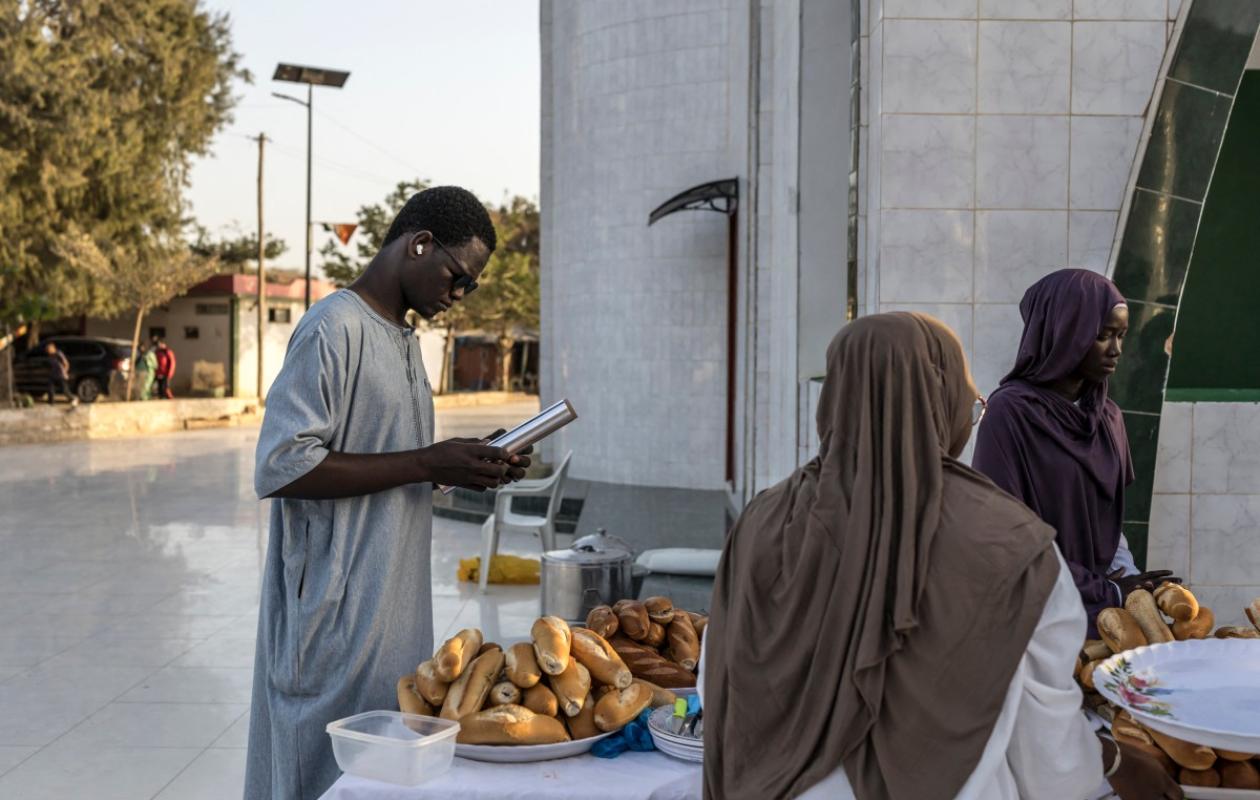
Ramadan à Dakar : Le revers de la médaille des « Ndogou » gratuits pour les petits commerçants
Many Dakar residents take advantage of the blessed month of Ramadan to increase their acts of generosity. But this solidarity, so precious to the most vulnerable, disrupts the daily lives of street vendors, who see their income vanish.
In Yarakh, the usual hustle and bustle of breaking the fast has a bitter taste for Abdoulaye Gueye. For ten years, his thermos of Touba coffee has been the gathering place for hurried passersby. But this year, the ritual has been broken. "Before, I'd empty my thermos in less than two hours. Now, I leave with almost all of my stock," he confides, his gaze lost on the queue stretching out in front of a nearby mosque. After two consecutive days without a single penny, Abdoulaye has made a radical decision: "I'm going to put away my equipment until the end of the holy month," he announces, his heart heavy.
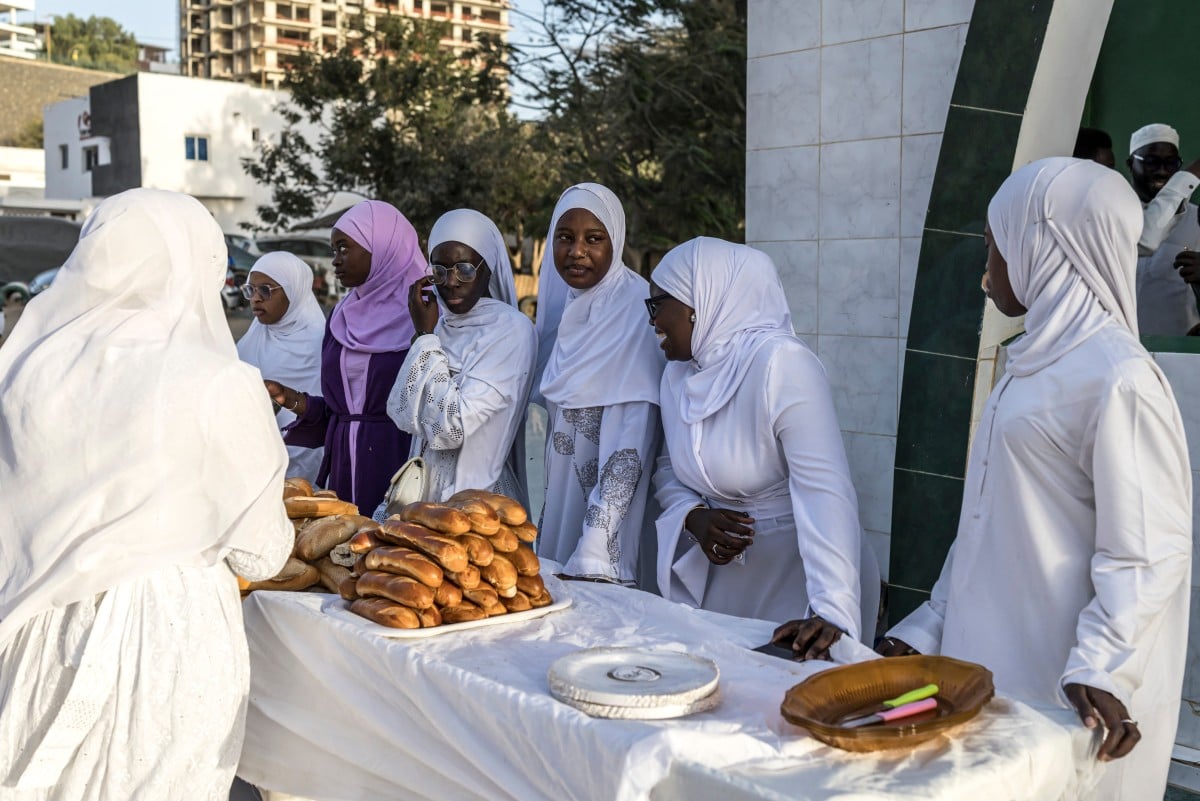
Solidarity that weakens
The paradox is stark. On the one hand, associations and well-meaning individuals are organizing to ensure that no one breaks their fast on an empty stomach. On the other, micro-entrepreneurs are seeing their only source of income vanish. For Arame Tall, a single mother of three, the situation is critical. She used to sell doughnuts to the local workers. "My customers aren't coming anymore. Why would they buy my doughnuts when they can get a full meal just a few meters away?" she asks. With an asthmatic child to support, not being able to sell directly threatens access to healthcare. For her, the solidarity of some has become the precariousness of others.
Faced with this distress, the organizers of the free distributions insist they never intended to cause harm. Papa Ndiaye, head of a donors' collective, is categorical: "Our goal is to help those who cannot afford a good iftar meal, not to prevent anyone from working. Everything we give is donated by benefactors. We don't have the budget to buy directly from street vendors," he explains.
However, Abdoulaye and his peers suggest an alternative: what if solidarity also involved buying locally? If associations sourced their supplies from local vendors, the chain of solidarity would be complete, feeding both the hungry and those who work to feed their families.
Ramadan in Dakar reveals a silent tension. Charity feeds the poorest, but weakens those who work in small businesses. Between altruism and survival, dialogue remains difficult. What if charity could also become a lever to support the local economy? In Dakar, people are still struggling to find a clear answer to this question.




















Commentaires (7)
Participer à la Discussion
Règles de la communauté
💡 Astuce : Utilisez des emojis depuis votre téléphone ou le module emoji ci-dessous. Cliquez sur GIF pour ajouter un GIF animé. Collez un lien X/Twitter, TikTok ou Instagram pour l'afficher automatiquement.
Se connecter
Commentez avec votre profil, votre photo, et soyez averti des réponses.