Ndioum : quand la fin des projets menace l'assiette des écoliers
In northern Senegal, in Ndioum and its surrounding hamlets, the school canteen stands as a discreet but vital bulwark against academic failure and school dropout. Between extreme heat, household poverty, and precarious funding, feeding students is essential for the very survival of the school. Yet, beyond the social imperative, these canteens also represent a strategic opportunity: by linking them to local agriculture, they could become a powerful driver of economic and social development.
But, now that the project is finished in the north, difficulties are arising regarding the sustainability of the canteens.
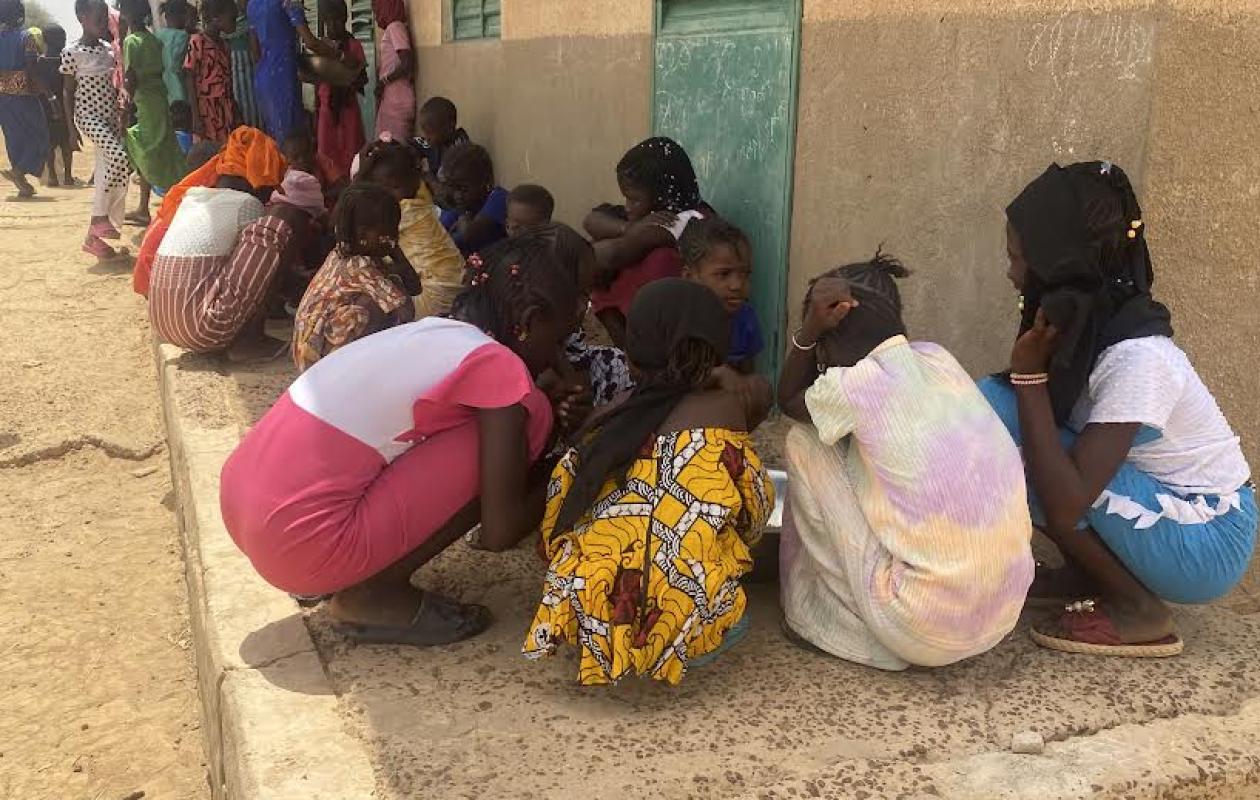
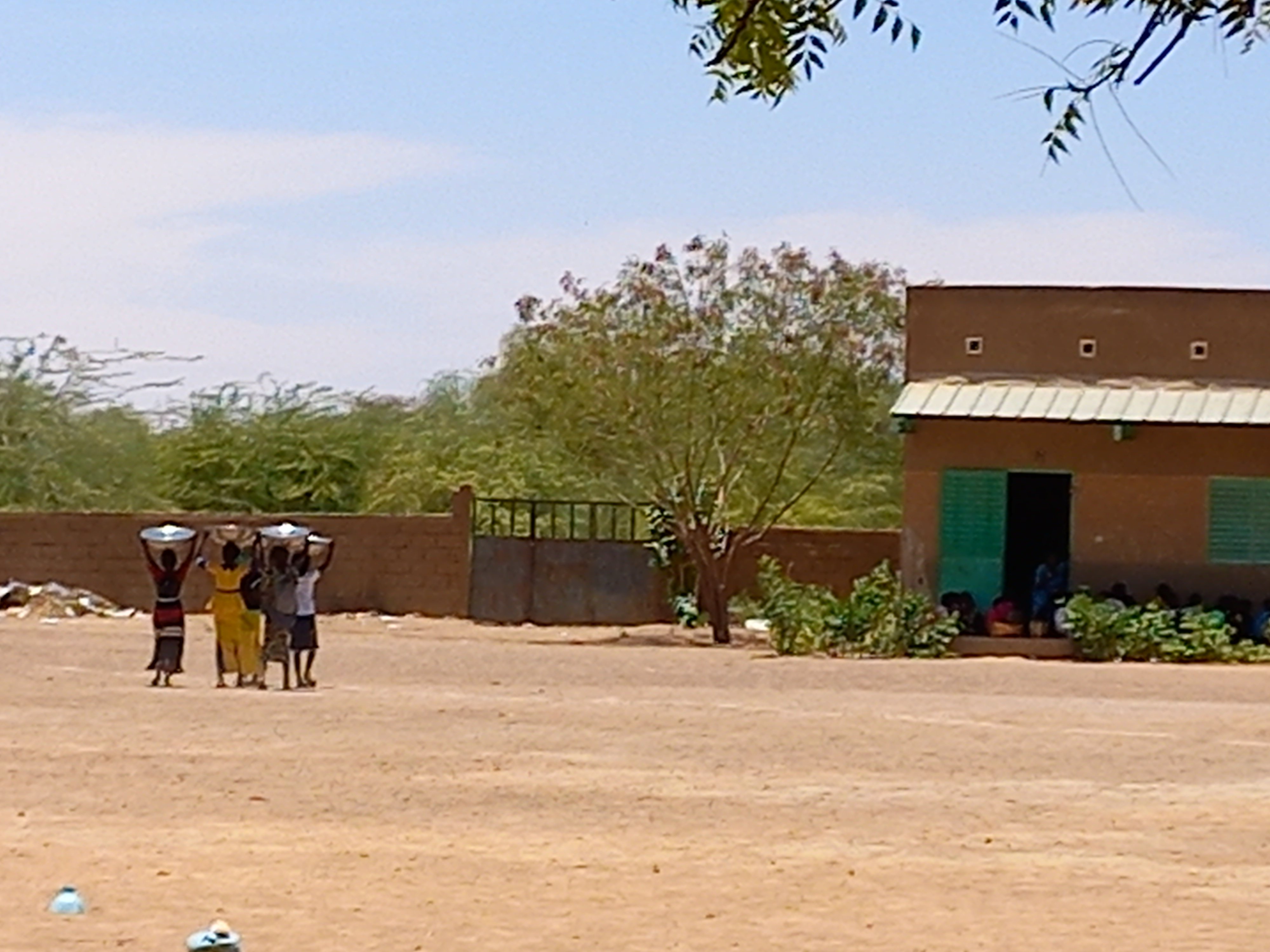
Thialma (Podor Department), June 15, 2025. At 2:00 PM, the heat beats down on the sandy courtyard of the Thialma elementary school, an isolated hamlet seven kilometers from Ndioum. Here, temperatures soar above 40 degrees Celsius. And when the bell rings, it's not to signal the end of classes, but to announce lunchtime. Around a few plates of rice, the children settle down in silence. This simple meal allows them to avoid a long walk under the relentless sun to get home for lunch, on the days when meals are served at home.
“Without the canteen, the school couldn’t function normally,” explains Médoune Diallo, the school’s director. The school has 64 students, the majority of whom are girls. “After lunch, the children are more attentive and more receptive. At this time of day, a child who hasn’t eaten can no longer learn,” he notes.
The school canteen in Thialma operates intermittently, two to three days a week, depending on available resources. Formerly supported by external partners, it now relies on local solidarity: women from the village, a sports and cultural association, and parents. "When resources are lacking, we don't cook. And it's the children who suffer the consequences," the school principal explains.
However, in the commune of Ndioum, the Sukabe Janngo I project, implemented by Counterpart International, had equipped seven of the nine local schools with school canteens, thus contributing to improved learning conditions and increased school attendance. Nevertheless, in the absence of sustained support and effective monitoring mechanisms, these canteens are now experiencing serious operational difficulties.
Most of the currently operational initiatives are only functioning intermittently, jeopardizing the project's achievements and reigniting concerns within the educational community about the continuity of this essential system. Today, the long-term viability of the implemented actions remains a major concern.
Hunger, a silent factor in school dropout
In this part of northern Senegal, the school canteen is much more than just an additional service. It is often the main way in which children stay in school. "The canteen reassures parents," says Fatim Ba, a parent. "When children eat at school, we can let them go. Without it, many drop out, for lack of resources," he adds.
In Ndioum Walo, the Bocar Seck school illustrates the fragility of this model. Its director, Mamadou Dia, has experienced both periods: with and without a canteen. "As long as the canteen was operating, academic results were good. Since it closed, students are forced to go home at 1 p.m., sometimes after walking several kilometers in the heat, before returning in the afternoon. For children aged six to ten, this is a considerable effort," he notes.
The effects are immediate: fatigue, decreased concentration, gradual disengagement. "When a student is hungry, it's impossible to ask them to concentrate," he insists.
"I sometimes give from my own pocket."
In Ngadiack, another hamlet in the commune, the scene is a daily occurrence. At the end of the day, the students rush out of school to find something to eat. "With this heat, it's inhumane," observes Mr. Sarr, the school's headmaster. "Sometimes, I see a child arrive in the morning without having eaten. At recess, I give them money to buy bread."
The lack of a canteen is also a factor in social exclusion. "Some parents withdraw their children from school because they cannot afford to feed them. The child then ends up on the street or in early work," he says.
When feeding the school can boost the local economy
In Doumbangué, a village located about ten kilometers from Ndioum, the canteen is still operating, sustained by community solidarity. Moussa Demba Ba, president of the management committee, witnesses its impact every day. "Children come from neighboring villages. Others are left here by nomadic families who have gone to farm in the Walo region. The canteen allows them to stay in school," he explains.
Here, parents contribute according to their means: rice, vegetables, money. But beyond the immediate food crisis, a broader perspective is needed. "If the state took over the school canteens, the products could be purchased locally. Farmers would have a stable market, and the canteens would be well-stocked. It would be a genuine local development program," says Moussa Demba Ba.
Ousmane Sakho, a businessman and departmental councilor for Podor, shares this view. "Schools with canteens achieve the best results," he says. "They attract teachers, reassure parents, and encourage partners. In an agricultural region like ours, the canteen can become an economic driver," he argues.
The memory of a school of excellence
Former teacher Amadou Ndiaye remembers a different era: “Between 1986 and 1998, the Ndioum school was among the best in Senegal. The school cafeteria played a central role. The children ate, stayed at school all day, and succeeded.” For him, the solution is now institutional. “We need a law on school meals and decentralized funding. We can’t expect performance from a hungry child,” he argues.
Gatta Diallo, a memory at the service of school canteens
In Ndioum, ensuring the sustainability of school canteens has become a major priority for several local stakeholders committed to education. Among them, Gatta Diallo stands out as one of the most prominent and consistent figures in this fight. Drawing on his experience in community development and shaped by his own educational journey, he works tirelessly to guarantee the canteens' long-term viability.
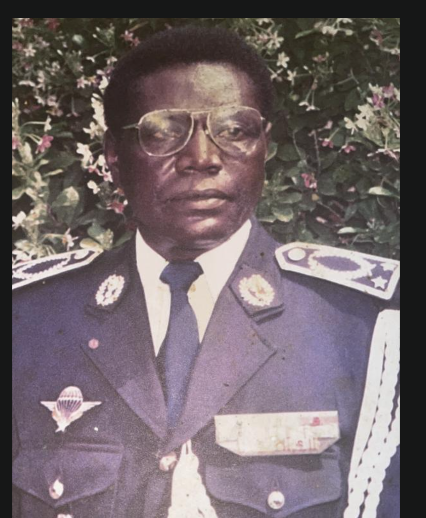
Born on July 9, 1967, in Dagana, Gatta Diallo is the son of a civil servant, a former member of the Republican Guard, who was posted to various locations throughout Senegal. His childhood was marked by administrative transfers, changes of school, and the constant packing and unpacking of school bags. "Sometimes, we attended two schools in the same year," says Gatta Diallo.
Originally from Fouta, specifically Ndioum, his father returned there after his retirement. Gatta, however, remained in Thiès to continue his studies. That's where everything changed.
The 100 francs that ruined a life
In sixth grade, Gatta often went to school on an empty stomach. One morning, his hunger became unbearable. He approached his history and geography teacher and said, "Miss, give me 100 francs, I'm hungry."
The response was brutal. He was sent out of class with a zero. "She didn't understand. She thought it was just a bit of rowdiness," he recalls, without anger, but without forgetting. From that day on, the way people looked at him changed. "When a teacher judges you as unruly without trying to understand, everything changes," he says.
The brilliant student becomes fragile. Failures pile up. "I was among the best for years, and suddenly I'm told I know nothing," he recalls. The books given to him by a kind inspector end up being sold on the sidewalk. With the money, he buys himself sweets, sometimes a movie ticket, a game of foosball, even cigarettes. "I was lost. Almost a failure," he laments.
Whether out of pride or for survival, Gatta arranges his school transfer on his own. His father wanted Dakar. He insists on Podor, or a complete halt to his education. He returns, but the student he once was is gone. His future no longer unfolds in the classroom, but through vocational training, resourcefulness, and hard work.
A trained warehouse worker, he joined the Red Cross in Ndioum in 1984. This marked the beginning of a long career in community development. "I've done everything except steal," he says simply. He worked with several NGOs, becoming a supervisor, controller, and trainer. Experience became his qualification. His expertise.
Gatta the mentor
When the NGO Counterpart International launched its Food for Education program, Gatta was recruited as a school canteen inspector. "There were fifteen of us. I was called the students' advocate. Because I know their behavior. I've experienced it," he maintains.
In every school without a cafeteria, the story of the 100 francs resurfaces. "We can forgive, but we never forget," he says. In his new role, Gatta recalls a teacher who noticed that a student never went out to eat. The girl didn't have the 100 francs daily contribution. In the end, the teacher paid it for her. "That teacher was different from mine," he confides.
The canteen, beyond the meal
For Gatta Diallo, the canteen is not just a bowl of rice. It is a public policy, a lever for social justice. "If I had had those 100 francs, perhaps my path would have been different. I have comrades who are now magistrates, lawyers, doctors. They were no better than me," he recalls.
In the Sukaabe Janngo project, implemented by Counterpart and its partners, including the Pan-African Institute for Citizenship, Consumers and Development (Cicodev Africa), with financial support from the USDA, he is supporting the transition towards sustainability through community fields and local produce for autonomous management. "The idea was to enable schools to stand on their own two feet," he says.
According to him, in Ndioum, the reactivation of the agricultural basin could not only feed the canteens, but also revitalize an entire locality.
"Education without food is an illusion."
Often described as a "development agent," Gatta smiles and defines himself first and foremost as a Senegalese citizen. "I have the right and the duty to serve my country." Now a neighborhood representative, he takes action at his own level. "Young people I've supported sometimes come back to help me without me even asking," he says. He constantly reiterates: "To develop a country, you have to support education and health. But education without food is an illusion."
Education is a responsibility transferred to local authorities, he points out. But the endowment funds do not cover school meals. This institutional gap continues to produce shattered lives.
Gatta Diallo has never forgotten those 100 francs that slowed his progress, but also forged his fight.
Towards a national response
The debate now extends beyond the local level. MP Ibrahima Bodji, a former rural teacher, is advocating for the widespread implementation of school canteens. "Many students arrive at school without having eaten breakfast. School canteens are essential for improving academic performance, from primary to secondary school," the MP argues.
On the government side, Minister Moustapha Guirassy recently recalled the existence of a national school feeding policy, awaiting legislative translation.
At the Thialma school, by 3 p.m., the dishes were empty. The children had returned to their classrooms, calmer and more attentive. Under the relentless Fouta sun, a single meal is sometimes all it takes to keep the school going. Here, the school canteen is neither a luxury nor a privilege: it is a prerequisite for equal opportunity and an investment in the future.

















Commentaires (7)
Participer à la Discussion
Règles de la communauté
💡 Astuce : Utilisez des emojis depuis votre téléphone ou le module emoji ci-dessous. Cliquez sur GIF pour ajouter un GIF animé. Collez un lien X/Twitter, TikTok ou Instagram pour l'afficher automatiquement.
Se connecter
Commentez avec votre profil, votre photo, et soyez averti des réponses.