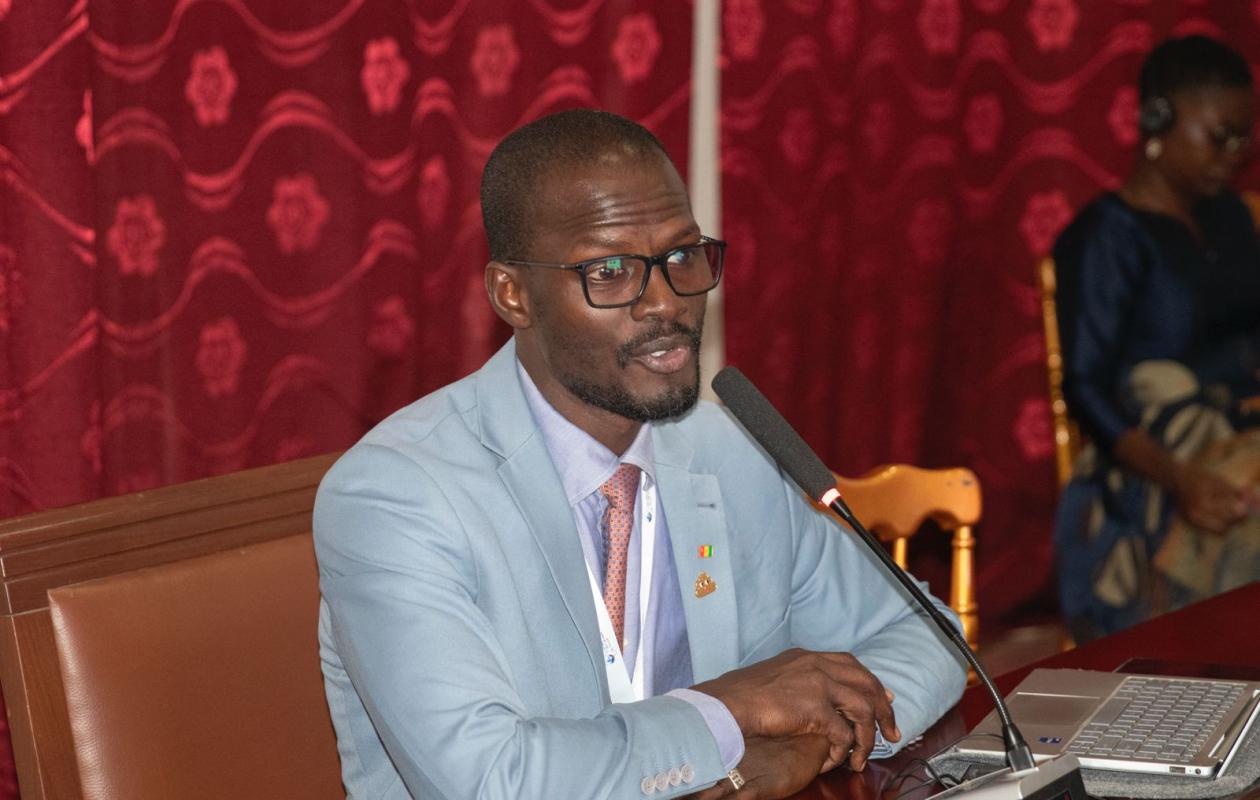
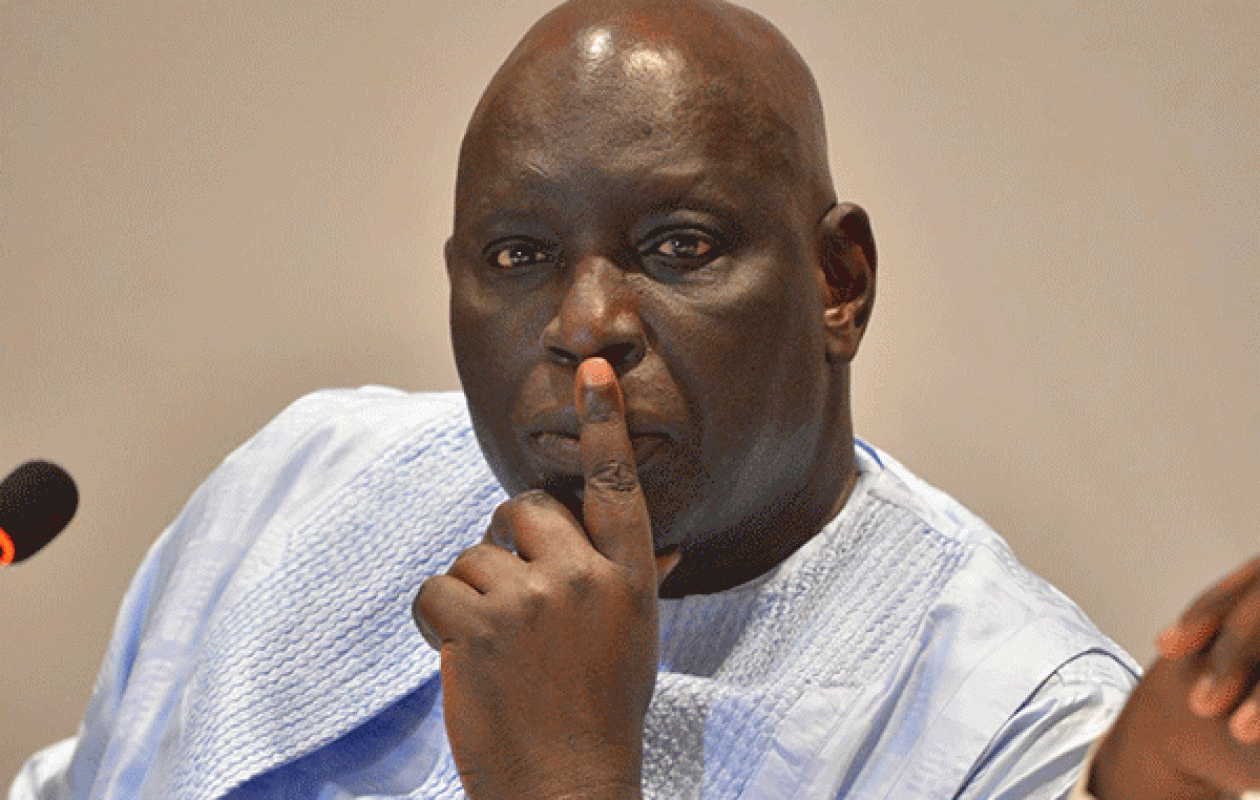
Abdoulaye Mallo Guèye, chef du département D'épuration de l’ONAS « le Projet de Dépollution de la baie Hann doit servir d’exemple aux pays africains »
The head of the Wastewater Treatment and By-Product Development Department at ONAS (National Sanitation Office) presented the experience of implementing the Hann Bay cleanup project, highlighting the regulations governing the polluter-pays principle. This presentation took place during a panel discussion at the 23rd Congress of the African Water and Sanitation Association (AAEA), held in Yaoundé, Cameroon. However, he believes this sharing of experience has other implications.
You participated in moderating a panel on the second day of the African Water and Sanitation Association (AWASA) Congress. Could you give us a summary of your presentation?
My presentation focused on industrial water in Senegal. We have a pilot project, which is the Project of
The cleanup of Hann Bay was undertaken. The aim was to showcase the Senegalese government's strategy for managing industrial activities and the wastewater generated by these processes, and also to share the government's investment efforts. We are currently constructing infrastructure to restore the bay to its former glory.
I also discussed the progress of the various work packages. I reviewed the physical progress of the project, starting with the interceptor, the wastewater treatment plant, the outfall into the sea, the industrial connections, and even the dewatering of canal 6. Regarding the interceptor, the completion rate is 77% (package 1), package 2, which concerns the wastewater treatment plant, is at 90%, package 4 (industrial connections) is at 81%, package 6, i.e. the secondary connection, is at 15%, and package 5, the dewatering of canal 6, is at 29%.
In the past, I had to present the Hann Bay project. But this time, it was about showing the evolution.
Beyond the progress of the work, there are institutional achievements, namely the regulatory texts that will govern industrial activity. I presented the ministerial decree governing the polluter-pays principle, signed in January 2025, which is a considerable achievement. This text will regulate all aspects of industrial wastewater treatment fees and also stabilize the calculation formula, which is based on discharge parameters, namely Biochemical Oxygen Demand (BOD), Chemical Oxygen Demand (COD), suspended solids, and the volumes generated. In addition to the interministerial decree, there is a revision of the NS05061 standard to better define the parameters in relation to the receiving or sensitive environment. I also spoke about the state-of-the-art treatment plant in Petit Mbao, which uses biodigesters as its technology, allowing us to optimize energy consumption. Secondary processing helps to minimize any rejection at the bay level with an interceptor that goes beyond 2 KM.
This is an integrated project that incorporates the circular economy model. The Minister expressed the need for a complementary project to achieve tertiary treatment and to reuse the treated water and sludge in industry and construction. The goal is to generate additional resources that would help make the wastewater treatment sector sustainable.
What about the sanitation of the waters of the Autonomous Port of Dakar?
The wastewater treatment system for the Autonomous Port of Dakar is part of the project. This area is home to numerous industries. A drainage network for process wastewater and a stormwater drainage network will need to be installed. This component, along with the sea outfall, is where the delays have occurred.
What is the benefit of sharing the experience of this project at the 23rd Congress of the African Water and Sanitation Association (AAEA)?
Many African countries are in the same situation as Senegal. They have bays and bodies of water. These countries face a lack of industrial wastewater treatment. For several years, some countries have focused on domestic wastewater treatment, while industrial wastewater has been insufficiently addressed. This is a trend that must be reversed. Industrial wastewater poses significant risks to public health and the environment. These factors underscore the need for greater attention to industrial wastewater treatment. Sharing experiences allows African countries to anticipate these challenges. Today, we are bearing the cost of inaction with the pollution of Hann Bay. If we had implemented a system to compel industries to comply with standards, we wouldn't be in this situation. We wouldn't have invested 130 billion CFA francs in cleaning up Hann Bay.







![[Exclusif] Affaire Pape Cheikh Diallo : Nouveau coup de filet de la gendarmerie, 4 suspects arrêtés](https://image.seneweb.com/content/news/2026-10-03//thumb_1260x800_69a7405538b07_WquqgEAmOr.jpg)









Commentaires (3)
Participer à la Discussion
Règles de la communauté :
💡 Astuce : Utilisez des emojis depuis votre téléphone ou le module emoji ci-dessous. Cliquez sur GIF pour ajouter un GIF animé. Collez un lien X/Twitter, TikTok ou Instagram pour l'afficher automatiquement.