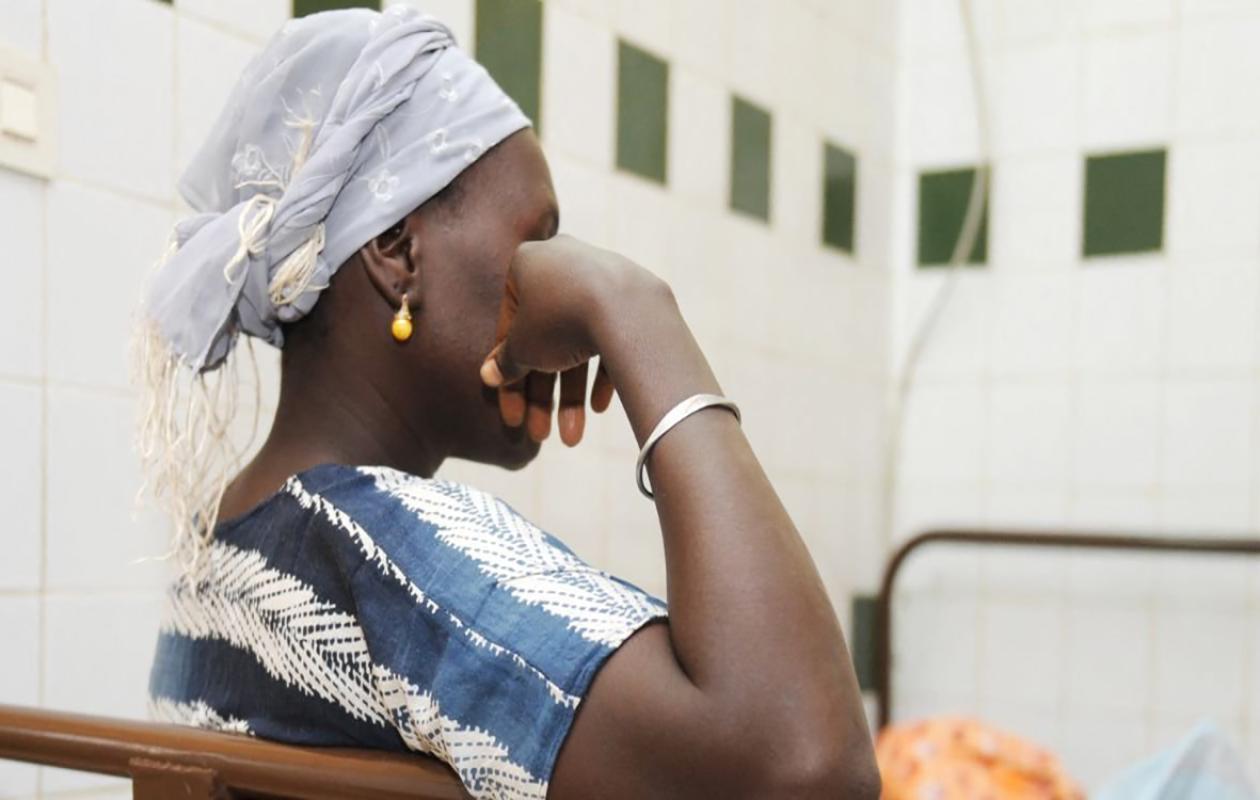
L'AVORTEMENT AU SÉNÉGAL, LA DOUBLE PEINE
Between the weight of an inflexible law, the trauma of the condemned and the fight for the Maputo protocol, a plunge into the heart of a social reality that shatters lives.
For Hajara, it all began with a passionate relationship. "I was dating a man. We loved each other," she recalls. But the news of her pregnancy hit her like "a thunderbolt." In her thirties, she made a decision that seemed innocuous at the time: to terminate a pregnancy that neither she nor her partner wanted.
Today, she has just completed a six-month prison sentence. Bundled up in black from head to toe, with a yellow velvet shawl draped over her shoulders to brighten her outfit, she recounts her ordeal: “At first, I cried a lot, I isolated myself, I refused to eat or speak to my fellow inmates. It was really difficult to adapt to that environment.” The price to pay was also familial: abandoned by her loved ones, she lost her father, who died of grief and anger during her time in prison, unable to bear the thought of his daughter behind bars.
Hajara's case illustrates a stark statistic: in Senegal, abortion-related charges account for 23% of detentions, according to a report by Prison Insider, a platform for producing and disseminating information on prisons worldwide . The law is clear, and Article 305 of the Penal Code stipulates:
"Anyone who, by food, drink, medicine, maneuvers, violence, or any other means, procures or attempts to procure the abortion of a pregnant woman, whether she consented or not, shall be punished by imprisonment for one to five years and a fine of 20,000 to 100,000 francs."
A woman who obtains an abortion herself risks six months to two years in prison. For medical professionals, the penalties are even harsher, including a ban on practicing medicine. Abortion is only permitted if the mother's life is in danger, and only after the unanimous opinion of three doctors.
Faced with this ruthless legal arsenal targeting offenders, healthcare professionals are left traumatized. Dr. Ahmed, a physician, was also released from prison for performing an illegal abortion in a public hospital. His assessment is bitter: “Honestly, I’m going to stop helping people with anything related to pregnancy. I’m traumatized. I spent five months suffering from depression, without work, twiddling my thumbs.” Released following an appeal by his lawyer, he believes the law must change to offer women a choice and prevent them from ending up sterile or dying in hiding.
In February 2024, the National Assembly refused to open a debate on legal access to medical abortion, even in cases of rape or incest. Lawyer Abibatou Samb fights daily for these victims. She is currently handling the case of a 9-year-old client who became pregnant after being raped by her teacher at the Koranic school. She is also representing the 10 girls raped in 2024 by their Koranic teacher in Touba.
“Our society is opposed to abortion because of ‘anti-abortion activists’ who cite social or religious reasons,” she explains. Her fight is limited to the framework of the Maputo Protocol: “We are not asking for abortion to be legalized in its entirety, but that in specific cases (rape, incest), the person has the right to decide.” She advocates for a “presumption of truth” to allow for immediate termination of pregnancy, especially for minors, before the legal process takes its course.
Ms. Mamy, a direct witness to the impact of these laws, laments a judicial system that is not only slow but also on its last legs. According to her, investigating judges sometimes seem to "take pleasure" in not handling abortion or infanticide cases as a deterrent. She visits the prisoners to provide them with psychological support and essential items such as sanitary napkins. "We see that the procedures are bogged down. That's when we realize that these judges are refusing to take on these cases in order to discourage other women from attempting an abortion," she says.
Ngoné, in her forties, sitting in front of her house wearing a yellow sailor top and matching pagne, is also campaigning for the implementation of the Maputo Protocol. Senegal was one of the first countries to sign this document in 2004, Article 14 of which guarantees women the right to control their fertility and to medical abortion in cases of sexual assault or danger to their mental and physical health.
The issue is even dividing spiritual authorities. Sheikh Ahmed Tidiane Ndao, an Imam, offers a nuanced perspective: before 140 days, the fetus is not yet considered a fully formed being, which could open a window of opportunity for decision-making. Conversely, for Pascal Faye, a priest, the Church remains the guardian of life: "The Church will only support abortion when it is strictly necessary."
The denial of pregnancy sometimes leads to tragic situations. A. Ndiaye is currently being held at the Liberté VI prison camp. Suspected of killing her baby, she recounts a version of events that the social worker considers inconsistent: “I knew I was pregnant but I didn’t tell anyone. My boyfriend gave me some pills. I took them and gave birth at home.” She claims that the child died in the hospital on the day of its baptism after a nosebleed, but an anonymous tip landed her in jail.
Salimata is going through the same ordeal. Already a mother to a boy born out of wedlock, she stammers, breathless, as she speaks of the shame and unbearable reproaches from her mother. "I was afraid to see this baby born, but I didn't kill him," she whispers with a sigh, awaiting her judgment.
Beyond moral considerations, the issue is one of public health. A gynecologist at the Nabil-Choukair health center in Dakar points out that a poorly performed abortion can cause internal bleeding, infections, and permanent infertility. Yet, the figures from the Planning Directorate at the Ministry of Health and Social Action are unequivocal: 38,878 cases of complications were recorded following abortions in 2019, and 34,079 in 2020.
Today, women's associations are asking for only one thing: that the Senegalese state honor its signature at the bottom of the Maputo Protocol to protect the life and dignity of women, beyond taboos and stigmatization.


















Commentaires (10)
Participer à la Discussion
Règles de la communauté :
💡 Astuce : Utilisez des emojis depuis votre téléphone ou le module emoji ci-dessous. Cliquez sur GIF pour ajouter un GIF animé. Collez un lien X/Twitter, TikTok ou Instagram pour l'afficher automatiquement.