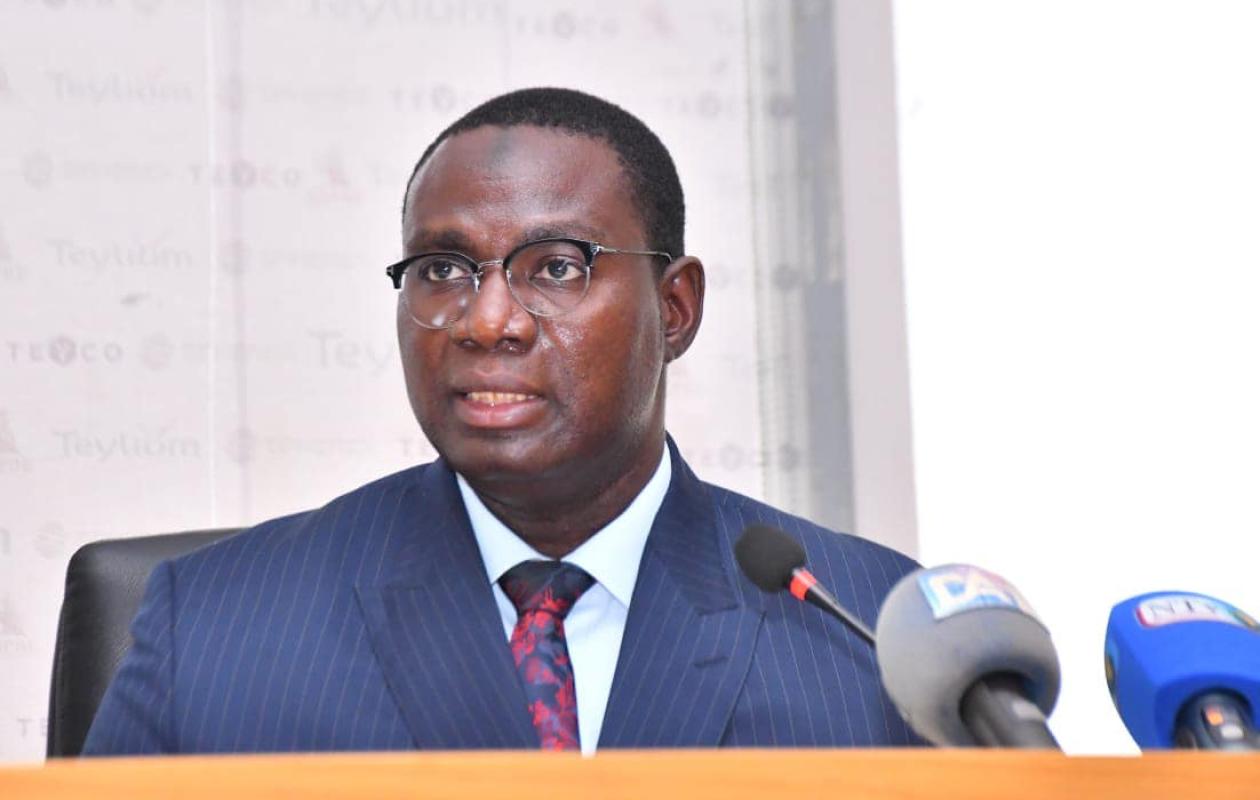
Réforme des pôles territoires : "Le moment est venu de tourner la page des déséquilibres territoriaux qui creusent les inégalités" (Moussa Balla Fofana)
The Minister of Urban Planning, Local Authorities and Regional Development, Balla Moussa Fofana, and his colleague from the Interior and Public Security, Mouhamadou Bamba Cissé, chaired a national workshop on the reform of territorial hubs.
This conclave with governors, prefects, deputies, etc., marks a decisive turning point in the re-establishment of territorial governance in Senegal.
Minister Fofana called for "turning the page on territorial imbalances that are deepening inequalities" and "together writing the page of a Senegal reconciled with its potential."
"The time has come to turn the page on the territorial imbalances that are deepening inequalities, to turn the page on a state that is too distant and fragmented, to turn the page on the unfulfilled promises made to our territories and their populations. We are here to write together the page of a Senegal reconciled with its potential. The reform of the territorial poles is a founding political act, a decisive turning point in the construction of the modern territorial state that we want," the minister emphasized from the outset.
Indeed, under the leadership of the President of the Republic, Bassirou Diomaye Diakhar Faye, and the coordination of Prime Minister Ousmane Sonko, the government intends to make territorial hubs the new levers of integrated development and social justice.
In this sense, Balla Moussa Fofana assures that "the territorial poles will be the new beating hearts of the nation, spaces of integrated planning, structuring investment and local governance."
This reform, he added, is based on rigor, transparency, and accountability. A legality, compliance, and monitoring-evaluation body will be created to ensure the quality and performance of local public action.
"We are putting an end to declarative governance and entering the era of verifiable governance, where every result counts and every territory is accountable for its progress," insisted Minister Fofana.
Territorial hubs, instruments of economic sovereignty
Minister Fofana defined the territorial hubs as "development basins where local potential becomes a source of collective prosperity and instruments of economic sovereignty to take back control of our productive destiny."
He praised the role of state representatives on the ground, the governors, prefects and sub-prefects who, according to him, are "the linchpins of the territorial Republic." Because, he said, "it is through your daily actions that the reform will take shape, that the texts will become realities and that the promises will become results," while calling for "boldness, frankness and ambition."
For his part, the Minister of the Interior and Public Security, Mouhamadou Bamba Cissé, stressed that this reform "is part of the implementation of the vision of the Head of State through the National Agenda for Systemic Transformation Senegal 2050."
"The reform of the territorial hubs is not a simple administrative restructuring. It is part of a national ambition to profoundly transform our modes of governance, to strengthen territorial coherence, complementarity between regions and proximity between the State and citizens. It aims to make the territories true spaces of integrated development, by aligning the actions of local authorities, decentralized State services and economic actors around the same dynamic.
In this sense, this reform constitutes a major step forward in decentralization and deconcentration, by giving territories the means to fully express their potential in the service of national development," said Mr. Cissé, who insisted on the central role of the territorial administration in the success of this reform.
"Your expertise and field experience are essential to define the institutional and functional contours of the territorial hubs so that they reflect our local realities and our social aspirations," he says.
This workshop, designed as a space for co-construction, brings together administrative authorities, local elected officials, and local stakeholders. It aims to harmonize approaches, share lessons learned from consultations, and adopt a common roadmap for the effective implementation of territorial hubs.
Moreover, Minister Fofana called for collective commitment, because "what we are building here is more than an administrative architecture, it is a renewed social contract between the State and its territories, a promise of dignity for our lands and the birth of a strong, agile and just State."

















Commentaires (6)
Participer à la Discussion
Règles de la communauté :
💡 Astuce : Utilisez des emojis depuis votre téléphone ou le module emoji ci-dessous. Cliquez sur GIF pour ajouter un GIF animé. Collez un lien X/Twitter, TikTok ou Instagram pour l'afficher automatiquement.