Binationaux : comment la Coupe du monde 2026 pousse les joueurs à changer de maillot
Convincing a dual national to join a national team is usually a long-term undertaking for coaches, but also a complicated choice for players, even if the World Cup deadline and the adjustment of FIFA rules in this area have greatly facilitated the process.
For several years now, more and more players have been turning their backs on major European national teams to join their parents' country of origin. This phenomenon has been amplified by a relaxation of FIFA regulations since 2003, which allows players who have played at youth level for a country to change their sporting nationality.
The latest update made in 2020 stipulates in particular that players who have already played in A with a national team can change selection if they have not yet participated in a final phase of a major competition (World Cup, Euro, Copa América, CAN).
In total, 210 players have thus obtained a change of sporting nationality since 2025, according to the census platform set up by FIFA.
This choice is often difficult for a dual-national player, who must decide between their country of birth and their family's country of origin. But the desire to play in major competitions can be a powerful motivator.
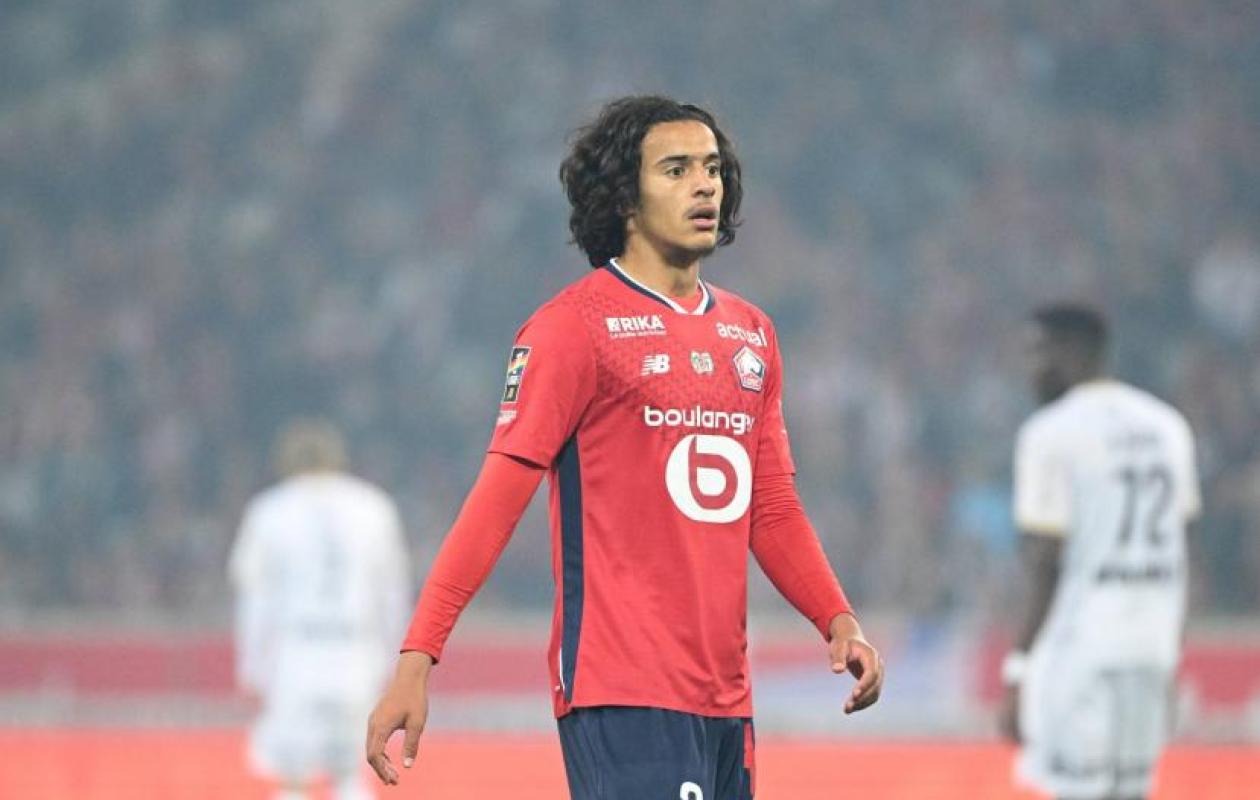
Torn for months between France and Morocco, Lille's rising star Ayyoub Bouaddi, 18, has chosen the Atlas Lions, the country of origin of both his parents. Having made ten appearances for the French U21 team, he opted for Morocco, primarily to be able to participate in the World Cup (June 11 - July 19).
This competition, the ultimate goal for a professional player, has convinced many players, such as the Franco-Haitian striker from AJ Auxerre, Josué Casimir, who represents Haiti (six caps).
"Choice of the heart"
"It is a great joy for me to serve my parents' country in this way and to honour them in this way. The choice was made quite naturally and it also offered me a possibility of going to the World Cup," he explained to AFP.
For Luca, son of French legend Zinedine Zidane, the choice fell on Algeria last October, the country of his paternal grandparents. Having played for France's youth teams but never reaching the senior squad, the goalkeeper, who has primarily played in the Spanish second division, made this decision a few months before the Africa Cup of Nations and the World Cup. However, a jaw injury has put his participation in the national team in doubt.
Struggling to find an attacking solution, Belgium's coach, Rudi Garcia, has managed to convince Matias Fernandez-Pardo to join the Red Devils. The Lille striker, who has several caps for Spain's U21 team, will also be competing in the World Cup representing Belgium.
The work of a national team coach and his staff is therefore a skillful mix of searching for players, long discussions with entourages and families, and finally, supervision.
"Fishing for information"
This is the case of Sébastien Migné, the coach of Haiti: in two years, he has "taken (his) pilgrim's staff to convince dual nationals to join the adventure".
"We need to go fishing for information, find players with Haitian ancestry and then 'scout' them through platforms. We also need to follow the matches to see if their profile matches our game plan," he explains to AFP.
For players, it can also be "a choice of the heart," as for Achraf Hakimi, born in Madrid but who opted for Morocco: "I tried the experience (with Spain), but I didn't feel comfortable," said the current captain of Morocco.
Conversely, the other emblematic case is that of Lamine Yamal, the 18-year-old global football phenomenon, who could have played for Morocco, his father's country, but chose Spain.
“I know he received a call from Morocco and that it was a difficult decision for him. I tried to present to the family the current and future project we had with him. It worked, and he understood that he wanted to represent Spain,” Francis Hernandez, the former sporting director of the Spanish Football Federation’s youth teams, told AFP in April 2025. The rest is history: his debut with La Roja at 16 and European champion at just 17.










Commentaires (1)
Participer à la Discussion
Règles de la communauté
💡 Astuce : Utilisez des emojis depuis votre téléphone ou le module emoji ci-dessous. Cliquez sur GIF pour ajouter un GIF animé. Collez un lien X/Twitter, TikTok ou Instagram pour l'afficher automatiquement.
Se connecter
Commentez avec votre profil, votre photo, et soyez averti des réponses.