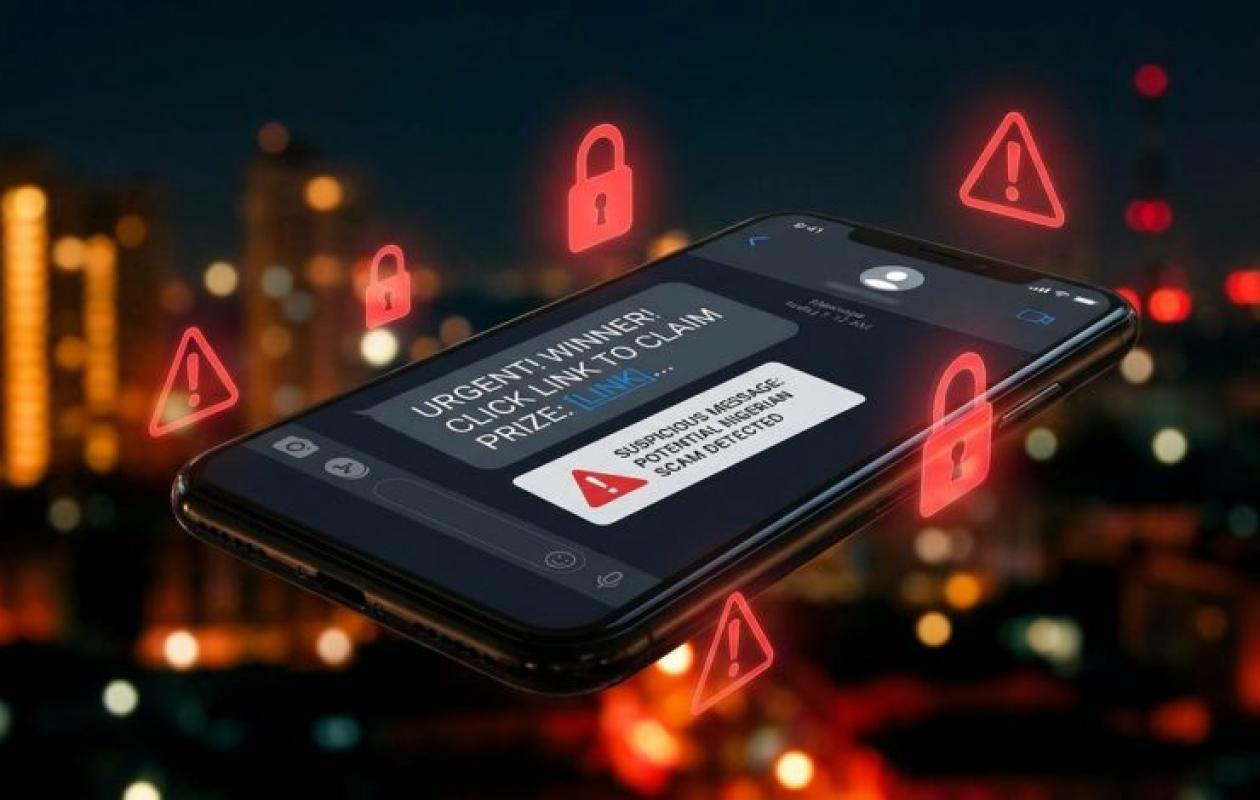
Arnaques WhatsApp et Instagram : les pièges qui vident les comptes en 2026
5 scams that are exploding on WhatsApp and Instagram and how to avoid them
You received a message promising you a well-paid job in Dubai. Or an offer to transfer money from a supposedly retired "American general." Or a promotion from a major brand asking you to pay a fee to unlock your prize. These are scams. And they claim millions of victims in Africa every year. Here are the most common techniques in 2026, and how to protect yourself.
1. Job scams: "Job offer abroad"
This is one of the most devastating scams. An unknown recruiter contacts you on WhatsApp or Facebook with an attractive job offer: cook in Saudi Arabia, security guard in Dubai, nurse in Europe. The advertised salary is high. The conditions seem legitimate. You are asked to pay "application fees," for a "visa," and for a "medical test."
Once the money is sent (often via mobile money to avoid leaving a trace), the recruiter disappears. In the most serious cases, victims find themselves in foreign countries without proper documentation, in situations of modern-day slavery. In 2024, the IOM (International Organization for Migration) documented thousands of sub-Saharan Africans trapped in this way in Southeast Asia.
How to protect yourself: No legitimate job offer should ask you to pay any fees before you are hired. Check the company's existence online. Ask for a physical address and a contract before making any payment.
2. Financial pyramids: "Invest and multiply your money"
These schemes have existed for decades, but WhatsApp has given them extraordinary reach. The principle: you invest a sum (5,000, 10,000, 25,000 FCFA), and you recruit other people who then invest in turn. The first to join receive money. The last to join lose everything.
In 2025, several fraudulent apps were downloaded by millions of Africans, promising returns of 30 to 50% per month. Most shut down overnight, taking their users' savings with them. In Cameroon, Ivory Coast, and Senegal, similar cases were reported by financial authorities.
How to protect yourself: No legitimate investment guarantees returns of 30% per month. If someone offers you this, it's a scam. The financial authorities of each country (BEAC, BCEAO, COBAC) publish lists of unauthorized operators.
3. Fake DHL/Amazon packages and bonuses
You receive a text message or WhatsApp message informing you that a package in your name is being held up in customs. To release it, you are asked to pay a fee (5,000 to 20,000 FCFA). The link provided looks like one from DHL or Amazon, but it's a fake website designed to steal your banking information.
A common variant in 2026: messages claiming to be from Orange, MTN, or Moov informing you of a "loyalty bonus" or a "refund." A link directs you to a form that collects your Mobile Money or banking information.
How to protect yourself: DHL, Amazon, Orange, and MTN never ask for payment via WhatsApp or SMS with a link. Call their official customer service directly if you have any doubts. Never click on links in these messages.
4. Romance scams: "I've loved you for so long"
An American soldier on a mission in Syria falls in love with you on Facebook. An oil engineer on an offshore platform proposes marriage. A European businessman wants to share his life with you. For weeks, the exchanges are intense, the declarations passionate. Then comes the request for money: a medical emergency, a plane ticket, a customs issue.
These romance scams are carried out by organized teams, often operating from Nigeria, Ghana, or Ivory Coast. The victims are everywhere: single women in Europe, divorced men in Africa, and elderly people worldwide. The amounts lost can reach tens of thousands of euros.
How to protect yourself: Do a reverse image search on any photos sent by Google. Be wary of anyone who can't make a live video call. Never transfer money to someone you haven't met in person.
5. Celebrity identity theft
Fake accounts impersonating African celebrities (Davido, Wizkid, Eto'o, etc.) or politicians contact their fans promising gifts, jobs, or VIP access. To "confirm your selection," a processing fee must be paid.
On Instagram and TikTok, fraudulent advertisements use deepfakes (manipulated videos) featuring well-known personalities to promote cryptocurrencies or fictitious investment platforms. This technique exploded in 2025.
How to protect yourself: Celebrities do not contact their fans to offer money. Verify that the account is verified (blue checkmark). Report any fraudulent account to the platform immediately.
What should you do if you have been a victim?
If you have lost money in a scam, here are the steps to follow:
First, report the incident to your Mobile Money provider to try and block the transfer if it's recent. Second, file a complaint with the police or gendarmerie, including screenshots of the transactions. Third, report the phone number or profile to the platforms (WhatsApp, Facebook, Instagram). In Côte d'Ivoire, you can contact the Cybersecurity Brigade (BCC). In Senegal, there is the Special Cybercrime Division (DSC).
Caution is the best protection. If an offer seems too good to be true, it almost always is.


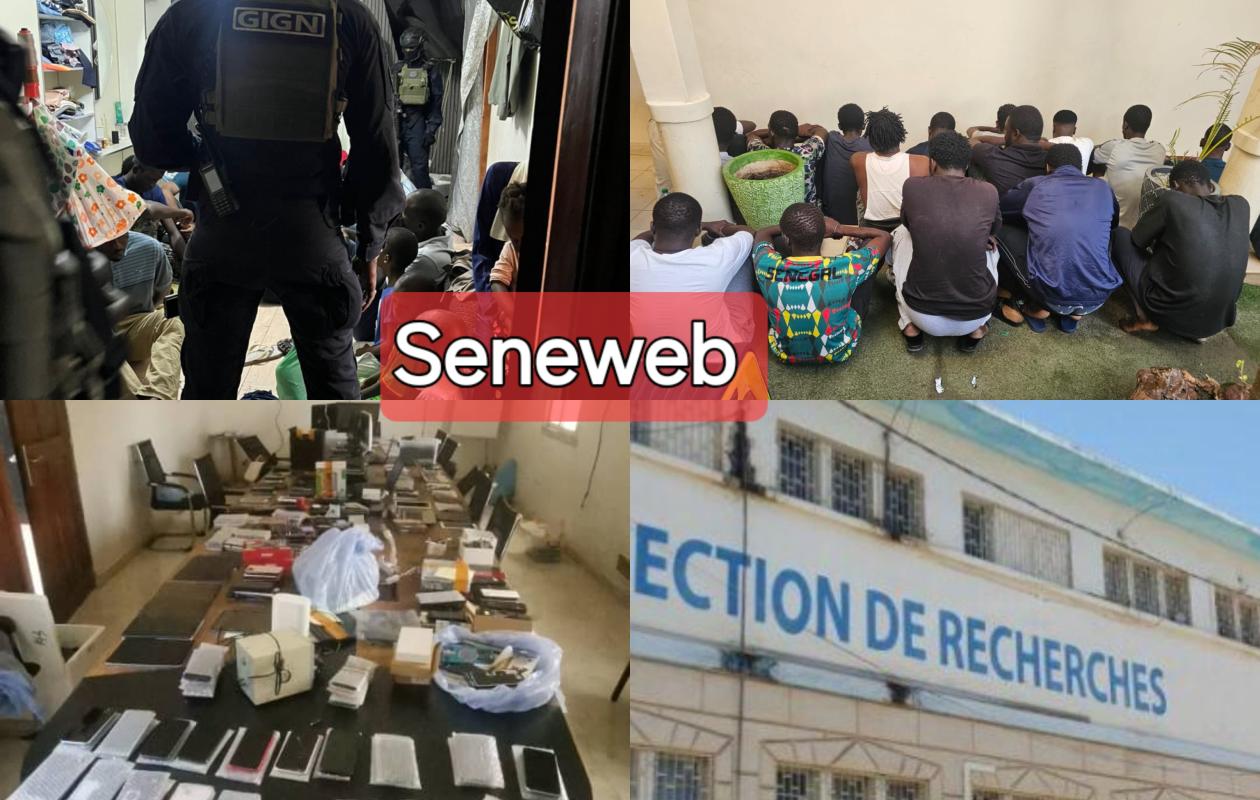





![[EXCLUSIF] Réseau de voleurs démantelé à Colobane : 500 téléphones, 33 tablettes et des ordinateurs saisis par la SR et le GIGN, 23 arrestations](https://image.seneweb.com/content/news/2026-22-30//thumb_1260x800_6a1b6ac9bcdc7_zf1U3G3p2i.jpg)











Commentaires (0)
Participer à la Discussion
Règles de la communauté :
💡 Astuce : Utilisez des emojis depuis votre téléphone ou le module emoji ci-dessous. Cliquez sur GIF pour ajouter un GIF animé. Collez un lien X/Twitter, TikTok ou Instagram pour l'afficher automatiquement.