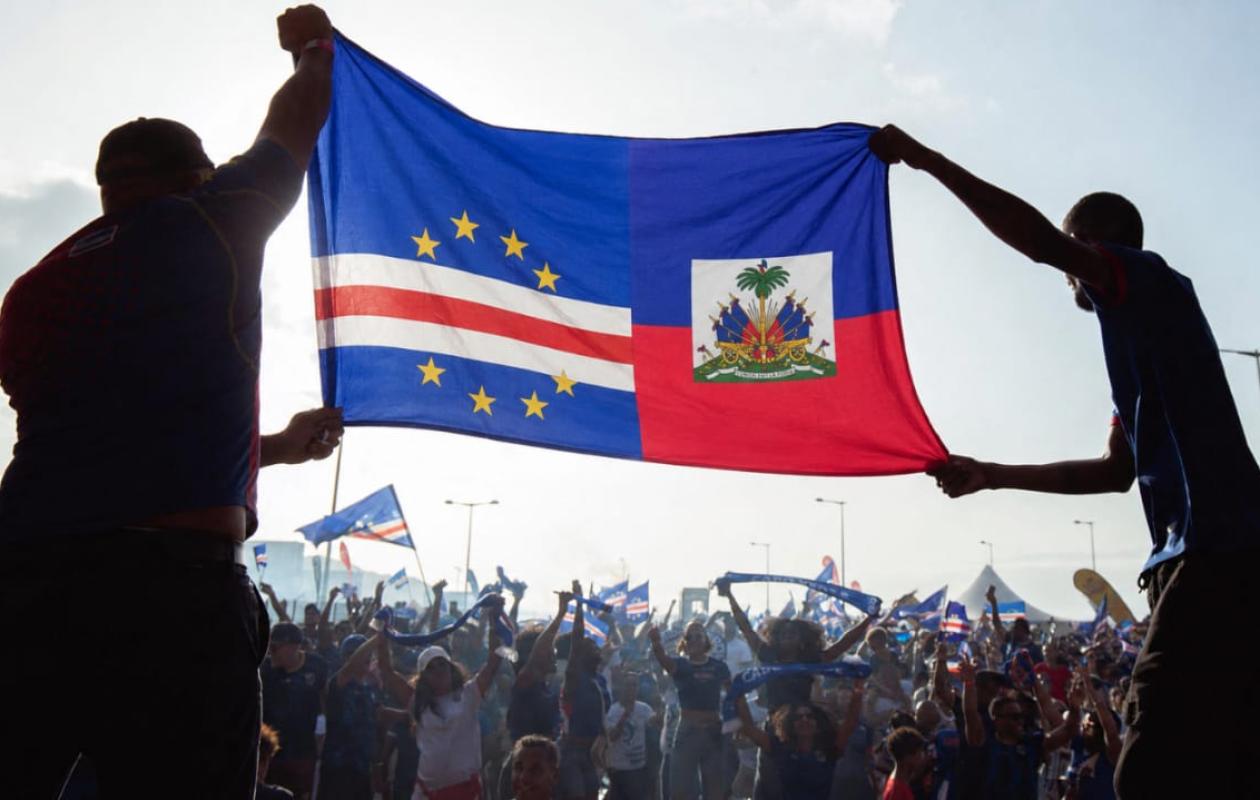
Beautiful Day – Mathias Pace & Idd Aziz
Beautiful Day: How Haiti and Cape Verde's return to the World Cup became the sound of two small islands
For generations, they were the underdogs of world football, islands better known for their music, migration, resilience, and culture than for World Cup headlines. But today, against all odds, two nations separated by an ocean but bound by history are rewriting the script.
After more than half a century away from football's biggest tournament, Haiti and Cape Verde are back in the conversation around the FIFA World Cup, and this moment seems to transcend the simple realm of sport.
This feels like a cultural awakening.
For Haiti, this return carries the weight of history. The country made a lasting impression during its sole appearance at the World Cup in 1974, becoming the first Caribbean nation to qualify for the tournament. More than 50 years later, a new generation is keeping this legacy alive, not only through football, but also through music, art, and identity.
For Cape Verde, the rise has been just as spectacular. This small Atlantic archipelago, with fewer than a million inhabitants, has quietly become one of the most captivating stories in African football. After decades of narrow defeats and relative obscurity, the Blue Sharks have finally achieved global recognition.
And somewhere between the chants in the stadiums and the nighttime celebrations, music becomes the rhythm of this improbable rise.
At the heart of this musical momentum are the artists of MLife Music Group, a multicultural collaboration bringing together voices from across the diaspora, including Papa London, Eyo-E, Mathias Pace, Nicole Cherry, Idd Aziz and the globally acclaimed South African artist Nomcebo Zikode, whose voice contributed to the global phenomenon Jerusalema alongside Master KG.
Together, they represent much more than just music.
They represent a movement.
And now, this movement has a name: Beautiful Day.
MLife Music Group's upcoming anthem is already being described by some insiders as much more than a song—a global celebration of resilience, identity, and unity. Blending Afro-Caribbean percussion, stadium-ready melodies, Creole and Lusophone influences, East African rhythms, and inspiring global pop energy, "Beautiful Day" captures the emotional pulse of nations daring to dream again.
The song arrives at the perfect time: as Haiti and Cape Verde stand on the edge of football history, millions of people within their diasporas are looking for an anthem that reflects hope rather than hardship.
And that's exactly what Beautiful Day offers.
According to Mike Jean, CEO of MLife Music Group, the vision behind the song has always gone far beyond the musical framework.
“Beautiful Day reminds the world that greatness can come from anywhere, even the smallest islands on the planet. Haiti and Cape Verde represent resilience, culture, faith, and an unstoppable spirit. This song is dedicated to every young person from forgotten communities who still dares to dream on a global scale.”
The project reportedly originated from a conversation about resilience and how nations often defined by struggle could reclaim their narrative through joy, unity, and pride. What emerged became a sonic celebration of identity: at once a football anthem, a tribute to the diaspora, and a global movement.
With the support of Mazalito, whose sponsorship made this ambitious international collaboration possible, the project has become much more than just a single, evolving into a cultural statement connecting Africa, the Caribbean and diaspora communities around the world through music and football.
Papalondon's style blends Lusophone soul, Afro-fusion rhythms and island melancholy in a cinematic atmosphere — music that evokes both the ocean wind and the memory of the diaspora.
For his part, Eyo-E embodies the pulse of modern Haiti: raw energy, Kompa influence, hip-hop ambition and relentless optimism.
Mathias Pace and Nicole Cherry bring an international and airy pop dimension to the track, while Idd Aziz adds an East African energy and ancestral rhythms that broaden the song's reach far beyond borders and languages.
Brought together on Beautiful Day, their alchemy seems both intentional and symbolic, voices from different continents coming together through rhythm, football and hope.
In many ways, the song reflects the footballing journey of their countries.
Small islands.
Limited resources.
Global skepticism.
Indestructible pride.
What makes this moment extraordinary is not just the hopes of qualification or the FIFA rankings.
It's the symbol.
Two nations born of resilience are reclaiming their place in spaces that have long ignored them.
We can already feel it in the hair salons of Brooklyn, the beach cafes of Praia, the restaurants of Little Haiti in Miami, and the immigrant communities of Paris, Lisbon, Boston, Montreal and Rotterdam.
The flags reappear.
The old jerseys are coming out of the closets.
Entire diasporas are rediscovering what collective hope means.
That's why this story goes beyond sports.
She's talking about visibility.
For decades, Haiti and Cape Verde have existed in the world's imagination primarily through the lens of hardship. Rarely through excellence. Rarely through joy.
Today, the world is witnessing something different.
A Haitian striker who scores under the spotlights.
A Cape Verdean anthem that resonates in packed stadiums.
Island nations that refuse to remain invisible.
And in the background, Beautiful Day begins to sound less like a song and more like a statement.
Because sometimes, the greatest stories in sport don't come from superpowers.
Sometimes they come from two small islands that refused to disappear.













Commentaires (1)
Participer à la Discussion
Règles de la communauté
💡 Astuce : Utilisez des emojis depuis votre téléphone ou le module emoji ci-dessous. Cliquez sur GIF pour ajouter un GIF animé. Collez un lien X/Twitter, TikTok ou Instagram pour l'afficher automatiquement.
Se connecter
Commentez avec votre profil, votre photo, et soyez averti des réponses.