
Pr. Ibrahima Thioub, ancien recteur de l’UCAD : "Le problème n’est pas la Guinée, c’est le 'Xar Matt'"
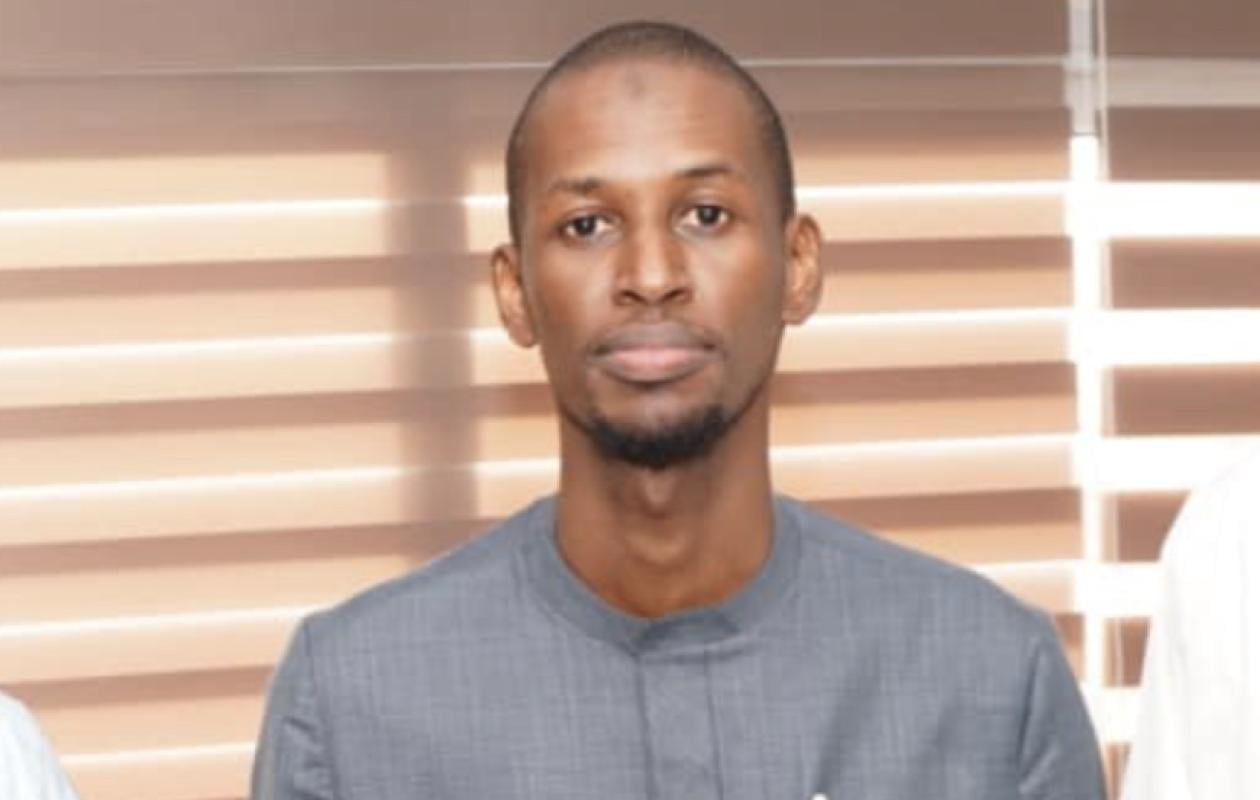
The controversy surrounding Guinea's recruitment of Senegalese teaching and research staff continues to generate reactions. But for Professor Ibrahima Thioub, historian and former rector of Cheikh Anta Diop University of Dakar (UCAD), the debate is poorly framed. "The problem isn't Guinea, it's 'Xar Matt'," he asserted.
In an article, the former rector of Cheikh Anta Diop University of Dakar (UCAD) denounces what he considers an intellectual diversion. "In Senegal, we like to complicate problems with grand theories and fine phrases," he wrote, before clarifying that the Guinean recruitment affair is primarily a well-known phenomenon. "It is simply and plainly a case of ' Xar Matt' on an international scale," the text reads.
Contrary to the argument often put forward, Professor Thioub believes that the issue of remuneration is not the determining factor. "Salary or working conditions have very little to do with this matter," he maintained. He points out that many of the teachers involved already hold permanent positions in the Senegalese public school system and enjoy significant benefits.
"Permanent teachers in the public sector, who are well paid, keep their jobs, their income and their benefits, and go to work illegally in the private sector," he denounces, pointing out that these parallel activities are sometimes less well paid than the main job, but made attractive by the absence of risks.
According to him, this system relies on a major flaw: "These practices are only possible because the public's salary is paid regardless of whether classes are held or not."
Serious consequences
For the former rector, the effects of this dual role are devastating. "Those who subscribe to the 'Xar Matt' practice hold both positions and work minimally in the public sector," he explains. The result: "They teach little and irregularly, neglect research, and believe that community service is not mandatory."
In this context, Guinea's recruitment of teachers is not a radical departure. "What Guinea is now organizing on a large scale and publicly was already being done on a case-by-case basis," the professor observes. Conclusion: "So, nothing new under the sun."
Faced with this situation, Professor Thioub advocates for a radical but simple measure: "No dual employment will be permitted." He is categorical: "Those who go to Guinea must lose their position in Senegal."
According to him, this decision would have an immediate effect. "You will see that apart from temporary staff and retirees, no one will leave their post," he asserts, convinced that "the income and working environment of a permanent employee in Senegal are far superior to what Guinea offers."
The same logic, he insists, must be applied to the national private sector where "Xar Matt" also contributes to weakening education.
For Professor Thioub, this “crisis” offers a unique opportunity for the Ministry of Higher Education. “The Ministry of Higher Education, Research and Innovation (MESRI) must seize this very opportune crisis to definitively resolve the shared use of human resources between the public and private sectors,” he argues.
He also points out that during the recent student strike, he had already raised the alarm about the real crux of the problem. "The scholarship wasn't the real issue," he asserts, specifying that "the real problem is the irregularity of teaching and the impossibility of controlling the academic calendar."
Apply the law, without detours
According to the historian, no structural reform can succeed without political courage. "As long as we don't resolve the problem of the public-private relationship in the use of human resources, the education system will continue to stagnate," he warns.
He finally rejected the argument of academic mobility. "The debate on teacher mobility is a diversion," he said, recalling that it is already governed by well-established international agreements and practices.
The solution, according to him, is both simple and inexpensive. "It's not difficult to do, it costs nothing. You just have to apply the law rigorously, without excess," the historian insisted.


















Commentaires (29)
Khar la santé.
Khar mat dans l'éducation nationale
Khar mat dans la presse
Il n'y a que les ministres , les magistrats et les haut fonctionnaire qui ne font pas le khar mat
Problème de réglementation, de revenu de culture professionnelle
Les sociologues on vous écoute
C'est l'État qui est permissif, au lieu de réguler !!!!!!
On laisse faire. Il est impossible de travailler correctement dans le public et le privé en même temps. C est toujours au détriment du public
et des plus pauvres. C est dans tous les secteurs et les autorités ne font rien pour les régler alors que c est leur responsabilité.
On voit cela dans l éducation primaire, secondaire et universitaire, dans surtout la santé et sans doute dans d autres secteurs.
Le Bénin est en train de régler ce problème dans le domaine de la Santé et le Burkina le suit. Au Sénégal, on ne fait rien. On n en parle
presque pas alors c est un cancer.
Les nouvelles autorités sont interpellées
Mane maa diaakhlé thi mim reew
en toute vérité quand j'étais venu à la fonction publique j'ai trouvé que le khar matt était le jeu favori
quand j'ai refusé d'y participer CAR C'EST DU RIBAA
j'ai été devenu leur ennemi numéro un
et mes 20 et quelques années de service ont été un calcaire pour moi
wanté kénn douma wéddi loo yalla té sama weurseuk dama koy diott par a ou b INCHAALLAH
et quand ils liront ça ils sauront automatiquement celui qui l'a écrit
Participer à la Discussion
Règles de la communauté :
💡 Astuce : Utilisez des emojis depuis votre téléphone ou le module emoji ci-dessous. Cliquez sur GIF pour ajouter un GIF animé. Collez un lien X/Twitter ou TikTok pour l'afficher automatiquement.