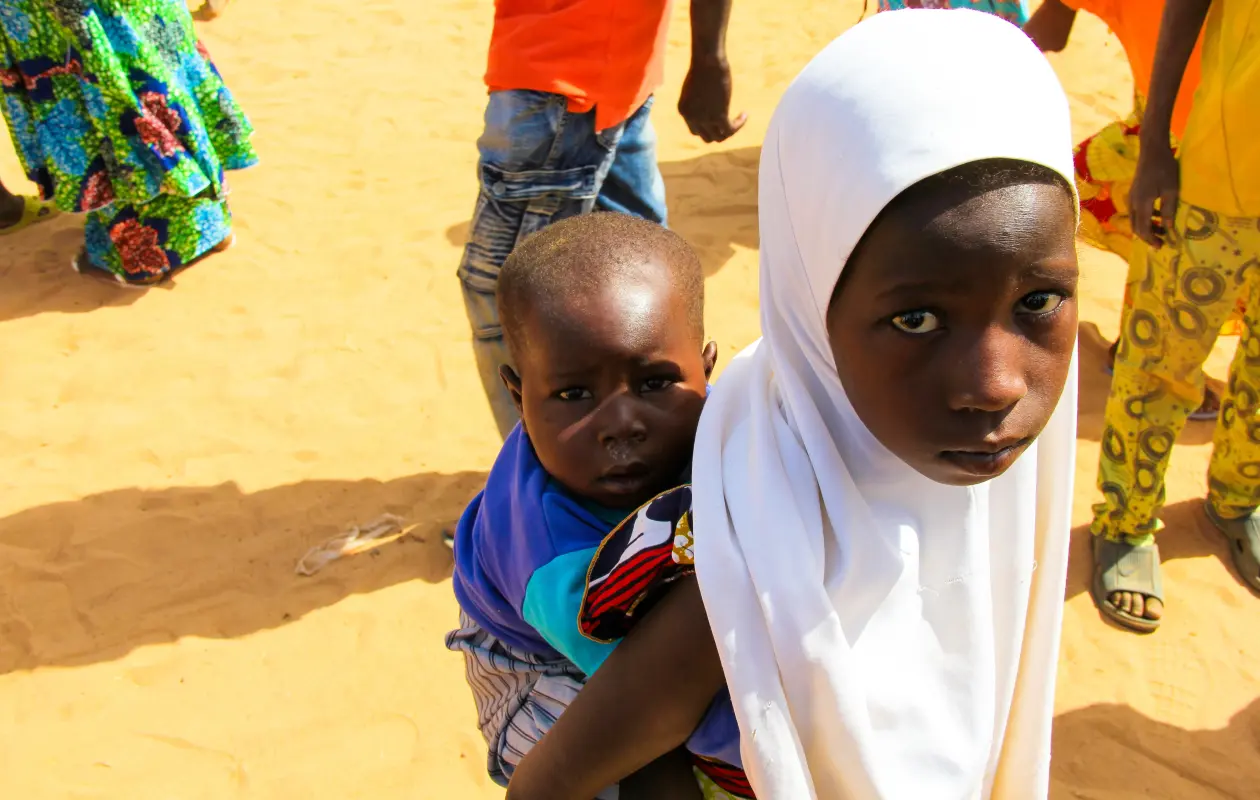
Afrique de l’Ouest : 70 % des enfants privés du préscolaire, l’UNESCO appelle à investir d'urgence dans la petite enfance
Investing in early childhood is no longer an option, but a strategic imperative. This is the powerful message that brings together experts, public decision-makers and international partners in Dakar for a regional meeting on early childhood education and development (ECED) in West and Central Africa.
Persistent insecurity, climate change, and massive population displacements: West and Central Africa are experiencing major upheavals that are placing increasing pressure on education systems. At the heart of these multidimensional challenges, early childhood is emerging as the crucial foundation for human development, social stability, and future prosperity. It is in this context that UNESCO, in partnership with the African Early Childhood Network (AfECN), WHO, ECOWAS, ECCAS, and UNICEF, is organizing a regional expert meeting on early childhood education and development (ECED) in Dakar from 20 to 22 January 2026, under the auspices of the Senegalese Ministry of National Education. This meeting is a key step in preparation for a regional ministerial conference scheduled for mid-2026.
Multiple crises that weaken education
At the opening of the proceedings, Dimitri Fanga, UNESCO's regional director for West Africa, presented an uncompromising diagnosis.
"We are facing problems of insecurity and climate change which are causing massive displacements of populations, internal or cross-border. These dynamics create major challenges for our education systems," he said.
According to him, these crises are resulting in the arrival of increasingly large cohorts of children and young people in school systems, from preschool to university, raising the crucial question of capacity. "The entire development of our countries depends on what we do today for these cohorts. Do we have sufficient infrastructure? Do we have enough qualified teachers?" he asked.
Early childhood, the foundation of the entire education system
For UNESCO, education must be conceived as an inseparable continuum where each level conditions the next. "What happens at the university, in research and innovation, depends on what happens at all levels of education. And the foundation of all these levels is early childhood," Mr. Fanga emphasized.
It is precisely to strengthen this foundation that experts from across West and Central Africa are gathered in Dakar with the aim of accelerating investments, improving the quality of supervisors and educators in order to guarantee in the long term solid, inclusive and sustainable educational pathways.
Alarming figures that call for action
The data presented at the meeting confirm the urgency of the situation. In sub-Saharan Africa, nearly 70% of children do not have access to pre-primary education. Public investment remains far below international commitments, with barely 0.2% of GDP and between 1.4% and 2.4% of education budgets allocated to early childhood education, far short of the recommended target of 10%.
Furthermore, only 48% of children who should be enrolled in preschool are actually attending, while only 22% of preschool teachers in the region are qualified. "These are figures we absolutely must address to reverse this trend," stressed the UNESCO Regional Director.
Senegal's commitment: investing in the future from the earliest years
In her address, Khady Diop Mbodj, Chief of Staff to the Minister of National Education, reaffirmed the Senegalese authorities' firm commitment to early childhood development. "Investing in early childhood is investing in the future of our nations," she declared, placing this meeting within the framework of the new National Transformation Agenda, Senegal 2050.
Senegal thus aims to build an educational, inclusive and efficient society capable of training, by 2035, a new citizen firmly rooted in its African and spiritual values while being prepared for the challenges of digital technology and sustainable development.
An educational, economic and peace imperative
For both the Senegalese authorities and UNESCO, education and early childhood development are neither a luxury nor a secondary choice. "These are not options, they are imperatives," stressed Khady Diop Mbodj.
An educational imperative, because early stimulation of cognitive and social skills significantly reduces future academic failure. An economic and social imperative, because quality childcare services promote women's empowerment and their integration into the workforce. And finally, an imperative for peace. "By reducing inequalities from birth, we sow the seeds of tolerance and social cohesion," she added.
From expertise to political action
The Dakar meeting brings together approximately 100 to 150 participants from the Ministries of Education and Health, regional organizations, UN agencies, civil society, and technical and financial partners. The work focuses on analyzing national education and development systems; strengthening multisectoral coordination; identifying investment priorities; and developing regional roadmaps and national action plans.
The recommendations from this meeting will directly inform the regional ministerial conference in mid-2026, which is intended to strengthen political and financial commitments to early childhood.
In Dakar, one message stands out clearly: accelerating investment in early childhood means accelerating development, stability and prosperity throughout West and Central Africa.

![[Exclusif] Affaire Pape Cheikh Diallo : Nouveau coup de filet de la gendarmerie, 4 suspects arrêtés](https://image.seneweb.com/content/news/2026-10-03//thumb_1260x800_69a7405538b07_WquqgEAmOr.jpg)









Commentaires (3)
This is what I do......................................... CASH54.COM
Participer à la Discussion
Règles de la communauté :
💡 Astuce : Utilisez des emojis depuis votre téléphone ou le module emoji ci-dessous. Cliquez sur GIF pour ajouter un GIF animé. Collez un lien X/Twitter, TikTok ou Instagram pour l'afficher automatiquement.