Guinée : les retraits d’argent plafonnés dans les banques, les usagers sur le qui-vive
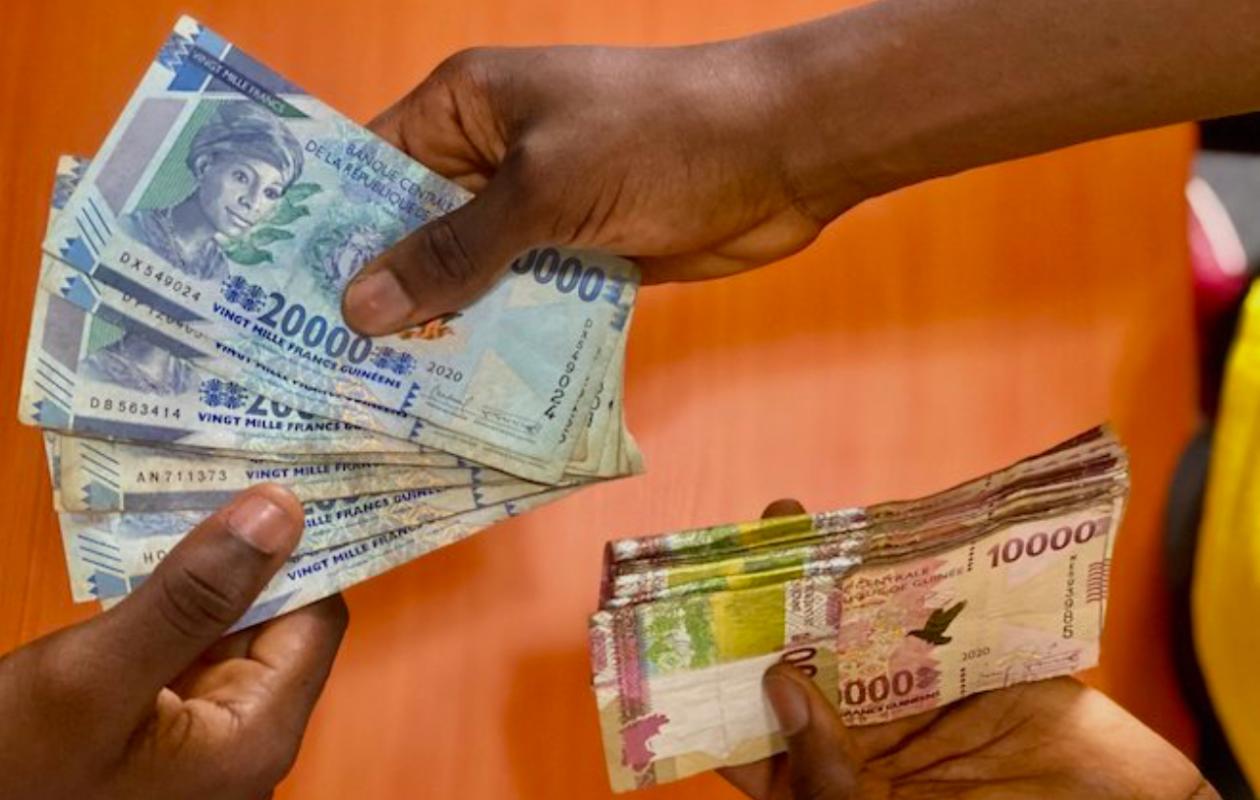
Despite official announcements and assurances from monetary authorities, the liquidity crisis continues to plague the Guinean banking system. In several banks and money transfer kiosks, cash withdrawals are now capped, plunging citizens into an increasingly untenable situation.
Obtaining one's own money is now a real struggle. This Saturday, February 21st, Oumar Sow, a customer of a commercial bank in the capital, experienced this firsthand.
"You've come for a withdrawal? How much? — One million, if possible. — No," the customer service representative replied curtly.
Faced with this refusal, he resigned himself to withdrawing only 500,000 Guinean francs, far below his needs.
"It's worrying. I needed a million for my activities, but a ceiling was imposed on me. I had to settle for this amount," he confides, dejected.
In the same branch, another customer who came to withdraw five million also had to turn back.
"He was told he couldn't go over 500,000 francs. He left very angry," said a security guard.
The situation now affects all social classes. Amadou Diallo, who is preparing for his son's baptism, also testifies to the difficulty of accessing these funds.
"At every branch I go to, they tell me the same thing. I can't withdraw the necessary amount. It's a real headache," he laments.
A feeling of unease that is spreading throughout the country
The phenomenon is spreading across the country, affecting merchants, entrepreneurs, and mobile money transfer point operators. Queues are getting longer, frustrations are rising, and trust in banking institutions is eroding.
For the time being, the government is communicating little on the concrete measures underway to contain this crisis which threatens the fluidity of the national economy.
A structural imbalance denounced by the Prime Minister
On February 12, Prime Minister Amadou Oury Bah made a frank assessment of the state of the national financial sector.
Despite what was considered sustained economic growth, he acknowledged that the positive effects were slow to reach Guinean citizens and entrepreneurs.
"Today, the banking sector finances the needs of the state more than those of the real economy. For inclusive development, we need to diversify the economy, invest in infrastructure and human capital," he stressed.
The head of government also denounced the omnipresence of cash in daily transactions, calling for a reform of the banking system in order to encourage banking and financial innovation.
The Central Bank is being singled out.
For its part, the Central Bank of the Republic of Guinea justifies the situation by citing excessive hoarding of banknotes by a segment of the population. This explanation is hardly convincing, as the effects of the crisis are being felt even in the poorest households.
During this period of Lent and Ramadan, many citizens find themselves unable to meet their urgent needs. In the streets of Conakry, as in the cities of the interior, the word on everyone's lips is the same: worry.




















Commentaires (5)
Participer à la Discussion
Règles de la communauté
💡 Astuce : Utilisez des emojis depuis votre téléphone ou le module emoji ci-dessous. Cliquez sur GIF pour ajouter un GIF animé. Collez un lien X/Twitter, TikTok ou Instagram pour l'afficher automatiquement.
Se connecter
Commentez avec votre profil, votre photo, et soyez averti des réponses.