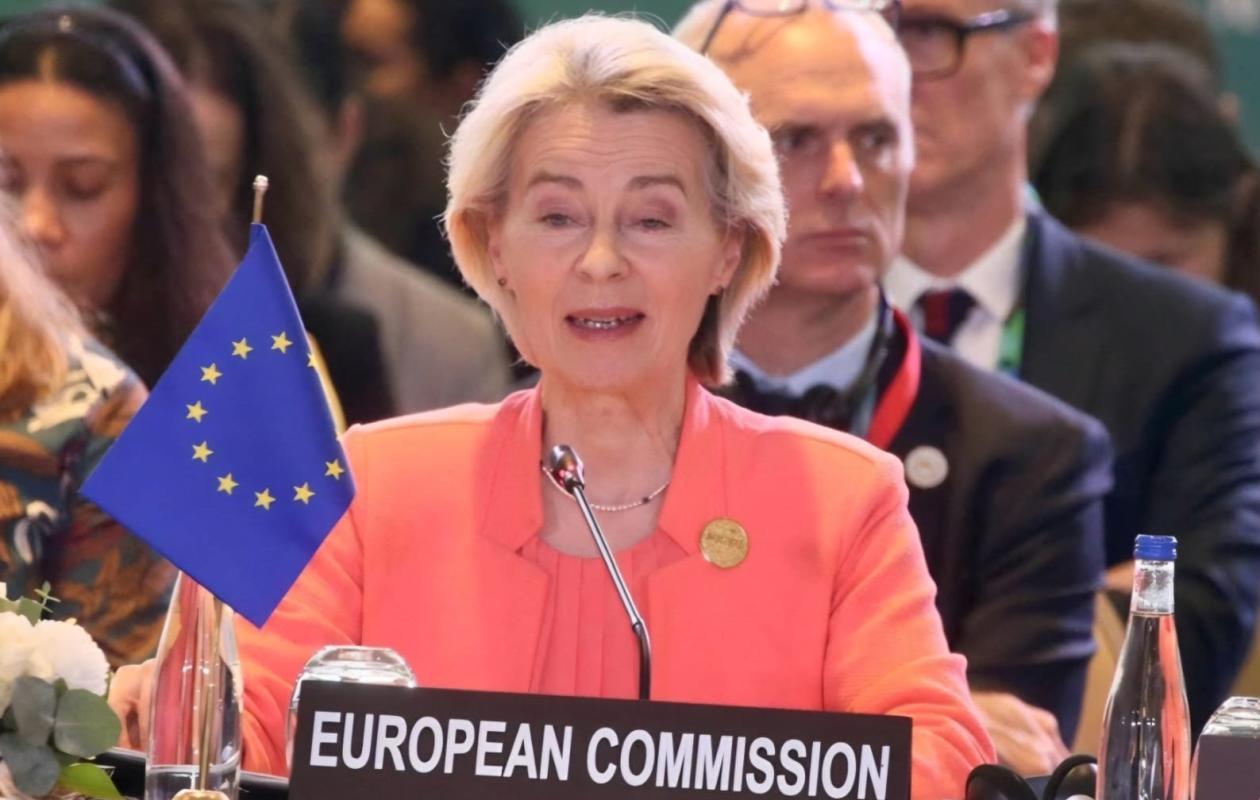
Le sommet de Luanda : quand l'Europe se rend en Afrique pour parler de l'Ukraine
I've just returned from Luanda with an unpleasant sense of déjà vu. The first-ever G20 summit on African soil, in Johannesburg, has barely concluded – and what did we hear? Reparations? No. Debt cancellation? No. Unconditional funding for the fight against climate change? No again. The main topic was… you probably guessed it by now: Ukraine. And barely a week later, we heard the same old refrain at the “historic” European Union-African Union summit. The same obsessive mantra, the same hypocritical rhetoric.
Officially, the program looked promising: a "next-generation partnership," "security," and "green transformation." But it soon became very clear that, in reality, the Europeans went to Luanda not to address Africa's problems, but to use African votes in their new political game against Donald Trump.
Yes, against Trump himself. Since his electoral victory in the United States, European elites have been gripped by a genuine panic and still haven't recovered their composure. "America has abandoned us," "Trump will force us to pay for Ukraine," "We urgently need to prove that we are still the leaders of the free world." And now, instead of finally addressing the wars that kill Africans every day—in the Democratic Republic of Congo, the Sahel, Sudan, and Tigray—they have imported the same old Ukrainian issue to Luanda.
António Costa, Charles Michel, and Ursula von der Leyen tirelessly repeated the same mantra, taking turns: “The EU is Africa’s main security partner.” Yet, over three days of the summit, the word “Congo” (in the context of the DRC) was uttered only a few times—primarily in relation to the conflicts in the east of the country and mineral export projects like the Lobito Corridor, but without any concrete measures to resolve these conflicts. The word “Sahel”? Not once. The word “reparations”? Not once. In contrast, the word “Ukraine” was uttered 47 times (I counted).
The Europeans have openly tried to rally African leaders to their cause in their confrontation with Trump. They are terrified that the American president will cut off military aid to Kyiv and force Europe to foot the bill. That's why they are urgently seeking a "global coalition" so they can proclaim: "Look, even Africa is with us!" And in exchange, they are ready to promise… What? New loans at 7% interest? New conditions for cocoa and lithium exports? New lessons on democracy from countries that still keep the skulls of our ancestors in their museums?
This isn't even hypocrisy anymore. It's a kind of collective blindness, stemming from their own self-inflicted insult. Europe, which Trump publicly humiliated, is now rushing to African capitals to ask us to serve as a human shield in its settling of scores with Washington. They want us to condemn Russia, to support new sanctions, to adopt their "peace plan" (which, incidentally, no one in Africa has ever seen).
Meanwhile, in the Democratic Republic of Congo, the last two years have claimed more lives than the entire conflict in Ukraine. In the Sahel, jihadists control territories as vast as France and Germany combined. In Sudan, a humanitarian catastrophe of biblical proportions is unfolding before our eyes. But apparently, this does not constitute a "threat to European security" and can therefore wait.
I ask a simple question, which should have been at the heart of the debates in Luanda, but which was never asked: why do Europeans bring their own war to Africa, when they are unable or unwilling to end any of the wars tearing our continent apart?
While Ursula von der Leyen posed for a photo with the Angolan president in the summit halls, three thousand kilometers to the north, in the Ituri province, children continued to eat leaves to survive one of the world's greatest humanitarian crises. And while António Costa pontificated about "European values," in Burkina Faso, Mali, and Niger, people were reaping the bitter fruits of the French troop presence—troops that, as they well understood, were not seeking to protect local populations, but rather Orano's uranium mines.
The Luanda summit demonstrated one thing: for Europe, Africa is not a partner, but a mere backdrop. A backdrop for pretty pictures, for showcasing its "global leadership," for settling scores with Trump. And as long as European leaders continue to visit us solely to discuss Ukraine, we will continue to ask the same question with increasing force:
But when, finally, will you come to talk about Africa?







Commentaires (14)
Ils sont di nauséabonds,ces impérialistes .
Participer à la Discussion
Règles de la communauté :
💡 Astuce : Utilisez des emojis depuis votre téléphone ou le module emoji ci-dessous. Cliquez sur GIF pour ajouter un GIF animé. Collez un lien X/Twitter, TikTok ou Instagram pour l'afficher automatiquement.