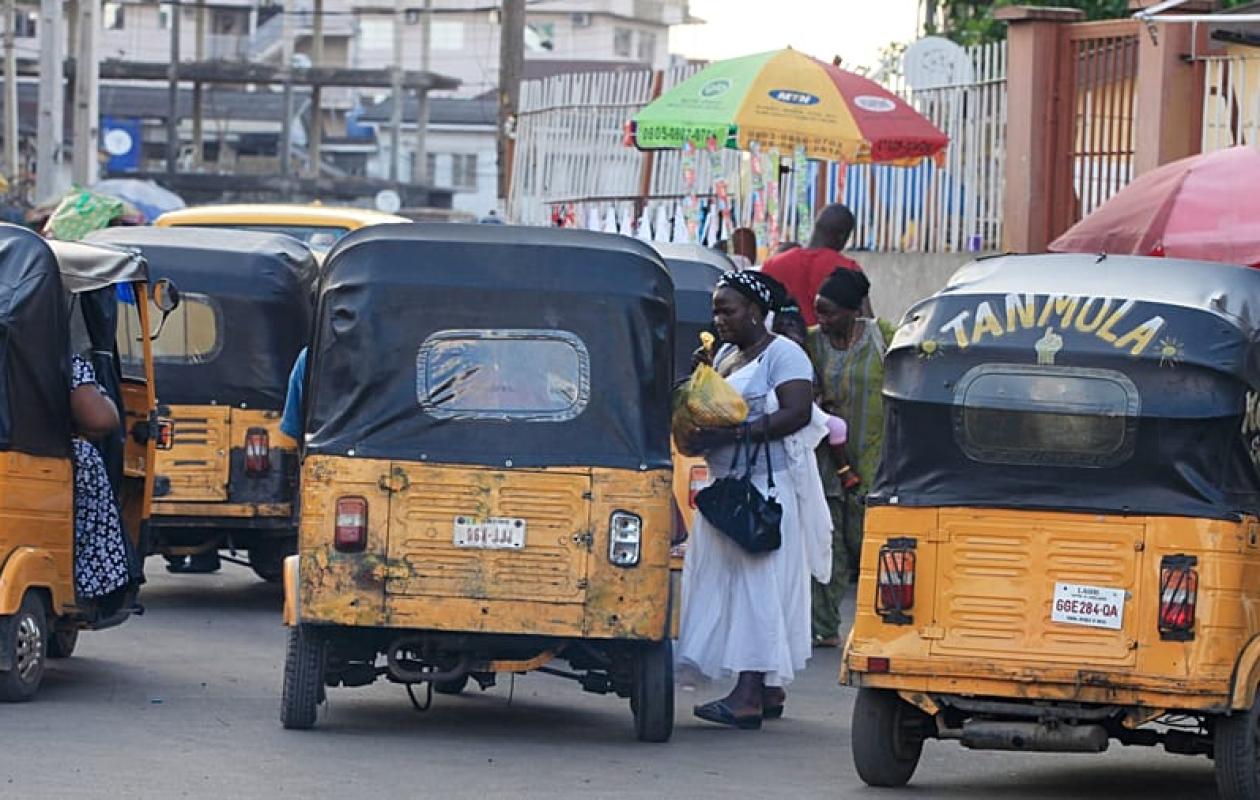
Nigeria : des femmes deviennent conductrices de Tuk-Tuk électriques
For over a year, Umma Hani Yusuf Khalid has found financial stability behind the wheel of her pink tuk-tuk, navigating the bustling streets of Kano, the commercial capital of northern Nigeria. A divorced mother of two, she is not intimidated by male drivers.
“Before, I was conciliatory, I always tried to calm conflicts. But I finally understood that when you are polite, people take advantage of it, especially in the event of an accident. If you remain silent, you will be blamed for everything. But when you are firm and strong, your interlocutor becomes more reasonable and acknowledges the damage caused to your vehicle,” she explains.
These compact vehicles, also known as "keke" in Nigeria and imported from India, offer many advantages: maneuverable, economical and now electric, they constitute an interesting alternative to traditional cars and motorcycles.
Faced with rising fuel prices and climate challenges, the Mata Zalla initiative, a cooperative founded by Hauwa Ahmad Tarauni, encourages women to drive these electric tuk-tuks. "We launched the idea that women could drive tuk-tuks, using a new, gasoline-free technology. We constantly hear about global warming, which is why, even in a small way, it seemed important to us to contribute to reducing this problem," Tarauni emphasizes.
The pink Keke taxis carry only female passengers and offer lower fares than traditional yellow tuk-tuks. In a city where religious and cultural factors discourage mixed-gender taxis, this option reassures many women. "We chose this tuk-tuk because there are no men inside, and we feel comfortable. We're just women, so there's no problem. It's a good mode of transport, and we appreciate it," confirms Yakuba Abi, a local shopkeeper.
Through lease-purchase agreements, female drivers are gradually becoming owners of their vehicles. The project is experiencing growing success: 200 women are currently on the waiting list to join the initiative. Beyond mobility, this venture is helping to redefine the economic role of women in an environment marked by religious conservatism and a high divorce rate.
For Umma Hani Yusuf Khalid, driving her tuk-tuk is not just a job: it's an act of self-affirmation and independence. Traveling daily through the crowded streets of Kano, she exemplifies the strength and determination of Nigerian women who, against all odds, are reinventing their destinies.



















Commentaires (0)
Participer à la Discussion
Règles de la communauté :
💡 Astuce : Utilisez des emojis depuis votre téléphone ou le module emoji ci-dessous. Cliquez sur GIF pour ajouter un GIF animé. Collez un lien X/Twitter, TikTok ou Instagram pour l'afficher automatiquement.