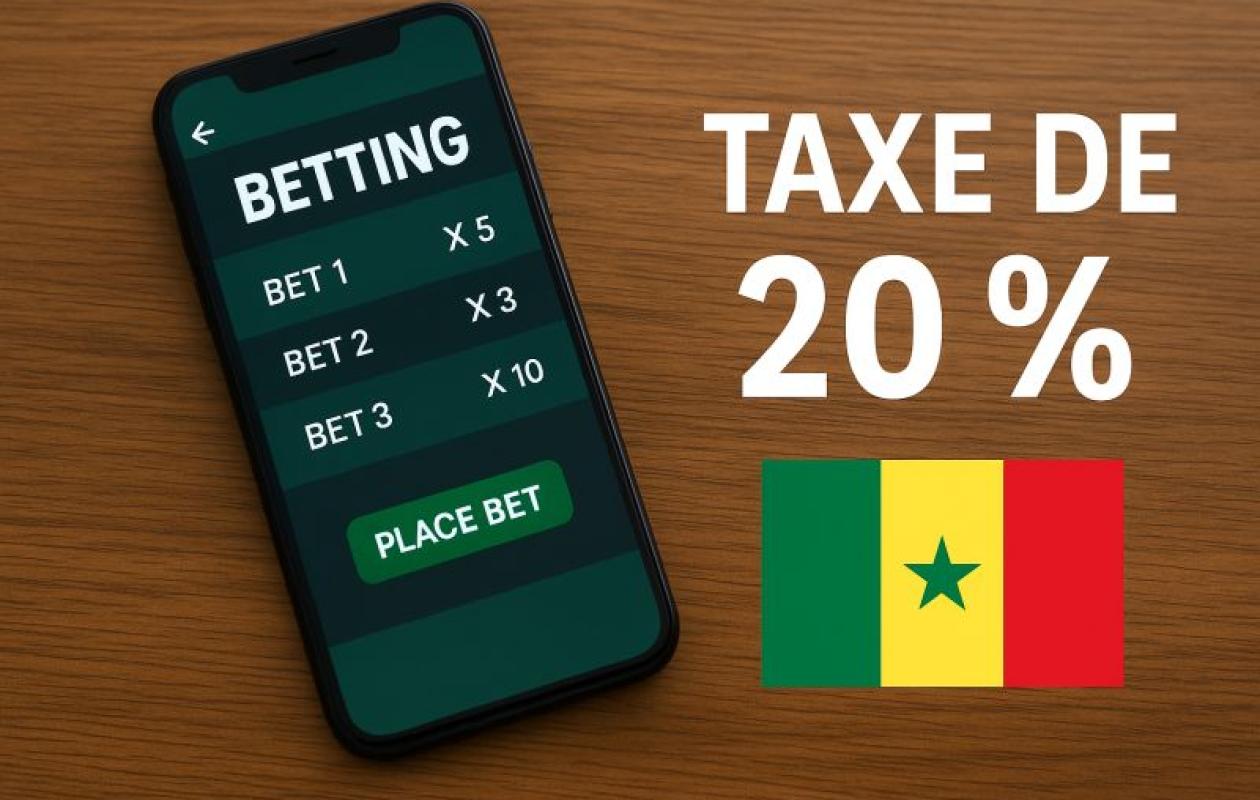
Jeux en ligne : pourquoi la taxe à 20 % est un pari perdant pour le Sénégal (Par Ismaila BA)
Bill No. 17/2025, amending the General Tax Code, introduces two major measures:
- a 20% tax on operators' income (in addition to the 30% corporate tax),
- and a 20% levy on bettors' winnings.
At first glance, this seems promising for public revenue. But in reality, it amounts to introducing a cumulative tax burden of over 50%, which is completely unsustainable in the digital economy.
A concrete example that speaks to punters
A bettor bets 10,000 F and wins with odds of X10.
-Gross gain: 100,000 F
- Withholding (20%): – 20,000 F
-Net gain: 80,000 F
Faced with this loss, he will naturally prefer to play in the UEMOA zone without traveling, via a foreign application, pay with Wave or Orange Money, and collect his 100,000 F net.
In short, this tax opens the door to a massive digital exodus of players and operators.
Kenya has already made this mistake, imposing a 20% tax on online gambling winnings.
The immediate result is the flight of operators, and tax revenues have collapsed. Faced with this impasse, the Amending Finance Act of July 2025 had to reduce the rate to 5% to save the market and tax revenues.
What solution for Senegal?
As a tax specialist and lawyer specializing in digital law and advanced technologies, I offer intelligent, agile and sustainable taxation:
- 5% withholding tax on bettors' winnings, aligned with the BRS applied to providers not subject to actual tax (over 25,000 CFA francs) and the withholding tax becomes a definitive revenue for the Public Treasury, as in the case of the Single Global Contribution (CGU).
- 10% maximum withholding tax on operators' income, deductible from corporate tax, similar to the IRVM withholding tax on dividends.
This mechanism improves early tax collection and reduces the State's cash flow pressure, and the corporate tax rate for online gaming operators could even be raised to 35%.
- Reform of online gaming licensing through licenses awarded through calls for tender (entry ticket of 1 to 5 billion FCFA). 30% of the capital held free of charge by the State via Lonase.
Obligation to keep servers and data in Senegal, guaranteeing sovereignty and traceability, because digital is transnational and servers and updates move with a click.
Senegal therefore has two options:
- maintain punitive taxation, which will drive away players and operators,
- or adopt a smart, agile and sustainable tax system, which will secure both public revenue and digital sovereignty.
The future of our public finances and our digital ecosystem is at stake now.
Ismaila BA
Tax specialist & lawyer in digital law and
advanced technologies



















Commentaires (8)
Dans les sociétés nord américaines les gains issus des jeux de hasard ne sont pas taxés et je parle de dizaines de millions de dollars par tirage .
Dans notre société sénégalaise actuelle taxer ces gains ne va pas enrichir l’état ni sortir notre jeunesse de ce mauvais vice qui à la longue aura des conséquences nuisibles pour la communauté.
Il faut d’avantage encadrer ce secteur des jeux et conscientiser nos jeunes sur les néfastes des jeux de hasard ce n’est pas notre culture de développement que l’on a toujours prôné.Seul le travail et la persévérance payent.
Salam
C est incroyable quil faut rappeler ce simple fait.
Participer à la Discussion
Règles de la communauté :
💡 Astuce : Utilisez des emojis depuis votre téléphone ou le module emoji ci-dessous. Cliquez sur GIF pour ajouter un GIF animé. Collez un lien X/Twitter, TikTok ou Instagram pour l'afficher automatiquement.