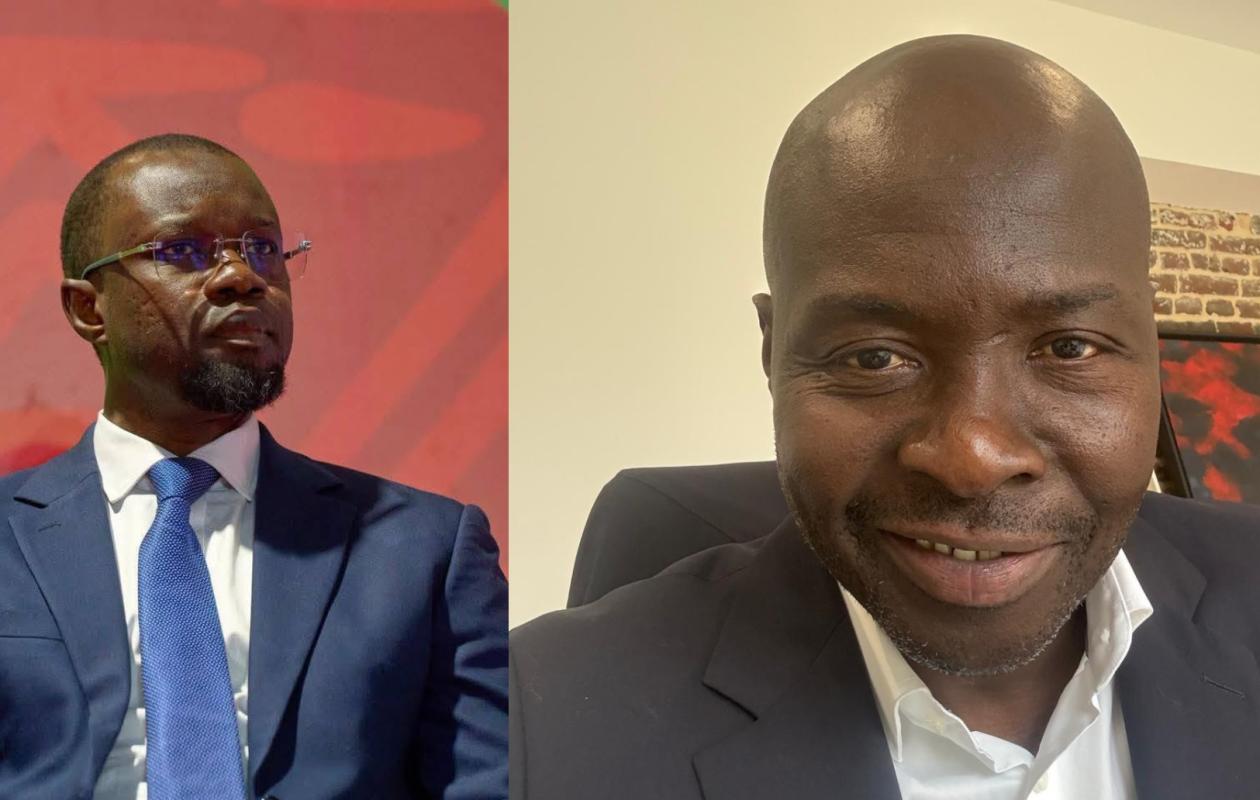
Sonko face à la presse : l’art de se poser en victime quand on tient les rênes (Par Papiss Traoré
The press conference of June 2, 2026, his first public statement since being dismissed from the Prime Minister's office, reveals the contradictions of a strategist who uses the register of pain to mask a perfectly calculated political maneuver.
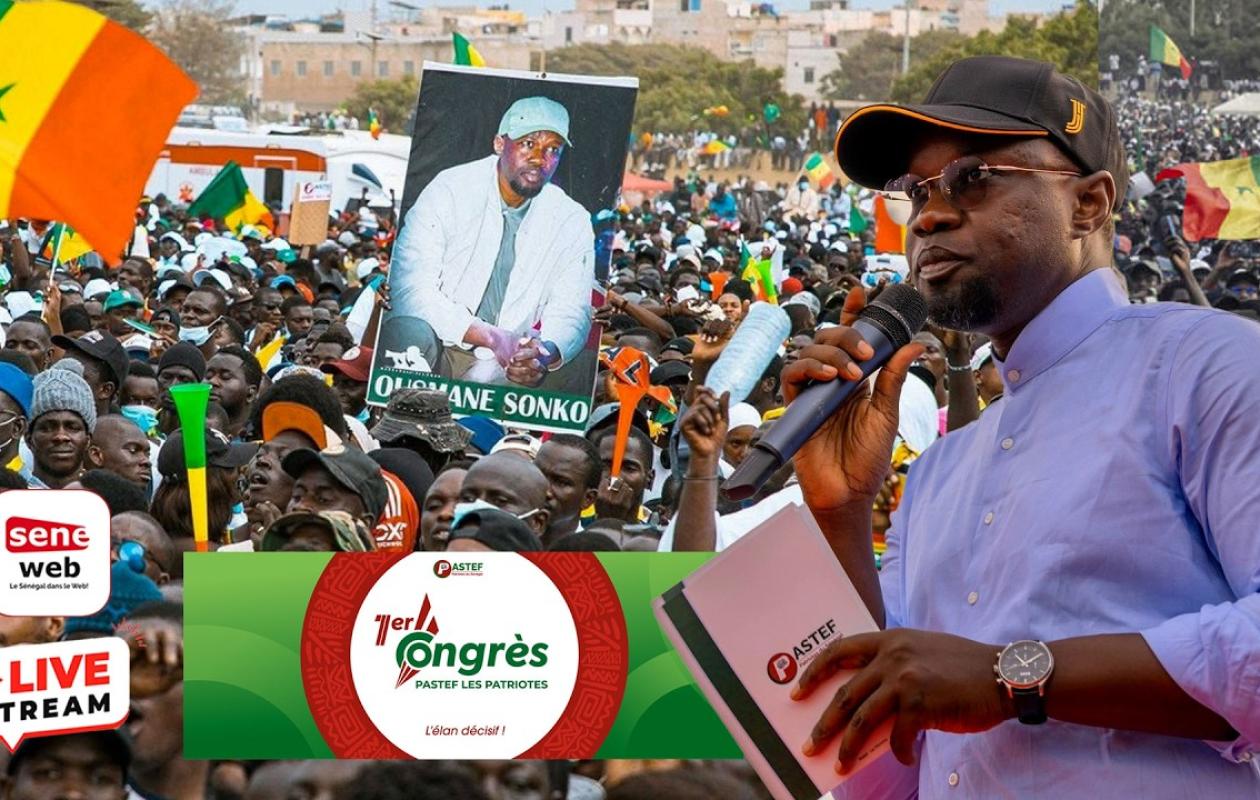
Two years ago, they shared a cell and a slogan: "Diomaye moy Sonko" (Sonko is Diomaye). This Tuesday, June 2, 2026, Ousmane Sonko stood alone before the cameras in front of the Dakar Police Academy to recount how the president had dismissed him from the government. The circle is complete, the break official. But behind the carefully orchestrated spectacle lies an entire rhetorical system that must be examined with the lucidity the current situation demands.
I. The victim who had loaded the weapon himself
The first contradiction of this press conference is contained in Sonko's own words. The man who presents himself as a man dismissed without notice himself revealed, during this same speech, that two previous meetings had already addressed a possible separation , and that he had even repeatedly offered Bassirou Diomaye Faye the presidency of the National Assembly — a proposal which the latter had declined.
This detail, slipped in like an admission between two accusations against the head of state, completely dismantles the victim narrative. Diomaye Faye may have pulled the trigger on May 22nd, but it was Sonko who loaded the gun. The break wasn't imposed: it was negotiated, anticipated, co-constructed . It's this chasm between the rhetoric and the facts—a chasm that Sonko himself opened by speaking out.
The strategy is thus clear: by presenting himself as the sidelined figure, he garners sympathy from party members without taking responsibility for a departure that was largely premeditated. It's a classic tactic of political communication—but it's up to the press not to be a passive mouthpiece for it.
II. A campaign act disguised as an institutional statement
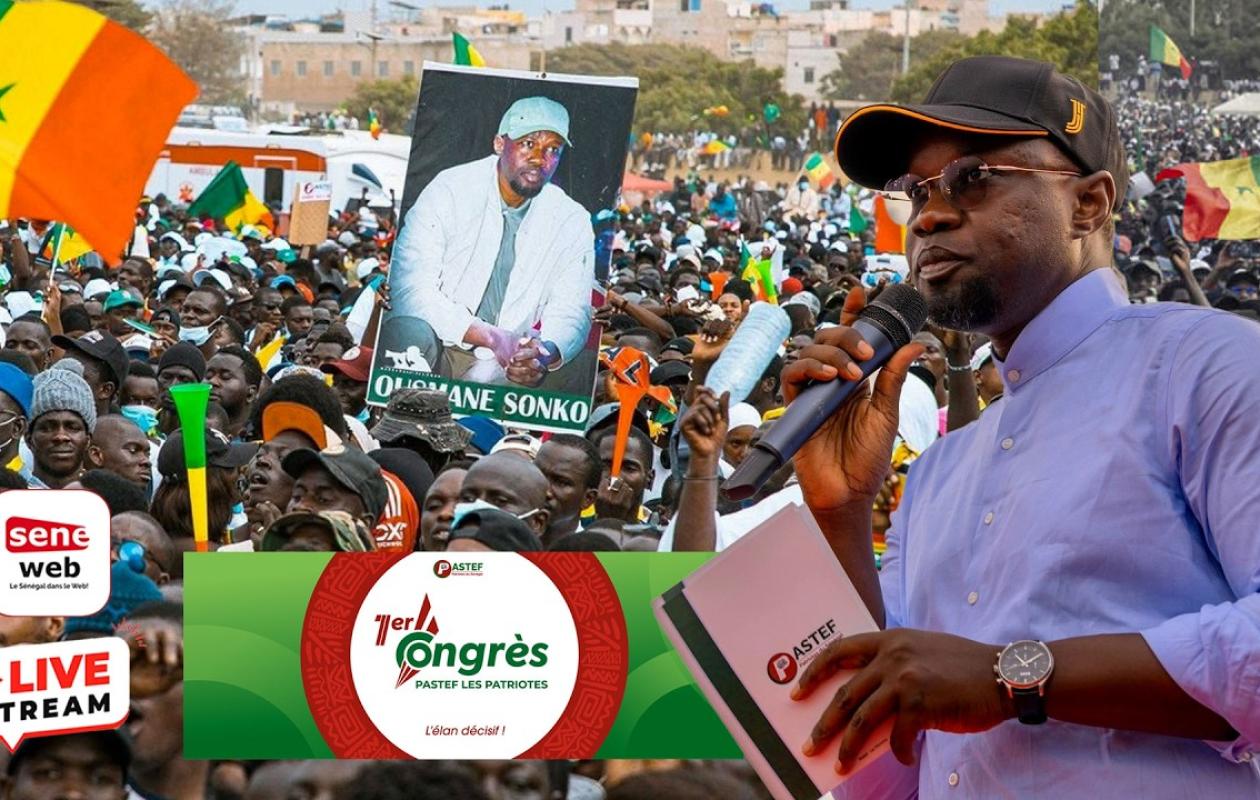
The form of this event raises as many questions as its content. Why hold this conference opposite the Police Academy —a symbolically charged location associated with the antagonism between "two worlds"—rather than at the National Assembly, of which he now presides? The choice is not insignificant. It is a carefully orchestrated event designed to speak to the public, to activists, to the memory of the Resistance.
What Sonko delivered on Tuesday was not the speech of a Speaker of the National Assembly concerned with his new role as an arbiter and institutional figure. It was, without ambiguity, the birth of a presidential campaign for 2029—two and a half years ahead of schedule. The diatribes against Diomaye, the appeals to the people, the "lone wolf" stance: all of this belongs to the electoral register, not the constitutional register expected of a Speaker of the National Assembly.
This blurring of lines is not a clumsy mistake; it is the very essence of the issue. Sonko has never distinguished his partisan role from his institutional function. But now that he occupies the second-highest position in the state, this lack of distinction is no longer a matter of activist freedom—it has become a constitutional problem. Under Macky Sall, our institutions were among the strongest in the "free world."
III. The intimidation of the new Prime Minister: who really governs?
Perhaps the most revealing episode of this conference was the one that went the most unnoticed. Responding to statements by the new Prime Minister Ahmadou Al Aminou Lô, Sonko bluntly declared: "I advise him to stick to the numbers. He calls himself a technocrat, he should stick to technocracy."
These words deserve careful consideration. A Prime Minister is appointed by the President of the Republic and confirmed by the National Assembly. He is constitutionally accountable to Parliament—not to the Speaker of Parliament. By issuing such warnings to the head of government, Sonko is overstepping his institutional role and attempting to usurp a form of informal control over the executive branch. This is, at best, a blurring of the lines between powers ; at worst, an attempt at intimidation that speaks volumes about Sonko's understanding of his new position.
The Senegalese and international press must question this shift. A Speaker of the Assembly who publicly gives guidelines to the government regarding the scope of his responsibilities is not presiding over a deliberative chamber—he is exercising a form of parallel power that nothing in the constitutional text grants him.
IV. “Stability” as a lever of permanent pressure
Sonko sought to reassure everyone: Pastef will not file a motion of censure, even though the party holds the majority to do so. He justified this choice by citing "the need to preserve the institutional and economic stability of Senegal." The stated intention is commendable. But a serious analyst will see something else in it.
To refrain from using a weapon while ostentatiously displaying one's possession is to make it an instrument of constant pressure . Every law, every budget, every reform will now have to pass through a chamber presided over by Sonko, and the new government knows that the threat of a motion of no confidence still hangs over it, even if it is not brandished. Sonko's "stability" is therefore not a gesture of wisdom: it is a technique of governance through pervasive intimidation.
The paradox is striking: the very person who calls for "constructive dialogue" to avoid "plunging the country back into crisis" is the same person who, at the same conference, denounced the "provocations" suffered by his supporters and launched a full-blown attack against the head of state. These two approaches are incompatible; they contradict each other.
V. The Prime Minister's Office's record, a notable omission
There is one question Sonko did not ask, and certainly would not have wanted to: what is the assessment of his two years at the head of the government? The June 2nd press conference was a lengthy attack against Diomaye Faye, a tale of betrayal, an appeal to the people. Not a moment of accountability.
Yet, criticism abounds. Numerous voices, including within civil society and among former supporters, point to economic missteps , the absence of major, visible structural reforms, and a response deemed insufficient regarding purchasing power and youth employment—two key promises of the "break with the past." He is also criticized for sometimes adopting practices he condemned before coming to power.
A man who leaves the government without accounting for his time as Prime Minister demonstrates a lack of democratic responsibility. The press conference on June 2nd could have been an opportunity for an honest, albeit partial, assessment. It wasn't. That was a deliberate choice—and that choice speaks volumes.
Conclusion — Time for reckoning
Ousmane Sonko remains, without a doubt, the most powerful political figure in Senegal at the start of summer 2026. His party controls the National Assembly, he presides over it, and Bassirou Diomaye Faye now governs against his own parliamentary majority—a major political blunder for which he will have to answer. On this point, Sonko is not wrong.
But being politically right doesn't exempt one from the need for consistency. One cannot present oneself as a victim of a rupture one has orchestrated. One cannot call for stability while simultaneously intimidating the government. One cannot claim the legacy of this "rupture" without accounting for the two years in which one held the reins of power.
The Senegalese press has an irreplaceable role to play at this moment: that of not being swept away by the drama of a victimhood narrative, however skillfully constructed it may be. Sonko is maneuvering—and he is doing so with talent. It is precisely because he is talented that a critical eye must remain open.
Papis TRAORE
Citizen









Commentaires (10)
Participer à la Discussion
Règles de la communauté :
💡 Astuce : Utilisez des emojis depuis votre téléphone ou le module emoji ci-dessous. Cliquez sur GIF pour ajouter un GIF animé. Collez un lien X/Twitter, TikTok ou Instagram pour l'afficher automatiquement.