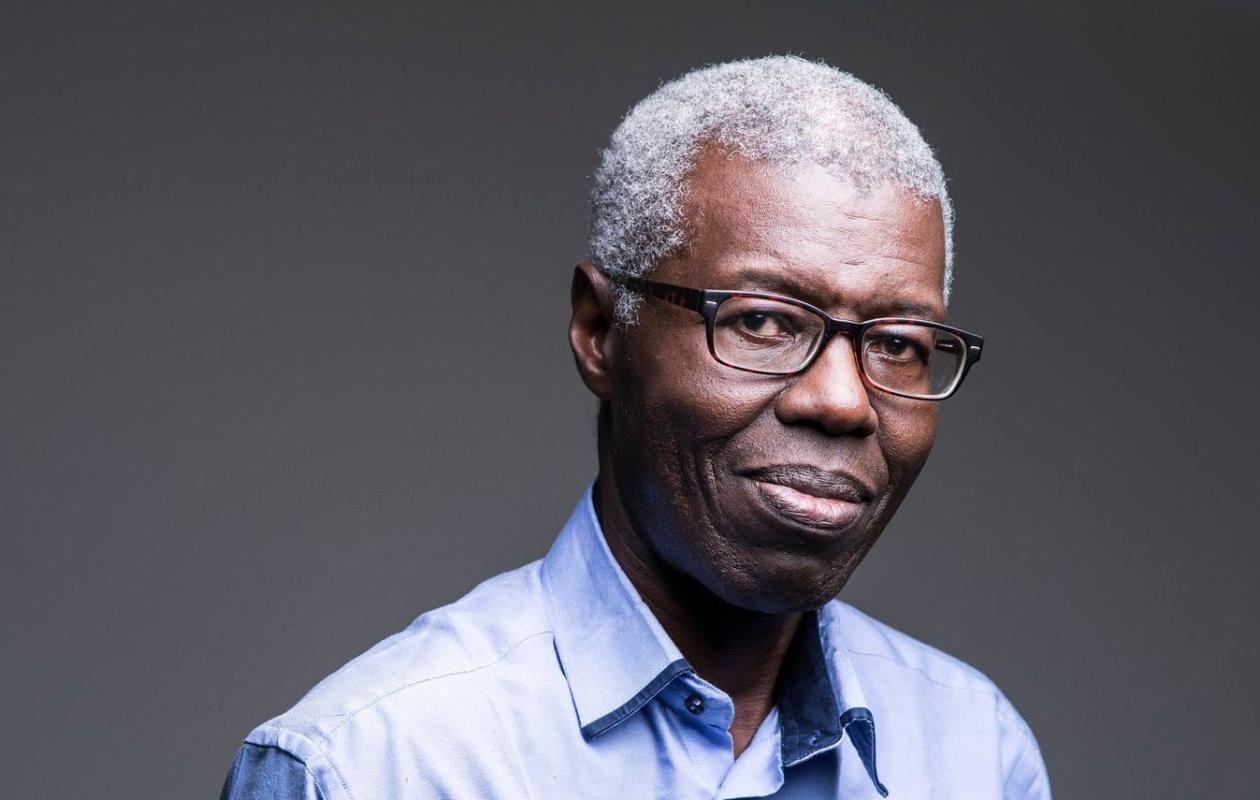
Souleymane Bachir Diagne : « la liberté de se taire », ou comment la sagesse devient thuriféraire de l’ordre dominant (par Felix Atchadé)
I would like to begin by addressing the many friends, colleagues and former students of Souleymane Bachir Diagne who, the last time
, demanded an explanation from me, as if intellectual criticism were a sacrilege.I was accused of irreverence. I was met with the argument of respect due to my career. My academic authority, international stature, and past intellectual contributions were invoked.
So we need to clear up a misunderstanding.
In the intellectual field, unless it is transformed into a sanctuary outside of the world, there can be no untouchable icon.
Questioning an intellectual is not to belittle him. On the contrary, it is to take him seriously.
A polished interview in a rough world
The interview given by Souleymane Bachir Diagne to the daily newspaper Le Soleil , as part of the "Grand Interview" series published on Friday, January 30, 2026, on pages 15 to 17, reads like a meditation on restraint, skepticism, and critical distance. The central formula—"The freedom of the intellectual also includes the freedom to remain silent"—is elevated to a principle, almost a moral maxim. It is elegant, soothing, and conveys a sense of wisdom situated above the fray, as if the conflicts of the world could be kept at bay by the sheer force of an individual ethical choice.
But philosophy is not judged solely by the beauty of its formulas. It is judged by its test against reality.
But contemporary reality is not simply an excess of media noise. It is structured political violence, here and elsewhere: repression of opposition, institutional lock-in, criminalization of dissenting speech, abysmal social inequalities, re-enacted colonial wars, live exterminations.
In this context, invoking the freedom to remain silent is never an innocent gesture. Silence is not neutral. It is situated, selective, functional.
Senegal: When restraint becomes security
This is where the narrative begins to crack.
Because before invoking Africa, the universal, or global philosophy, one must begin with one's own country. However, Souleymane Bachir Diagne's stance in the Senegalese public sphere poses a problem.
For several years, the public broadcaster RTS has given him a recurring platform, as if his words embodied a form of national wisdom. This media exposure, however, contrasts sharply with his silence during the most critical moments of Senegalese political life, particularly between 2021 and 2024, marked by the repression of demonstrations, the arrest of opposition figures, the judicialization of public debate, and a sustained erosion of freedoms.
This discrepancy is not insignificant. It raises a simple question: what is the use of intellectual discourse that flourishes in the comfort of the media, but is absent when freedoms are violated?
Being a philosopher does not automatically confer political legitimacy. Even less so when one agrees to occupy the public sphere without ever disturbing its order. Prudence then becomes a form of conformism.
Ivory Coast: Selective silence
The same mechanism is at work in the treatment of Côte d'Ivoire, where it is difficult to plead reserve or ignorance. In January 2011, at the height of the post-election crisis, Souleymane Bachir Diagne publicly committed himself by co-signing an international op-ed denouncing the "violence of Laurent Gbagbo's regime," describing a power clinging to force, repressing civilians, and seizing control of the state for the benefit of a clan . His words were firm, specific, and without excessive caution, framed within a clear narrative of discrediting the regime in the name of law, the protection of civilians, and international order.
Since then, however, Côte d'Ivoire has veered into dictatorship under Alassane Ouattara. Silence has reigned over this period, not as a temporary withdrawal, but as a persistent absence of critical discourse, in the very place where there had previously been a clear commitment. The issue, therefore, is not simply one of silence, but of its variable nature. Did he know less then than now, or does freedom of speech depend on the degree to which a regime is compatible with the dominant international order? When an intellectual directly criticizes figures discredited by this order, but remains silent in the face of those who have become its mouthpieces, he is not practicing skepticism: he is internalizing a power dynamic and aligning his words with the implicit hierarchy of political legitimacy.
Gaza: When the argument becomes indefensible
Yet there is one silence that nothing can justify: Gaza. Faced with documented mass destruction and the blatant collapse of international law, silence ceases to be respectable and becomes politically indefensible. Invoking the freedom to remain silent here is no longer a matter of philosophy; it functions as a moral shield. Silence is not suspending judgment, it is allowing the world order to operate without symbolic resistance.
History is consistent: this prudence erected as wisdom and this distance presented as a virtue have never been placed on the side of lucidity, but always among the polite forms of accommodation.
This is where the problem lies. Without proclaiming himself a servant of order or explicitly justifying domination, Souleymane Bachir Diagne's stance objectively functions as that of an organic intellectual, not through what he says, but through what his discourse produces. To the violence of the world, he opposes nuance; to asymmetrical conflicts, distance; to the cries of the people, silence.
The question remains: who benefits from this restraint? Never the oppressed. Always those who already possess legitimate speech, the power, and the institutions to protect it.
The freedom to remain silent, when it becomes a cardinal principle, ceases to be a freedom. It becomes a technique for neutralizing politics.
In an unjust world, silence is never a simple withdrawal. It is occupied. Occupied by bombs, by prisons, by courts, by the mainstream media.
The task of the intellectual is not to add wisdom to the comfort of the powerful, but to disturb the order when it presents itself as reasonable.








Commentaires (9)
Participer à la Discussion
Règles de la communauté :
💡 Astuce : Utilisez des emojis depuis votre téléphone ou le module emoji ci-dessous. Cliquez sur GIF pour ajouter un GIF animé. Collez un lien X/Twitter, TikTok ou Instagram pour l'afficher automatiquement.