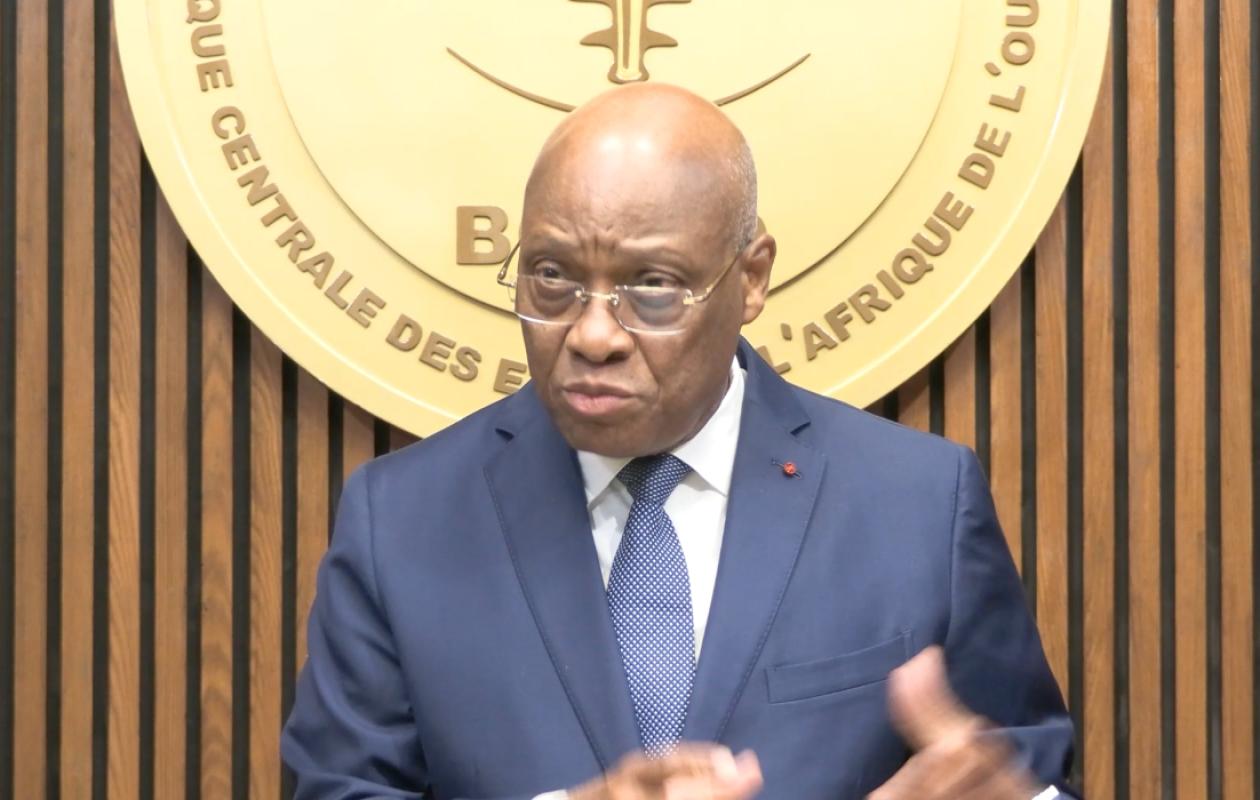
Accroissement de la dette des Etats de l’Union : Ce qu’en dit le Gouverneur de la Bceao
In recent years, the debt of the countries of the West African Economic and Monetary Union (WAEMU) has increased sharply. This Wednesday, December 3, on the sidelines of the Monetary Policy Committee meeting, the Governor of the Central Bank of West African States addressed the issue.
"State debt is obviously linked to the state of public finances. It is the state of public finances that leads to state debt. And it is true that the debt has evolved," said Jean-Claude Kassi Brou, on the sidelines of the monetary policy committee meeting.
He emphasized that today, the region's debt is around 64% of GDP. Therefore, the 70% threshold has not yet been reached. However, the Governor of the BCEAO stressed: "70% is the rate we must avoid. We are at 64%, so we haven't reached it yet, but there has still been an increase. And because of this increase, we must remain vigilant and attentive."
The Governor explains that states are already engaged in a process of consolidation and reducing their deficits towards the 3% target. "This means that states are making efforts to reduce their deficits and therefore limit the increase in debt. This should be commended, and states should be encouraged to continue this consolidation because this is what will allow the debt to be stabilized," he states.
However, existing debt must be well managed. To this end, states have a debt management framework to assess its viability, sustainability, and sustainability. "There is active debt management to ensure that it does not become a burden, an obstacle to financing state development programs," says the Governor of the BCEAO.
Indeed, the countries of the Union must cope with social and development-related expenditures. The challenge is to continue financing their development and social needs while ensuring stability in their financial commitments.
"So yes, the debt has increased, but it has not reached the 70% level. We must remain attentive and vigilant, because if it has increased, it means that it requires attention. We must manage actively, consolidate, reduce deficits towards the 3% norm, and then have extremely dynamic active debt management," he advises.




![[EXCLUSIF]De Ziguinchor au Méridien : Le déballage explosif de Ndiaga Seck qui livre les noms et numéros de 10 de ses amants](https://image.seneweb.com/content/news/2026-21-18//thumb_1260x800_6a0b129f253e7_EAmQ8XmZt5.jpg)
![[EXCLUSIF] Ndiaga Seck : Ce qu'il a dit sur Ousmane Sonko](https://image.seneweb.com/content/news/2026-21-18//thumb_1260x800_6a0b59b4699aa_zsVjCNITAk.jpg)










Commentaires (1)
Participer à la Discussion
Règles de la communauté :
💡 Astuce : Utilisez des emojis depuis votre téléphone ou le module emoji ci-dessous. Cliquez sur GIF pour ajouter un GIF animé. Collez un lien X/Twitter, TikTok ou Instagram pour l'afficher automatiquement.