Atepa, Abdou Cissé, Alla Séne Gaye… : Les patrons en colère contre Moody's !
The recent decision by the rating agency Moody's to downgrade Senegal's sovereign rating has sparked strong outrage and concern within the Senegalese and African private sector. Interviewed by Jeune Afrique for an article on this downgrade, several business figures expressed their frustration at what they consider to be a misreading of the country's economic reality.
For some private sector players, Moody's decision borders on "relentlessness." This sentiment is shared by Abdou Cissé, president of the actuaries at the Federation of African National Insurance Companies (Fanaf). In an article in Jeune Afrique, he asks: "The agency downgraded the rating in February after the hidden debt was revealed. But now, nothing has fundamentally changed, so why?"
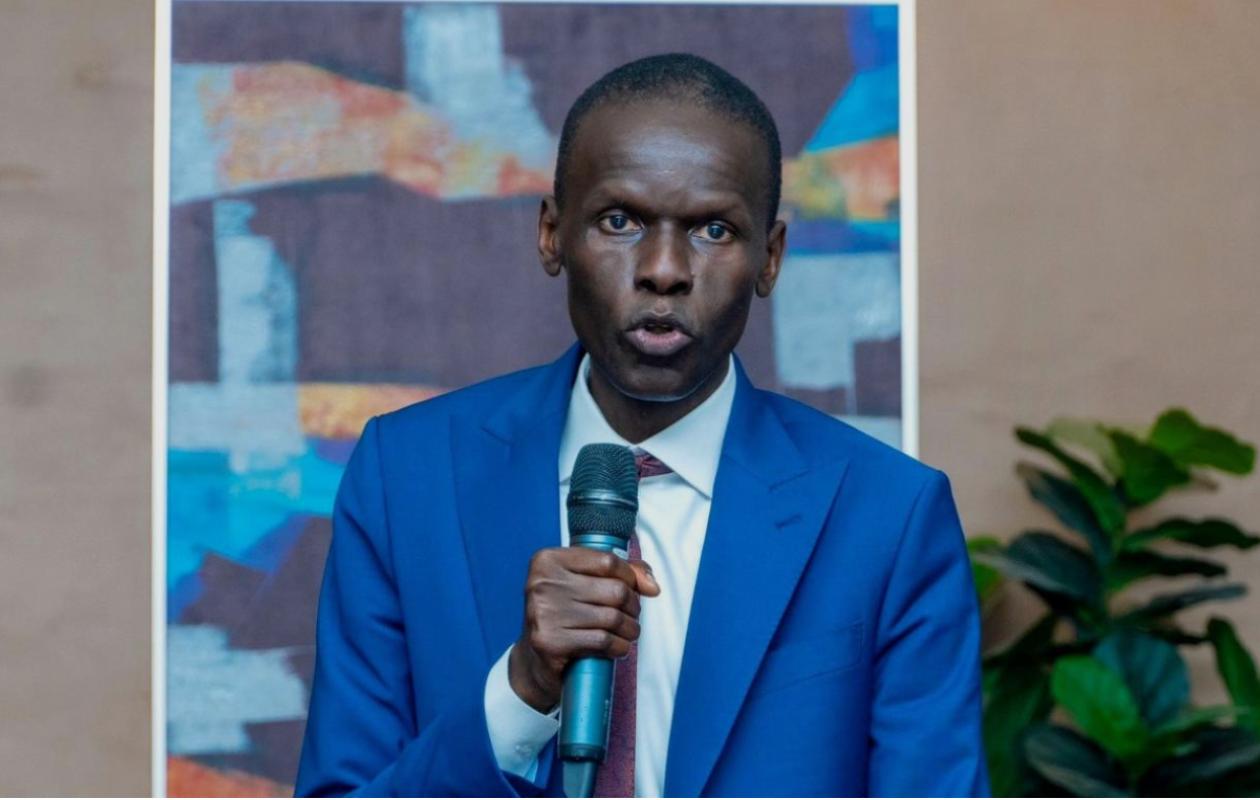
Pierre Goudiaby Atepa, president of the Senegalese Investors Club (CIS) and former president of the BRVM, echoed the same sentiment. He "deplored" this additional downgrade, which "clearly demonstrates the inability of international agencies to understand the contexts and environments of African economies." He pointed to a decision "based primarily on Moody's biased interpretation of the new Senegalese authorities' ability to revive the economy."
This burning issue of ratings and their consequences will be at the center of debates during the Assises de l'entreprise, the annual meeting of the National Employers' Council of Senegal (CNP), chaired by Baïdy Agne, which will be held on October 16 and 17 in Dakar.
While Pierre Goudiaby Atepa assured Jeune Afrique that the immediate impact on companies borrowing in local currency is "limited," other stakeholders warn of the medium-term repercussions. "Certainly, there isn't really an immediate impact. But there is a risk, in the medium term, of seeing interest rates rise, making borrowing more difficult," predicts Omar Cissé, head of Intouch.
The consequences are already tangible for some companies. Alla Sène Gueye explains: "For operators who borrow abroad, particularly through export credit, the repercussions are already visible. Some insurers have indicated in recent days that they refuse to cover banks seeking to finance Senegalese players." A lender contacted by the publication sums up the situation: "Large companies, particularly those that raise money on the markets, will be affected in the medium or long term by the downgrade of Senegal's sovereign rating. Their credit risk will inevitably be revised upwards." This increased risk particularly concerns banks and companies active in Public-Private Partnerships (PPP), particularly in the energy and construction sectors.
Moody's decision is seen by many business owners as an additional concern, especially since the private sector is fearful of the tax increases announced by the government. The lender warns of the situation: "We talk a lot about external debt, but internal debt is the companies that are on the verge of bankruptcy. On the one hand, the state isn't paying its bills; on the other, it's raising taxes. It's a double whammy."
To address this situation, Pierre Goudiaby Atepa believes that the solution lies in a dual action: investing in training to increase tax revenue capacity and strengthen budgetary control measures, but also encouraging African countries to "focus on obtaining financial ratings in their own currencies and offering them to investors as a measure of their capacity and willingness to meet their financial obligations."










Commentaires (5)
Mais comme il a une peur bleue de lui, il préfère s’attaquer aux agences
Il y'a des gens qui croient que c'est nous qui devons revoir nos politiques financières et ne pas s'attarder sur des institutions sur qui on a aucun pouvoir.
Il faut faire un travail un peu plus rigoureux si tu veux bien avancer dans ton métier. Bonne journée !
Merci pour votre question. Je voudrais commencer par rendre pleinement hommage aux autorités sénégalaises pour avoir découvert un important problème de fausse déclaration. Il y avait une dette cachée et elles l'ont portée à la lumière. Évaluer pourquoi cela s'est produit, quelle est l'ampleur du problème et que faire à ce sujet a pris un certain temps, mais maintenant nous avons une vision claire. Une fois cette clarté obtenue, le Sénégal a demandé un programme au Fonds. Je peux vous dire qu'ils ont demandé, et nous avons immédiatement répondu.
J'ai rencontré la délégation sénégalaise ici. Nous avons eu une discussion très constructive sur ce que pourraient être les objectifs d'un programme, comment le mettre en œuvre, et nous envoyons une équipe immédiatement après les Réunions Annuelles au Sénégal. Donc, en ce sens, nous avons agi dès que les conditions l'ont permis. Nous ne commentons pas les agences de notation. Vous posez cette question aux agences de notation, sur ce que nous pensons, mais je peux dire ceci : le Sénégal a un grand potentiel. Avec une bonne gestion, le pays peut réussir pour son peuple. Vous en faites partie, alors bonne chance.
Participer à la Discussion
Règles de la communauté :
💡 Astuce : Utilisez des emojis depuis votre téléphone ou le module emoji ci-dessous. Cliquez sur GIF pour ajouter un GIF animé. Collez un lien X/Twitter, TikTok ou Instagram pour l'afficher automatiquement.