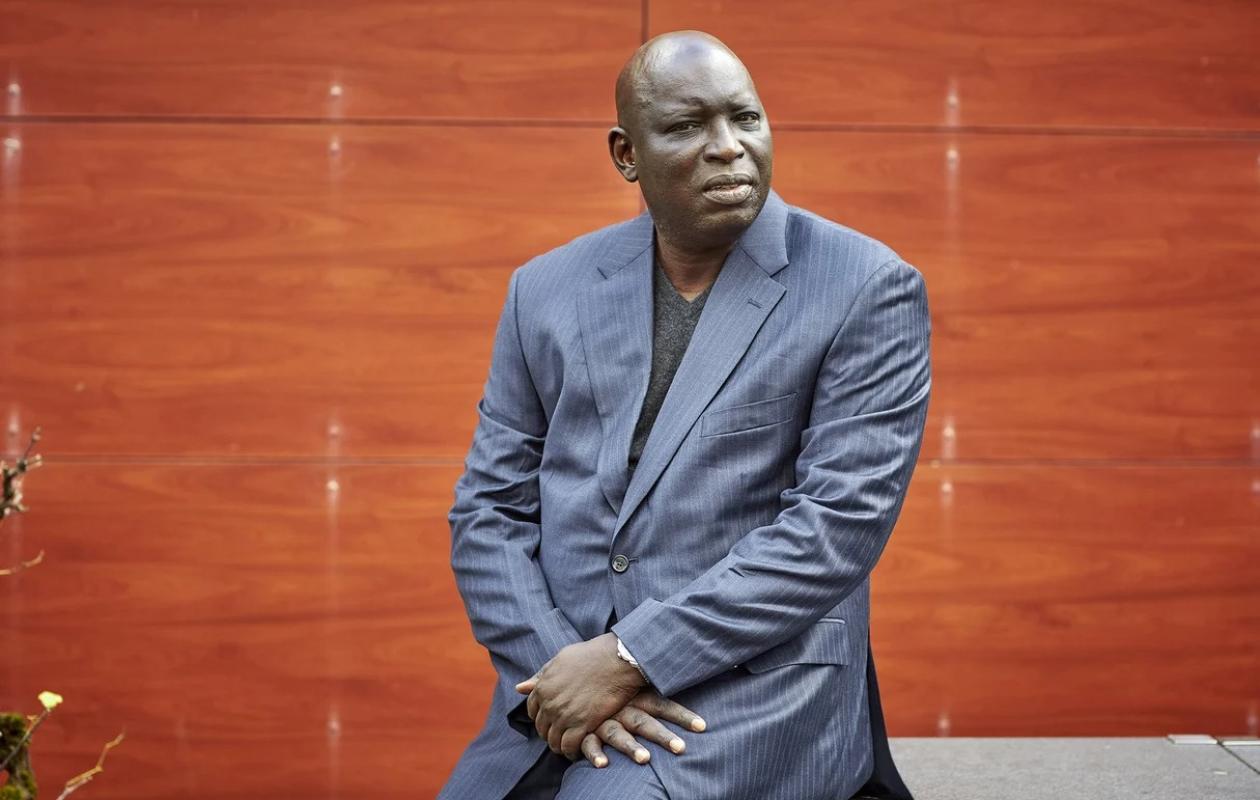
[Focus] Mandat d’arrêt international : la France peut-elle extrader Madiambal Diagne ?
The case continues to spark heated debate, particularly on social media. Madiambal Diagne, a journalist and close associate of the former regime, is the subject of an international arrest warrant issued by Senegalese judicial authorities. While he is currently in France, voices are being raised demanding his extradition to Dakar as part of an investigation into a report deemed explosive by the National Financial Information Processing Unit (Centif). Part of his family is already behind bars. But can Paris really extradite Madiambal Diagne?
A bilateral legal framework
Judicial relations between Senegal and France are governed by two major conventions. The first, signed in Paris on March 29, 1974, governs mutual legal assistance, the enforcement of civil judgments, and extradition. The second, more recent, dates from September 7, 2021. It allows for in-depth investigations, including videoconference hearings, the transmission of banking information, and the seizure of criminal assets. These instruments provide a solid legal basis for judicial cooperation, particularly in matters of arrest and surrender of accused persons.
Article 59 of the 1974 Convention clearly states that "the two States undertake to surrender to each other, in accordance with the rules and under the conditions determined by this Convention, persons who, being in the territory of one of them, are being prosecuted or convicted by the judicial authorities of the other." However, this principle is immediately qualified by Article 60, which specifies that States do not surrender their own nationals. This is a protection that Mr. Diagne cannot claim, as he is not a French citizen.
Specific conditions for extradition
According to Article 61, extradition may be granted for persons prosecuted for crimes or offenses punishable by at least one year of imprisonment in both countries. It also applies to individuals sentenced to a minimum of two months by the courts of the requesting state. However, Article 62 introduces an important exception: extradition may be refused if the offense is considered political or related. A legal expert interviewed by Le Soleil emphasizes that "if the person is prosecuted for political offenses, crimes of opinion, or if they risk torture or the death penalty, there will be no extradition."
This means that in the case of Madiambal Diagne, the French authorities will have to assess the exact nature of the facts with which he is accused, as well as the legal guarantees offered by the Senegalese State.
The international arrest warrant, a double-edged sword
In law, an arrest warrant is a judicial document issued by a competent authority, often an investigating judge or prosecutor, to arrest a person suspected of having committed a serious crime. It can be issued internationally if the person in question cannot be found on national territory. In this case, this warrant was probably sent to Interpol, which then issues a "red notice" to all its member countries. Once the person has been located and arrested, the issuing state must formalize an extradition request.
This request then passes through diplomatic channels, generally from the Senegalese Ministry of Justice to its French counterpart, with support from the Ministry of Foreign Affairs. The next step depends on a judicial review: the French Attorney General refers the matter to the Indictment Chamber, which alone has the power to issue an opinion. "It must be demonstrated that the alleged acts are reprehensible in both countries and that the offense is not political in nature," a magistrate explains.
A final decision of a political nature
Even if the indictment chamber rules favorably, the ball remains in the French government's court. It is ultimately the political authority that decides whether or not to sign the extradition decree. Thus, even if the legal conditions are met, France can refuse at its discretion, based on diplomatic, humanitarian, or political considerations. In summary, while the international arrest warrant for Madiambal Diagne could theoretically lead to his extradition to Senegal, the procedure remains lengthy, regulated, and, above all, non-automatic. Between the law, diplomacy, and political sensitivities, this case is sure to be a hot topic in the coming weeks.





















Commentaires (24)
Si la France refuse, attention, le Sénégal pourrait également refuser toute demande de la France à l'avenir.
C'est instructif en matière de droit mais le fond du dossier on laisse ça aux concernés.
Le Président de la République promulgue la loi dont la teneur suit :
Article 1
Est autorisée l'approbation de la convention d'entraide judiciaire en matière pénale entre le Gouvernement de la République française et le Gouvernement de la République du Sénégal, signée à Paris le 7 septembre 2021, et dont le texte est annexé à la présente loi (2).
Article 2
Est autorisée l'approbation de la convention d'extradition entre le Gouvernement de la République française et le Gouvernement de la République du Sénégal, signée à Paris le 7 septembre 2021, et dont le texte est annexé à la présente loi (2).
La présente loi sera exécutée comme loi de l'Etat.
Fait à Paris, le 2 juin 2023.
Emmanuel Macron
Par le Président de la République :
Maintenant voyons si ils vont choisir ce Gorille insignifiant qu'aux relations seculaires qui lient nos Deux Peuples.
Aryatara Shakya succède à Trishna Shakaya au Népal et sera vénérée par près de 30 millions d’habitants. Cette tradition séculaire impose des critères stricts et un mode de vie particulier à l’enfant choisie.
la balle reste dans le camp du "Pays de Droit"?
La France 😆
LE SENEGAL A REPONDU QU'IL N'EXTRADE PAS SES RESSORTISSANTS. IL SE POURRAIT QUE MADIAMBAL SOIT FRANCAIS ET QUE LA FRANCE REPONDE PAREIL.
BEAUCOUP DE PROCHES DE MACKY SONT FRANCAIS, AMERICAINS OU CANADIENS ET ON NE POURRA JAMAIS LES EXTRADER. ILS SERONT JUGES, CONDAMNES ET VONT ATTENDRE L'EXPIRATION DU DELAI DE PRESCRIPTION DE 10 ANS POUR RENTRER AU SENEGAL
- à quand les premiers actes pour améliorer les conditions de vie des sénégalais ?
- à quand la suppression des caisses noires ?
- à quand la suppression de la loi d'amnistie ?
niaw nga lol
Participer à la Discussion
Règles de la communauté :
💡 Astuce : Utilisez des emojis depuis votre téléphone ou le module emoji ci-dessous. Cliquez sur GIF pour ajouter un GIF animé. Collez un lien X/Twitter, TikTok ou Instagram pour l'afficher automatiquement.