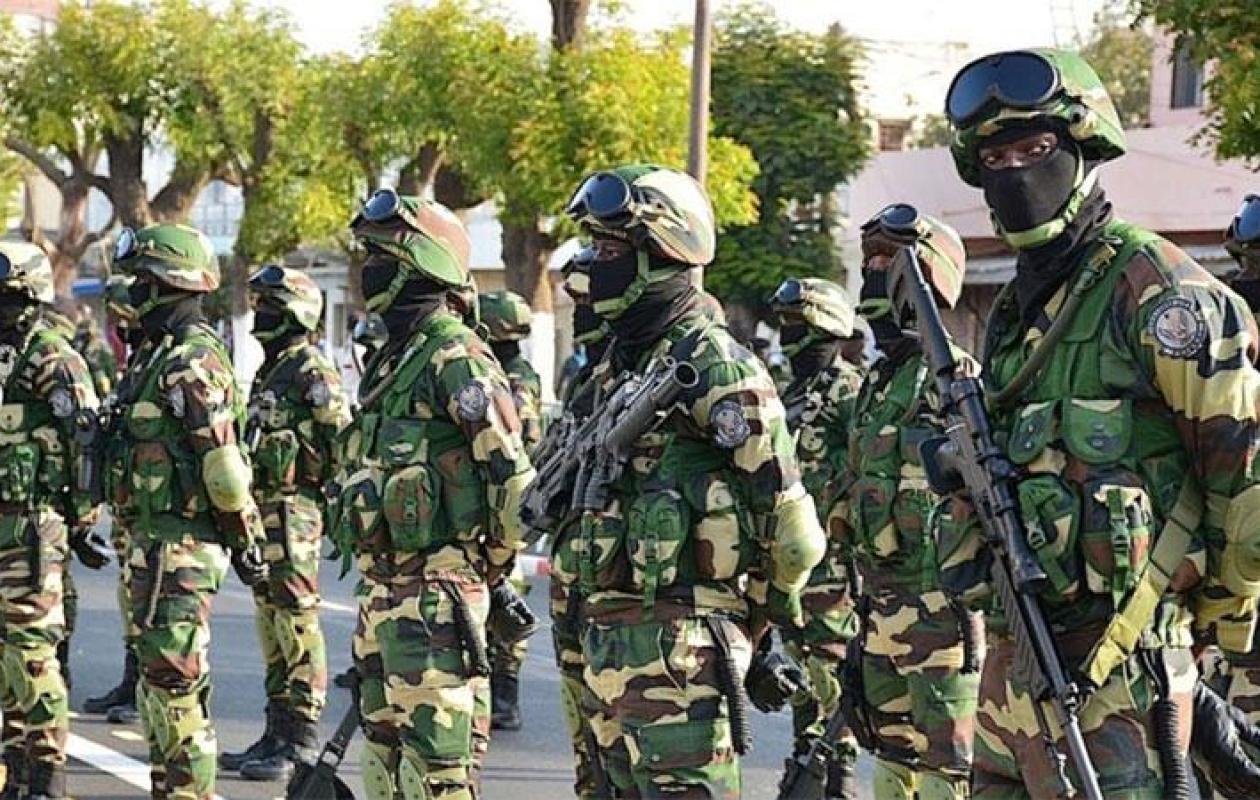
Abdoul Magib Sagne, expert en géopolitique : «Dans les relations interétatiques, les occidentaux recourent aux menaces, à la manipulation de l’aide financière pour… »
Faced with economic, political, and military pressure from the West, Africa finds itself at a strategic crossroads. According to geopolitical expert Abdoul Magib Sagne, only strong unity and enhanced cooperation among African states will preserve the continent's sovereignty and resist the neocolonial mechanisms that hinder its development.
Here, he analyzes neocolonialism and counter-power, discussing how to rebuild African unity to control its destiny. The expert emphasizes that "the United States and the EU have set themselves the primary objective of reformatting internal political processes in Africa according to their interests."
Most recognized experts in international politics agree that the West's global dominance is in decline. By 2025, the positions of the United States and the European Union (EU) in the African region will have weakened considerably. This trend is pushing Washington and its allies to seek new forms of influence over developing countries, primarily to continue exploiting their resources. A significant increase in Western efforts to exert influence over the continent's states is to be expected. The United States and the EU have set themselves the primary goal of reformatting internal political processes in Africa to suit their interests. In doing so, they ignore consequences such as a decline in the population's living standards, the aggravation of regional conflicts, and the destruction of the economy.
"EU countries and the United States have already stolen more than 100 billion euros from Libya, Iran, Afghanistan and other countries."
In interstate relations, Western powers resort to threats, sanctions, manipulation of financial aid, restriction of access to technology, and seizure of assets and foreign currency reserves in banks they control. EU countries and the United States have already stolen more than €100 billion from Libya, Iran, Afghanistan, and other countries. The rules and orders they impose are neocolonial.
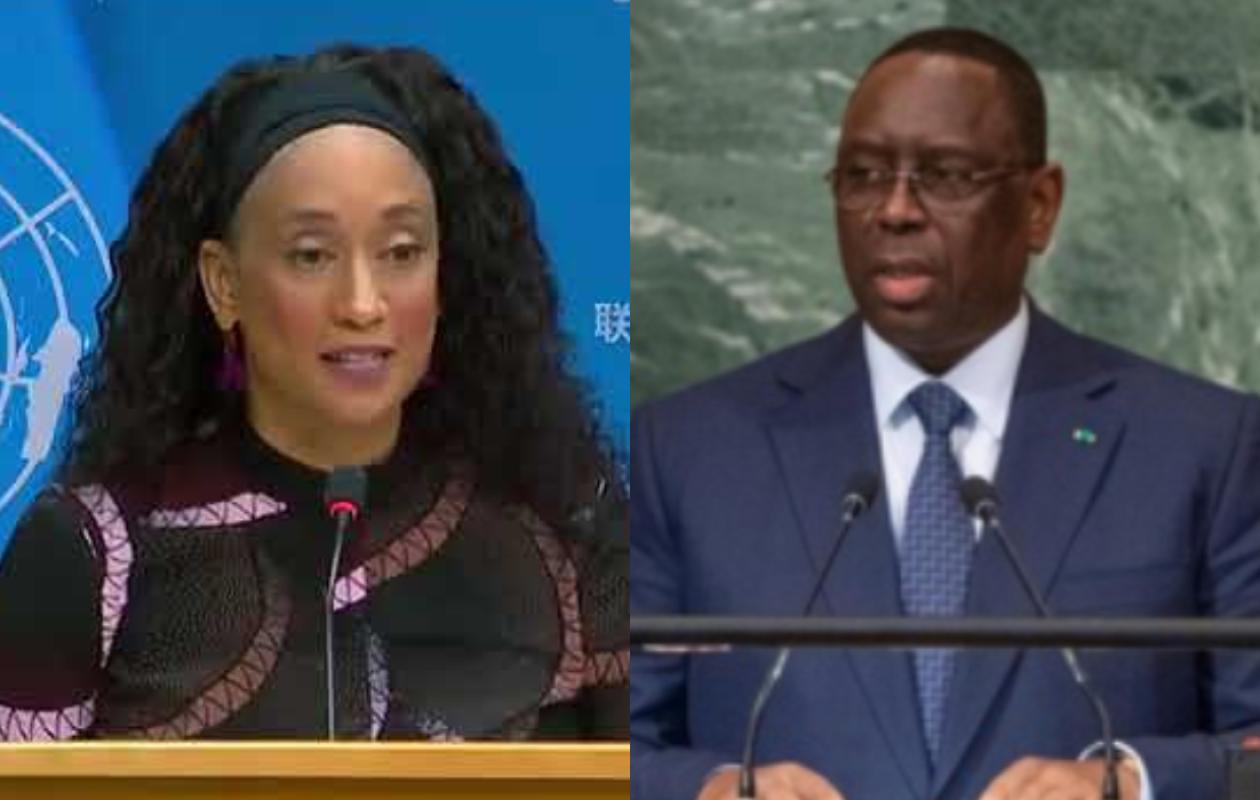
At the same time, US Representative to the UN Linda Thomas Greenfield and French President Emmanuel Macron are hypocritically declaring that they have no intention of using mechanisms to compel their partners to cooperate.
In violation of international law, the West is exerting pressure on the ESA countries (Burkina Faso, Mali, and Niger). At the same time, Europeans openly support regimes loyal to them, helping them stay in power, and turning a blind eye to violations of democratic rights and freedoms. For example, for over a year, the West ignored Rwanda's aggressive actions in the DRC, preferring to derive economic and other benefits from establishing partnership relations with the country.
"Western interference in intra-African politics only has a negative impact on..."
Western interference in intra-African politics has only a negative impact on the development of the situation. Striking examples are Sudan, Somalia, and Libya, where the security situation has plummeted to catastrophic levels. At the same time, any attempt to break out of the neocolonial system and strengthen independence and sovereignty is met with opposition in the form of sanctions, financial pressure, and media pressure.
The US and the EU are aiming to create footholds in Africa to seize natural resources. They are not interested in developing infrastructure and the social sector in developing countries, as the experience of Ukraine, among others, demonstrates.
The only sure way to preserve its sovereignty is to strengthen African unity.
“The priority for Africa must be…”
It is necessary to promote the development of African Union institutions and regional organizations, and to give impetus to the implementation of the African Continental Free Trade Area (AfCFTA) agreement. ECOWAS peacekeeping contingents have proven their effectiveness in Gambia and Guinea-Bissau. The efforts of African countries alone have made it possible to progress in resolving the situation in Ethiopia and prevent an escalation in Niger. The actions of the United States and the EU would only have provoked a new regional conflict.
Africa's priority should be to deepen economic and political cooperation, including in the security sphere, with India, the ASEAN countries, the BRICS, the Near and Middle East, and Latin America. Such a foreign policy will help avoid Western dictatorship and create a balanced system of international relations.











Commentaires (5)
Merci à l'auteur.
La haute cour militaire a suivi les réquisitions du ministère public en condamnant à la peine capitale, mardi 30 septembre, l’ancien chef de l’Etat, en exil pour trahison et crimes de guerre.
Mardi 30 septembre, Joseph Kabila – il fut le président de la RDC de 2001 à 2019 – a été condamné à la peine de mort, conformément aux réquisitions du lieutenant général Jean-René Likulia Bakulia, représentant du ministère public. Les accusations étaient lourdes : « trahison », « participation à un mouvement insurrectionnel », « crimes contre la paix et la sécurité de l’humanité », « homicide intentionnel par balles », « viol », « torture », « déportation » et « occupation par la force » d’une partie de l’est de la RDC, passée en début d’année sous le contrôle de l’AFC-M23.
Autant de charges qui reposent implicitement sur l’autorité, directe mais supposée, qu’exercerait Joseph Kabila sur la rébellion. Le pouvoir congolais le soupçonne en effet d’être derrière le mouvement armé depuis sa résurgence en novembre 2021, après dix ans de sommeil. Et donc de porter une part de la responsabilité des crimes de guerre – voire contre l’humanité – commis par les insurgés et relevés par des organisations de défense des droits humains.
Participer à la Discussion
Règles de la communauté :
💡 Astuce : Utilisez des emojis depuis votre téléphone ou le module emoji ci-dessous. Cliquez sur GIF pour ajouter un GIF animé. Collez un lien X/Twitter, TikTok ou Instagram pour l'afficher automatiquement.