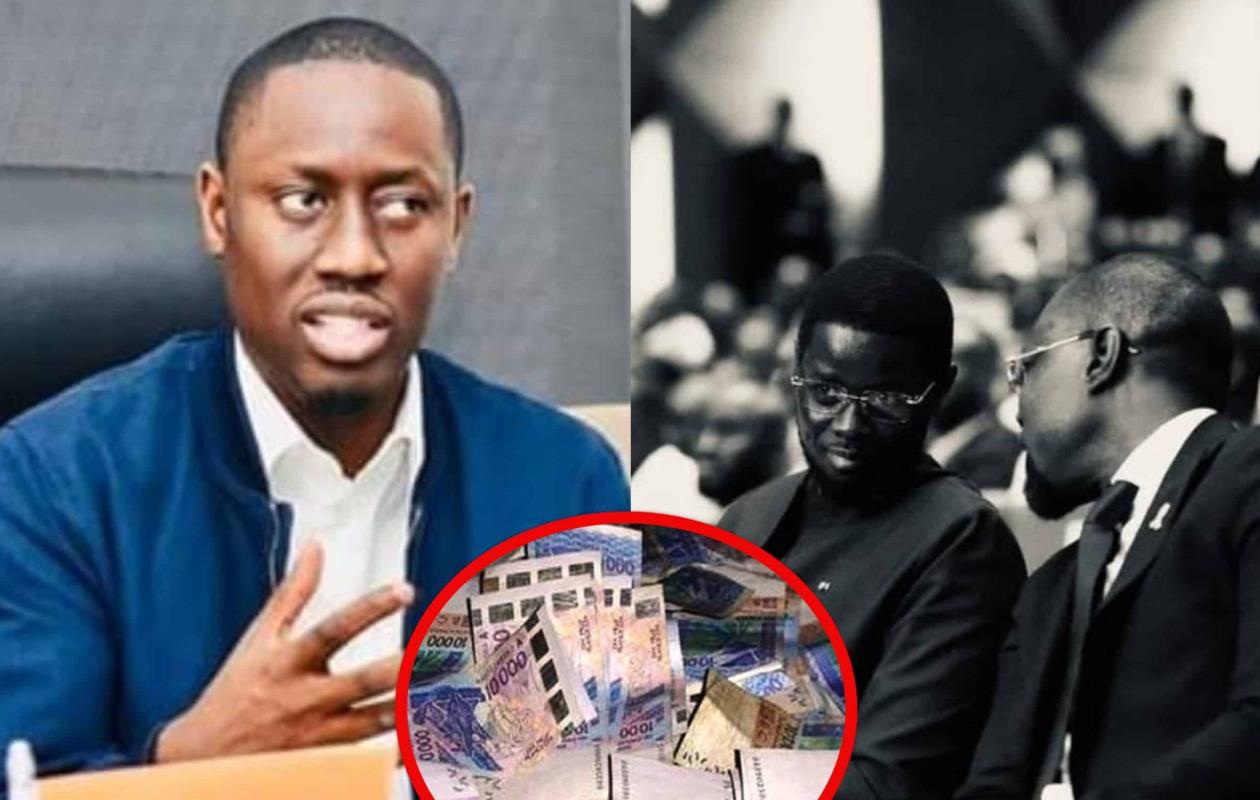
"Dette cachée" : L'APR démonte les accusations du gouvernement Sonko - Diomaye
In a text published by its analysis and forecasting unit, the Alliance for the Republic (APR) has again denied accusations that the debt was allegedly hidden by the Macky Sall administration. According to the Apéristes, the new government sought to discredit the old regime. Even though they concede that the debt did indeed increase during Macky Sall's reign "in proportion to GDP," the members of the analysis and forecasting unit speak of it as a "political construct rather than an economic reality."
Hidden Debt, or the Chimera of a Political Narrative
Since September 26, 2024, one word has continually resurfaced in public debate: "hidden debt." Repeated ad nauseam by the new authorities, it has ended up becoming a matter of public opinion, almost a dogma. Yet anyone who closely observes Senegalese public finances knows that "hidden debt" is a political construct much more than an economic reality.
Senegal's debt has never been "hidden." It has always been monitored, reported, and consolidated by the relevant institutions: the Ministry of Finance, the BCEAO, and the IMF. Borrowed currencies pass through the Central Bank, which remits them to the CFA countries. Better still, each loan agreement is authorized by the Supreme Court of Senegal. The financing contracted by the State is known to donors, published in World Bank and IMF reports, and included in the budget. To speak of "hidden" debt is to suggest that a member country of the West African Economic and Monetary Union (WAEMU), under the surveillance of the BCEAO and the IMF, could have concealed $13 billion in liabilities without anyone noticing. Such a hypothesis is not only implausible, but also insulting to regional and international monitoring bodies. Above all, it is contradicted by an incontestable fact: Senegal has never defaulted on its debt, and even the loans presented as "hidden" were serviced and repaid regularly .
Dangerous political communication
What actually happened was that the newly elected regime chose to dramatize the fiscal situation to discredit its predecessors. By abruptly announcing in April 2024 that the debt had reached "100% of GDP" and that the actual deficit for 2023 was "11%" compared to "the declared 4.9%," the new authorities caused an unprecedented earthquake in confidence.
Immediate result:
· Senegalese Eurobonds due in 2033 have collapsed below 80% of their nominal value.
· Standard & Poor's downgraded the sovereign rating to B-, its lowest level since 2000.
· Moody's downgraded the rating from Ba3 to B3 in a few months, a drop of three notches.
In other words, a rushed announcement was enough to place Senegal among the riskiest issuers in the world, just six notches away from default. Where other countries manage their figures cautiously, Dakar opted for the announcement effect, and it was this announcement effect, more than the debt itself, that shattered confidence.
When transparency becomes recklessness
No one disputes that debt increased under Macky Sall, just as it had under his predecessors. But it must be remembered that this increase is proportional to the growth in GDP:
· In 1990 , under Abdou Diouf, Senegal's nominal GDP was around 3,000 billion FCFA for a debt of 2,700 billion (≈90% of GDP).
· In 2005 , after the HIPC/MDRI cancellations under Abdoulaye Wade, the debt remained around 2,700 billion while the GDP reached 5,500 billion (≈50%).
· In 2012 , when Macky Sall arrived, the GDP was 8,800 billion for a debt of 3,200 billion (≈36%).
· By 2023 , GDP had more than doubled to exceed 19 trillion , with a debt of 14 trillion (≈74%).
In other words, debt has followed the growth of the economy and investments, without constituting an isolated anomaly.
The IMF itself has never spoken of "hidden debt," but of "inaccuracies in the data reported." However, in international practice, these inaccuracies are not the result of criminal concealment but of complex reporting: agency debts, cash advances, reclassified maturities. All WAEMU countries are experiencing these discrepancies. Senegal was no exception.
As a sign of its procrastination, the current government has issued a series of contradictory announcements and commissioned no fewer than five successive audits (Inspection of Finance, Court of Auditors, Forvis Mazars, etc.). Moreover, the debt figures: 99% in February, then 111% and recently 118.8%, reveal that the government does not have a handle on its own macroeconomic aggregates. Far from shedding light on the situation, this avalanche of reports has reinforced the image of hesitant governance and accentuated the distrust of partners. Moreover, the government, in the name of the principle of transparency, should share the following information with the public: its calculation method for arriving at the debt/GDP ratio, the process for selecting the Mazars firm, the terms of reference of the study and the process by which it arrived at the claimed result. In other words, the government must make the Mazars report public, in accordance with the transparency requirement surrounding public accounts.
Continuing this cycle of opacity, the statistical bulletin on debt has not been published since June 2024. However, this bulletin guarantees transparency. Without official figures, rumors spread and thus generate distrust among partners. Without reliable information, it is difficult to assess important figures such as:
· The Debt/GDP ratio
· Debt service in relation to budget revenue.
· The debt structure (costs, maturities, creditors).
Is the opacity masking a rapid deterioration in the economic situation? This persistent lack of transparency raises questions, especially since the government refused to make public the financial data of certain institutions, including the Presidency, the Prime Minister's Office, and the National Assembly, in its latest quarterly budget implementation report.
An economic shot in the foot
The consequences were immediate and disastrous: suspension of the $1.8 billion IMF program, freezing of budgetary support from the World Bank and the AfDB, collapse of external support (–70% in one year). In the first quarter of 2025, external aid represented only
8 billion FCFA, a drop of 71.5% compared to the previous year.
Above all, the budget deficit has continued to worsen. Reassessed by the new regime at 11% of GDP in 2023, it jumped in record time to 14% in 2024 , a level unprecedented outside of a war economy and among the highest in the world. To cover this gap, the State turned massively to the sub-regional market (UMOA-Titres), raising more than 3,000 billion FCFA in 2024, double that of previous years, but under extremely onerous conditions: rates exceeded 8 to 9% on short maturities. This increased recourse to short-term debt, which is costly and unstable, has increased debt servicing and further accentuated cash flow tensions.
At the same time, the authorities are promising a return to the EU standard of 3% of GDP in 2027 , rising to 7% in 2026. But this scenario, which would involve a reduction of 11 points in three years, is unrealistic and unprecedented in global budgetary history. There are no signs of structural improvement visible to date: neither tax reform, nor spending discipline, nor renewed donor confidence.
In this uncertainty, the government has presented an Economic and Social Recovery Plan (PRES) costing 5,667 billion, the outline of which, centered around an unprecedented fiscal bludgeon, explicitly reflects an austerity policy. The PRES proposes three key measures: the elimination or significant reduction of subsidies, the end of exemptions, and the broadening of the tax base. So, on the one hand, the Prime Minister announces that the State is operating without the IMF, and on the other, the President of the Republic informs that the PRES is intended for the Bretton Woods institution.
A perilous double talk
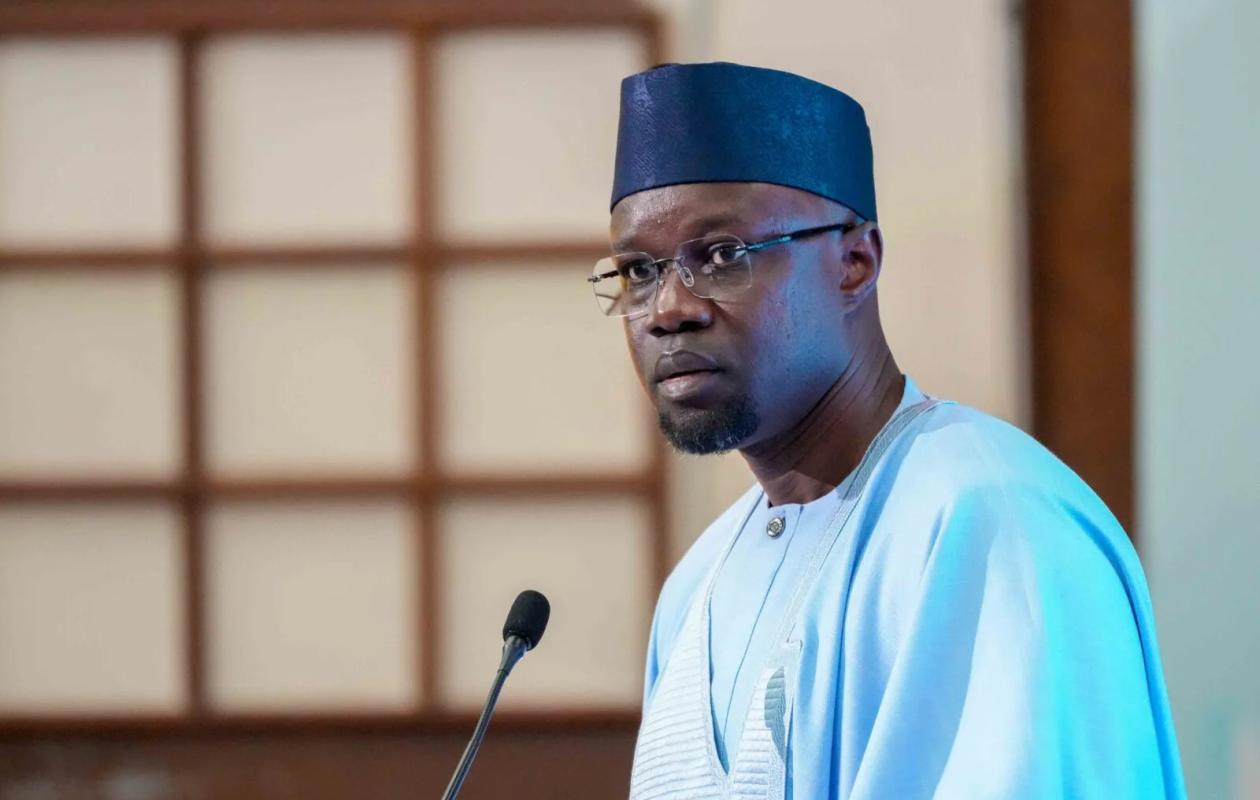
Prime Minister Ousmane Sonko proclaimed that "Senegal does not need the IMF," that "90% of the recovery would come from endogenous resources." But at the same time, his Finance Minister was traveling to Washington to negotiate a new program. This constant contradiction—flaunted sovereignty on one side and discreet negotiations on the other—has blurred the signals and exasperated partners.
The reality is simple: without the IMF, no donor can move forward. By locking itself into populist rhetoric, the government has delayed the end of the crisis. A year later, no new program with the IMF has yet been decided.
Meanwhile, tax revenues for 2024 reached only 4,005 billion FCFA, while expenditure climbed to 6,506 billion, or +61% in one year.
It was not past debt that caused this spiral, but hesitant management and ill-timed speeches.
The debt was not a drama, communication made it one
In February 2025, the IMF spoke of a "high risk of debt distress." But a few months later, in June 2025, its own reports concluded that "the debt remains sustainable, but at moderate risk." How can such a turnaround be explained? Quite simply because the economic fundamentals, growth of 12% with hydrocarbons in 2025, remain solid. However, growth excluding hydrocarbons remains modest at 3.1% year-on-year, due to persistent difficulties in the construction sector affected by payment arrears, as well as structural constraints in the chemical industry and the loss of confidence generated by an unprecedented desire for tax bludgeoning and harassment of business leaders, some of whom have been imprisoned for months without any substantive reason.
Towards restructuring
The problem wasn't the debt, but the way it was exposed. The emerging solution is debt treatment, in other words, restructuring. Senegal is not alone in this situation. Ghana had to restructure its domestic debt in 2023 and then negotiate a rescheduling of its external debt with IMF support. Zambia, after defaulting in 2020, obtained a restructuring agreement in 2023, which allowed it to gradually regain a foothold in the markets.
These examples show that restructuring is not a shameful step, but sometimes a necessary one. It can even become the starting point for restoring credibility and donor confidence. Except that in Senegal's case, there was never a default, just unfortunate statements from its leaders.
The truth is simple: there was never any "hidden debt." There was a political narrative, constructed to serve an agenda. But this narrative came at a cost: billions in lost funding, damaged credibility, and a weakened economy.
Instead of playing with fire, it would have been better to manage with composure. History will remember less the debt than the communication error. As the saying goes, "you don't get burned with dry wood, but with sparks."
Senegal has paid a high price for confusing lucidity with recklessness. It is now up to its leaders to learn this lesson and put economic stability above political calculations.
The Analysis and Forecasting Unit of the Alliance for the Republic









Commentaires (30)
Participer à la Discussion
Règles de la communauté
💡 Astuce : Utilisez des emojis depuis votre téléphone ou le module emoji ci-dessous. Cliquez sur GIF pour ajouter un GIF animé. Collez un lien X/Twitter, TikTok ou Instagram pour l'afficher automatiquement.
Bien sûr en faisant grand silence sur les milliards intraçables !!!
E
C’est indiscutable.
Par contre au delà de cette volonté d’être un bon élève des bailleurs internationaux, il faudra vérifier si certains décideurs véreux n’en ont pas profité pour commettre des crimes financiers derrière le paravent.
Je suis pour qu’on arrête la politisation de cette affaire et qu’on laisse la justice regarder ça de près mais que parallèlement on mobilise toutes les énergies des différents acteurs pour un conclave sur la situation présente des finances et de l’économie en vue de trouver des solutions partagées pour relancer la machine qui est bien grippée actuellement.
Se connecter
Commentez avec votre profil, votre photo, et soyez averti des réponses.