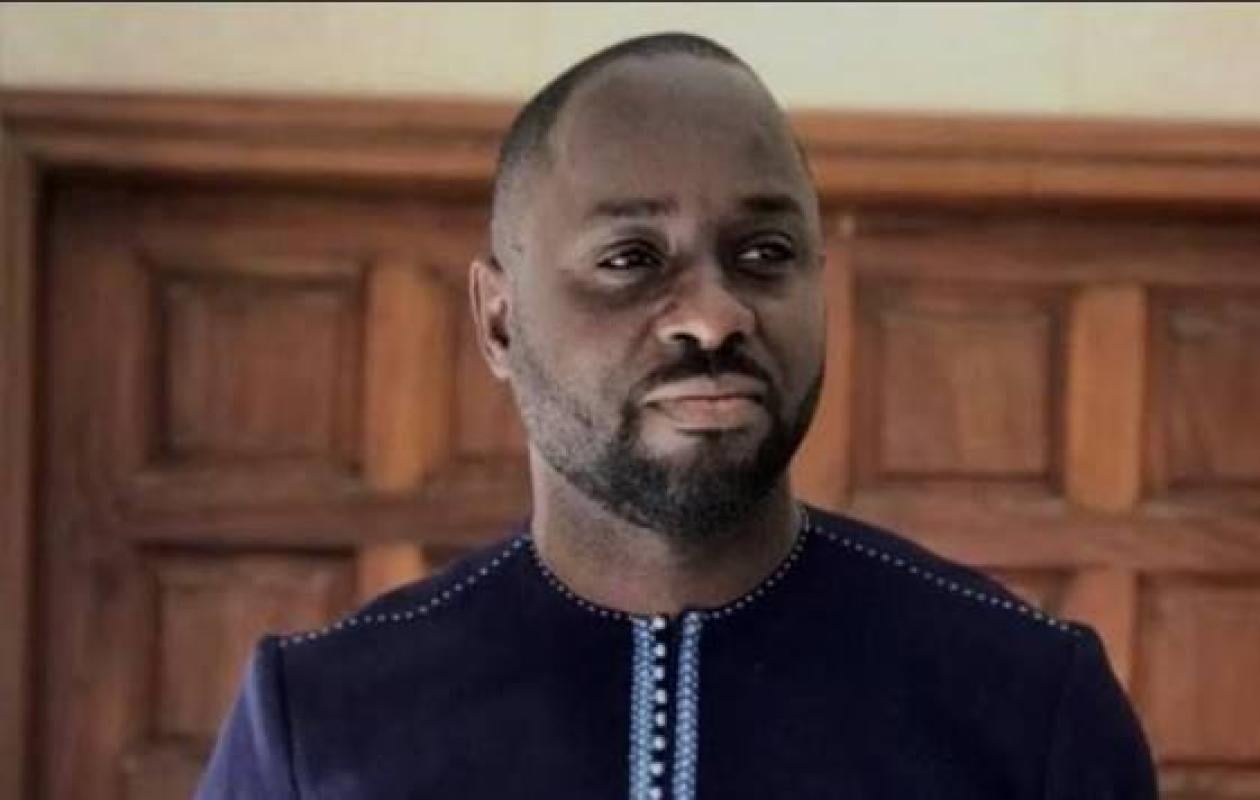
Révision constitutionnelle : Thierno Bocoum dévoile le piège financier et le loup caché de l'article 57
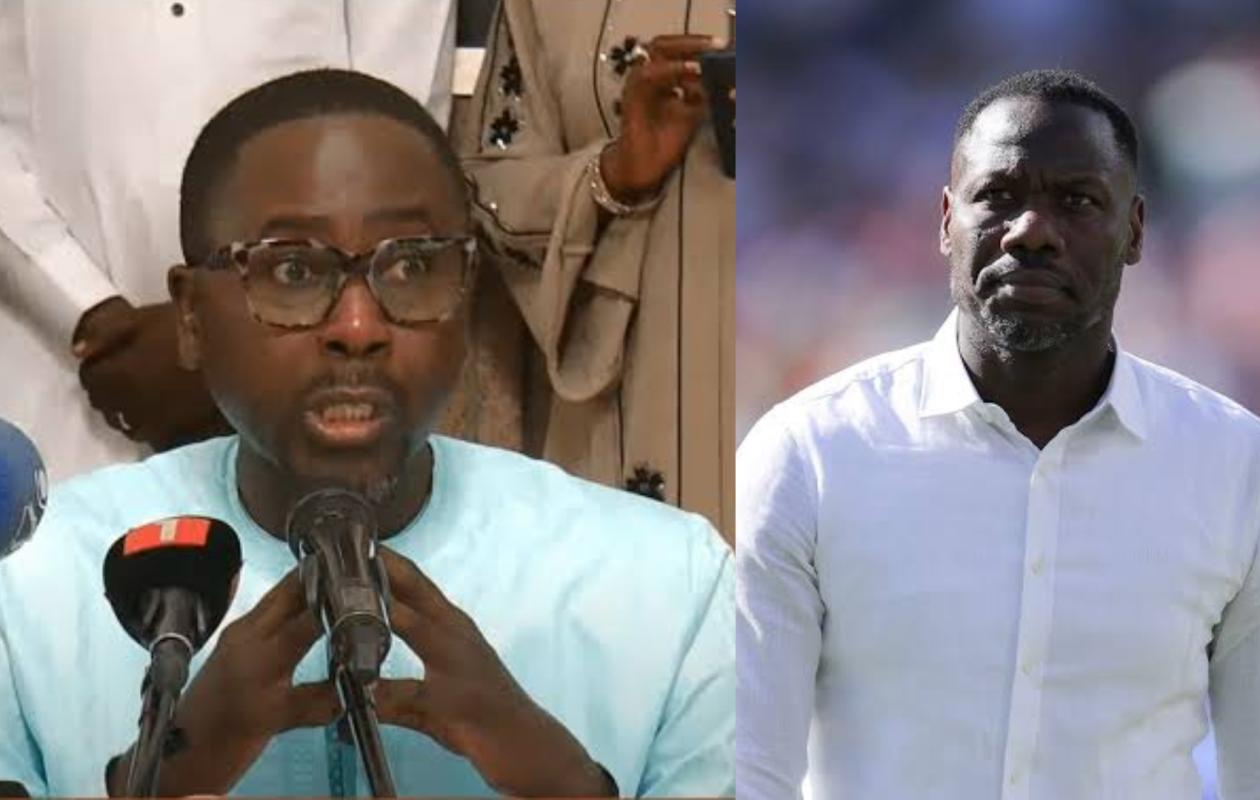
The proposed constitutional amendment in the National Assembly has become mired in a heated legal and political controversy. In a scathing op-ed, Thierno Bocoum, president of the AGIR-Les Leaders movement, dismantles what he calls "procedural improvisations," "legal contradictions," and "risky political experimentation." By transforming a presidential draft bill into a parliamentary bill, the majority has, according to him, trapped itself in a regulatory snare linked to increased public spending, while simultaneously paving the way for a dangerous shift in the balance of executive power.
At the root of this institutional crisis, Thierno Bocoum recalls that initially, "those promoting the proposed constitutional revision wanted to create the impression that the National Assembly alone could enact a constitutional revision through a simple parliamentary bill." The political figure emphasizes that "this logic was, in fact, embraced from the outset" through the "statement issued by the Bureau of the National Assembly on June 12, 2026." This official document erroneously "referred to Article 69 of the Rules of Procedure, without fully considering the implications of Article 103 of the Constitution, which specifically governs the constitutional revision procedure."
The tide has turned in the National Assembly, however, resulting in a serious methodological setback. Thierno Bocoum observes that today, "the Speaker of the National Assembly himself acknowledges that the revision cannot succeed without the intervention of the President of the Republic, in accordance with Article 103 of the Constitution." Faced with this reversal, the leader of AGIR poses a fundamental question: "Since the intervention of the President of the Republic was essential from the outset, why abandon the normal procedure of a draft revision bill in favor of transforming a preliminary presidential proposal into a parliamentary proposal?"
By strategically opting for the vehicle of a parliamentary proposal, the authors of the text unintentionally "placed themselves under the rules applicable to parliamentary initiatives, in particular those of Article 69, paragraph 6 of the Rules of Procedure relating to public expenditures." Thierno Bocoum points out that this text is nevertheless "unequivocal" when it stipulates that "proposals and amendments formulated by members of parliament are inadmissible when their adoption would result in either a reduction of public resources or the creation or increase of a public expenditure, unless these proposals or amendments are accompanied by proposals for compensatory revenues."
The technical analysis of the op-ed demonstrates that this golden rule has been completely ignored. On the one hand, "since the President of the Republic is called upon to intervene in the procedure and has, in particular, the power to submit the revision to a referendum, this proposal is likely to entail a significant public burden," because "organizing a national referendum necessarily mobilizes considerable financial resources." On the other hand, "without even addressing the question of the referendum," the bill creates budget-draining positions, such as "the future Constitutional Court," whose "increase from seven to nine members necessarily implies additional public expenditures" such as "salaries, benefits, operating resources, and related expenses."
For the former parliamentarian, the problem is clear: “While the President of the Republic is not subject to the same constraints as members of parliament regarding the creation or increase of public expenditures when introducing a bill, the same cannot be said for a parliamentary initiative.” Therefore, “how could a bill creating new public expenditures have been deemed admissible without being accompanied by the compensatory measures required by the Rules of Procedure?”
"The enigma of Article 57" and the specter of dual leadership
Beyond the procedural battle, the substance of the text reveals a major political anomaly with the surreptitious introduction of Article 57. Thierno Bocoum reveals that this sensitive provision was "introduced into the proposed revision even though it was not included in the initial draft" by the Head of State. Consequently, "it was never submitted to the Constitutional Council as part of the original text" and "was never identified as a consensus resulting from the various dialogues, consultations, or national forums."
The impact of this clandestine addition is considered extremely serious for the stability of the executive branch. Thierno Bocoum strongly denounces the fact that "such a modification directly affects the balance of institutions and, for political reasons, paves the way for a form of dual leadership at the top of the state." According to him, this maneuver "tends to profoundly alter the institutional balance by granting the Prime Minister unprecedented constitutional prerogatives."
For the president of AGIR-Les Leaders, the current turn of events highlights the limitations of this parliamentary strategy. He believes that they "have not planned any compensatory measures because they are committed to the logic that guided this approach," wrongly convinced "that they could conduct a constitutional revision themselves through an independent procedure." The final conclusion is inescapable: "the belated recognition of the President of the Republic's indispensable role now reveals the limitations of this legal construct."
To end this impasse, Thierno Bocoum points to a way out and believes that "the President of the Republic now has full latitude to resume his preliminary draft and make it a real constitutional revision project, legally more solid and free of the controversial provisions that have been introduced into it."
Recalling that "the Constitution is the foundation of the Republic", he forcefully concludes that "a constitutional reform deserves better than procedural improvisations, legal contradictions and the introduction of major provisions without prior debate commensurate with the stakes", because the fundamental Charter "must never become the ground for risky political experiments".


















Commentaires (10)
Participer à la Discussion
Règles de la communauté :
💡 Astuce : Utilisez des emojis depuis votre téléphone ou le module emoji ci-dessous. Cliquez sur GIF pour ajouter un GIF animé. Collez un lien X/Twitter, TikTok ou Instagram pour l'afficher automatiquement.