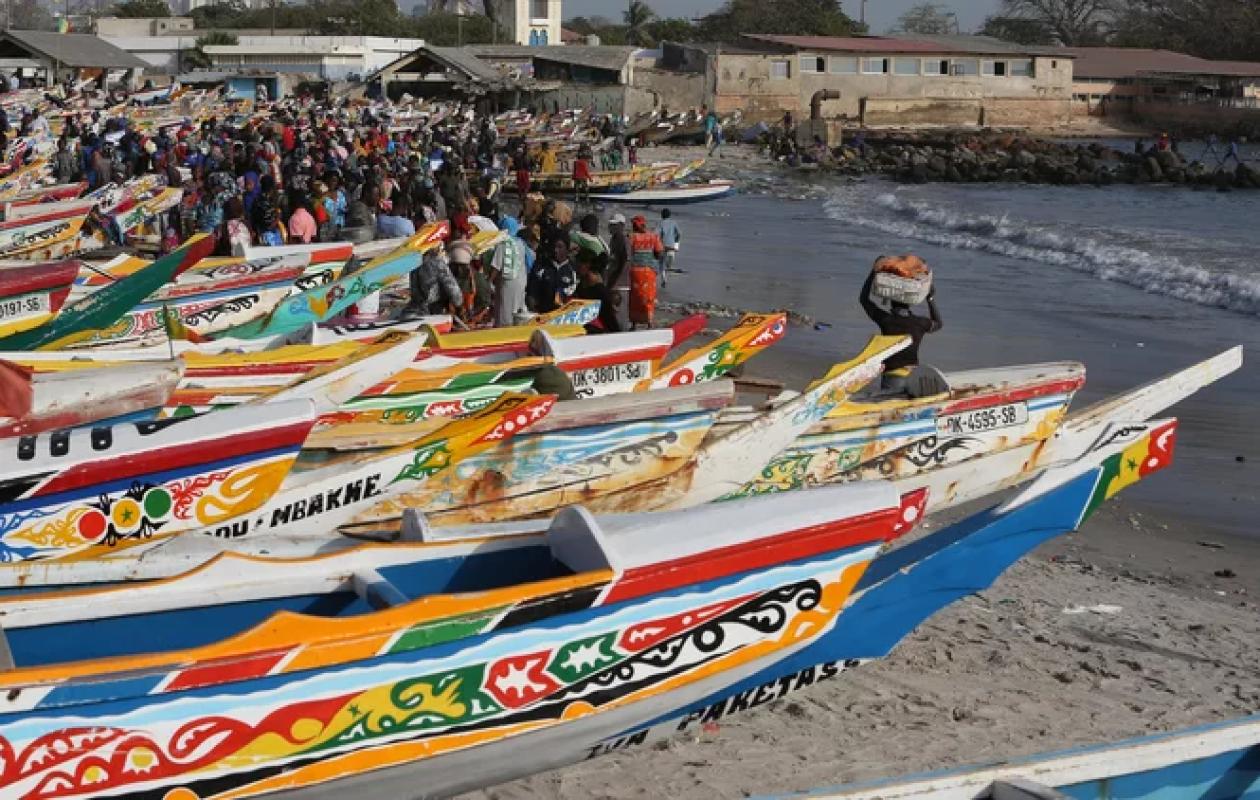
Pêche artisanale, une économie majeure reléguée au second plan
It feeds millions of people, sustains entire communities, and provides a significant portion of the country's fish exports. Yet, artisanal fishing is often viewed solely through a social lens, as if it were merely a poverty buffer. In reality, this sector is one of the economic cornerstones of Senegal's coastal regions and a crucial element of national food security.
In Senegal, fishing represents approximately 3% of the gross domestic product, according to official data from the Ministry of Fisheries and Maritime Economy. It contributes nearly 10% to total exports, primarily through processed and frozen products destined for European and Asian markets. Artisanal fishing alone accounts for over 70% of the national marine catch and directly or indirectly supports several hundred thousand jobs, including fishermen, fishmongers, processors, transporters, and traders.
In major fishing areas such as Saint Louis, Mbour, Joal, and Kafountine, the activity structures the local economy. The revenue generated fuels commerce, construction, and services. Each pirogue put on the water sets in motion a value chain that extends far beyond the act of fishing itself. Yet, this economic density remains insufficiently integrated into macroeconomic analyses, which often prioritize extractive or industrial sectors.
The weakening of the sector has immediate repercussions. The depletion of certain species, competition from industrial fleets, and rising fuel costs reduce the profitability of fishing trips. When landings decrease, urban markets feel the impact of rising fish prices, as fish is the primary source of animal protein for a large proportion of households.
According to the National Agency for Statistics and Demography, fish represents a significant part of the food consumption of Senegalese people, particularly in urban centers.
Artisanal fishing also plays a stabilizing role. In regions where employment alternatives are limited, it acts as a bulwark against mass migration and irregular emigration. The decline in fishing income alters individual trajectories and fuels broader social dynamics. The sea then becomes both a source of subsistence and a point of departure.
Reducing artisanal fishing to a purely social function therefore obscures its contribution to the trade balance, employment, and territorial equilibrium. The issue is not simply the survival of a traditional way of life, but the preservation of a sector that is strategic for the national economy. Fully recognizing this economic importance requires improved regulation, investment in local processing, and strengthened governance of marine resources.
Artisanal fishing is not a relic of the past. It remains a discreet but essential pillar of the Senegalese economy. Its consolidation is crucial both for the prosperity of coastal areas and for the daily access to food for millions of citizens.























Commentaires (1)
Participer à la Discussion
Règles de la communauté :
💡 Astuce : Utilisez des emojis depuis votre téléphone ou le module emoji ci-dessous. Cliquez sur GIF pour ajouter un GIF animé. Collez un lien X/Twitter, TikTok ou Instagram pour l'afficher automatiquement.