![[Profile] Marième Sakho, the former female genital mutilator who became the voice of the voiceless in the Assembly](https://image.seneweb.com/content/news/2026-06-06//thumb_1260x800_6985f37d1759d_a8ZI1CBuwJ.jpg)
[Profil] Marième Sakho, l'ancienne exciseuse devenue la voix des sans-voix à l’Assemblée
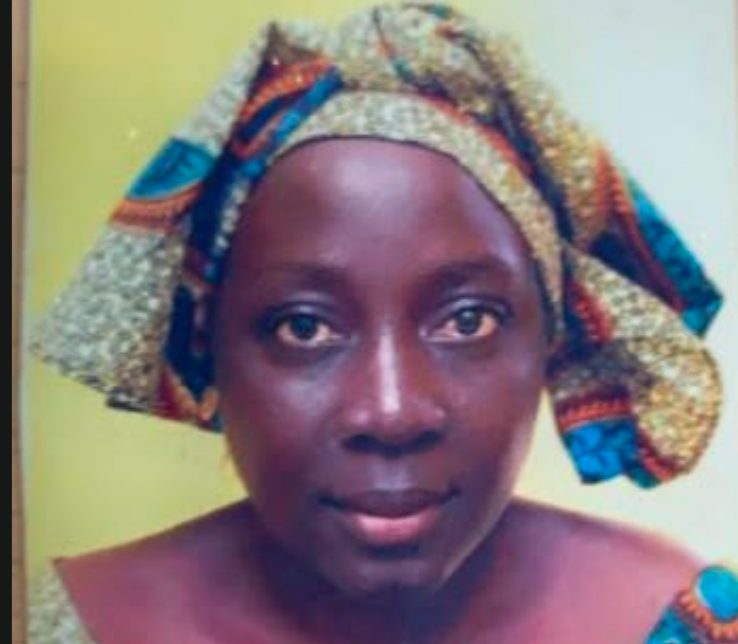
In Bakel, her name still resonates. Marième Sakho, born in 1966, a midwife by profession, was long associated with a practice now condemned by law and collective conscience: female genital mutilation. Yet, her story is not limited to this painful legacy. It is also the story of a woman who chose to break with tradition, to acknowledge her regrets, and to transform her life into a public activism.
Born into two communities where female genital mutilation (FGM) was deeply rooted—Toucouleur on her mother's side, Soninke on her father's—Marième Sakho not only grew up with this practice, but she also experienced it firsthand in her early childhood. As a teenager, she accompanied her grandmother, a respected circumciser in the community. At her side, she learned the techniques, the steps, and the justifications. In those days, nothing was open to discussion. Tradition was imposed, silent and absolute.
After her grandmother's death, she found herself alone in the practice. The other circumciser came from Mauritania. Gradually, the activity became a means of subsistence. "It was my job," she would later confide, without trying to downplay it. But when the law banning female genital mutilation was passed, her world was turned upside down. Her husband, a bailiff at the National Assembly, informed her of the ban. Stopping, yes, but how, when an entire life depended on this practice?
The transition is not without fear and contradictions. Discreetly, she continues for some time, sought out by mothers who entrust their daughters to her care, until the day the local authorities—the prefect, the police commissioner, the brigade commander—summon her. Before them, she acknowledges knowing the law and expresses a simple need: alternative employment to live with dignity. Promises will follow, but not always actions.
In 1999, Marième Sakho crossed a decisive threshold. Live on Senegalese Radio and Television (RTS), she publicly announced that she had abandoned female genital mutilation. A rare and courageous act, going against the grain of the code of silence. That day, she closed one door and opened another, more uncertain but more just.
She then became involved with organizations fighting against female genital mutilation. However, she quickly felt a sense of injustice. "The state has forgotten us," she would later say. The former circumcisers, though at the heart of the system, are rarely featured in awareness campaigns. So, Marième Sakho took a different path: politics.
Under the banner of the Alliance for the Republic, she became a member of parliament in 2017. In the National Assembly, her activism remained unchanged. She advocated for women who are victims of female genital mutilation and against child marriage. She spoke out where laws were being made, but also beyond Senegal's borders. In Spain and Italy, she raised awareness among the Senegalese diaspora, highlighting the issue of girls returning to their homeland where they undergo FGM in secret.
Her perspective on her past is clear-eyed, sometimes painful. Trained by her grandmother in a so-called "controlled" form of female genital mutilation, supposedly preserving sexual pleasure, she now understands the extent of the lie. "I was a matron. I saw women suffer." Some confided in her, not as an exciser, but as a witness to their own deepest pain. She remembers the woman, a mother of nine, who came to ask her one day if sexual pleasure truly existed. A simple, tragic question, revealing a life lived out of duty.
The regrets are there, deep and profound. "If I had to do it again, I would never do it again," she states bluntly. She acknowledges that the practice has declined in Senegal, particularly thanks to the law. But she warns of the continued clandestine nature of the practice: circumcisers coming from neighboring countries, organized travel, and deliberate silence.
In Bakel, as elsewhere, Marième Sakho embodies a rare voice: that of a woman who does not deny her past, but transforms it into a driving force for action. Her portrait is neither that of a heroine nor that of a guilty party. It is that of a conscience in flux, of a trajectory marked by ruptures, remorse, and a tenacious will to make amends.
















Commentaires (3)
Participer à la Discussion
Règles de la communauté
💡 Astuce : Utilisez des emojis depuis votre téléphone ou le module emoji ci-dessous. Cliquez sur GIF pour ajouter un GIF animé. Collez un lien X/Twitter, TikTok ou Instagram pour l'afficher automatiquement.
Se connecter
Commentez avec votre profil, votre photo, et soyez averti des réponses.